XRP Holder Losses Hit Deepest Level in 12 Years: Buy Signal or Trap?

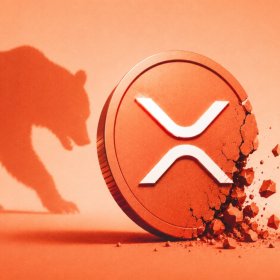
XRP trading returns have hit historic pain levels never seen before in the token’s 12-year history. However, one analyst just flagged a fresh technical buy signal. Meanwhile, others warn that the broader trend structure remains firmly bearish.
The setup places XRP at a critical crossroad where bullish and bearish forecasts openly clash across the market.
Why XRP Trading Returns Sit at Historic Pain Levels
Historic pain levels describe periods when the average investor holds an asset far below their purchase price. XRP is currently experiencing precisely that situation, with both short-term and long-term holders realizing losses simultaneously.
The numbers tell the story. Santiment data shows the 30-day MVRV ratio at -45% and the 365-day MVRV at -47%. This dual negative reading represents the lowest combined level in XRP’s entire 12-year history, signaling an unprecedented pain threshold across its holder base.
“That doesn’t mean price can’t dip a bit more if crypto markets keep struggling. But from a risk-reward view, buying or adding $XRP here comes with much less risk than average because so much downside has already been absorbed by other traders,” Santiment noted on X.
Not everyone reads the extreme as a bottom. Some observers note that XRP now shows patterns similar to those in the March phase, while breaking below the 20-week EMA after each cycle peak has historically been a bearish signal for XRP. Furthermore, the token still trades well below that level, currently around $1.35.
That structural weakness colors any short-term bounce. A relief rally from the $1.00 low remains possible, according to crypto analyst ChartNerd. However, the broader trend structure remains bearish for now. As a result, traders should treat any bounce with clear caution.
What the Buy Signal Really Means for the XRP Price
The bullish counterpoint comes from technical indicators. Crypto analyst Ali Martinez flagged that the SuperTrend indicator turned bullish on XRP for the first time since mid-June. Furthermore, the previous SuperTrend buy signal preceded a 14% rally.
The indicator carries a strong recent record. It correctly flagged the 19% and 16% declines in XRP before they materialized. As a result, traders are now watching whether the same level of accuracy holds for the current upward reversal signal in the coming sessions.
“Historically, the best setups often appear when the crowd is feeling maximum pain (both on-chain and sentiment-wise), not maximum confidence,” Santiment noted.
The current XRP price supports a possible bounce. BeInCrypto Markets data shows XRP trading around $1.09, up 3.11% in the last 24 hours. Furthermore, the token has a market capitalization exceeding $67 billion and a daily trading volume of $1.86 billion.
However, the bullish case requires strong technical confirmation. XRP must convincingly reclaim the $1.10 level. Moreover, a decisive reclaim of the 20-week EMA at $1.35 would be necessary to fully validate any trend reversal, according to bearish observers watching the broader macro structure.
“Ripple (XRP) is… raising concerns about a potential breach of the critical support level around the $1 mark. The market is currently facing mounting selling pressure as investor sentiment turns increasingly cautious… XRP could face the risk of a deeper decline—potentially dropping below the $0.90 threshold—if the negative trend persists. This situation has the community closely monitoring the coin’s next key support levels,” one analyst said.
The bottom line remains split. Bulls point to historic pain, technical buy signals, and steady spot ETF inflows. However, bears warn that the trend remains negative until XRP reclaims key structural levels. Traders are now watching the coming sessions to see which camp gains the upper hand.
Subscribe to our YouTube channel to watch leaders and journalists provide expert insights
Источник: BeInCrypto
Новости в мире криптовалют



Random quote about money
"Будь бережлив и готовься к завтрашнему дню."
Interesting posts in other sections of the blog










* to search the proxy database, just enter a country name, e.g. Russia, USA, Thailand