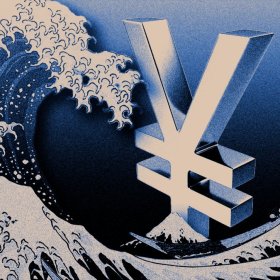
Panic Hits Japan and South Korea Markets: Can Crypto Become the Big Winner?

South Korea’s Kospi has entered a technical bear market while Tokyo’s Nikkei sank again on Friday, as an unwinding AI trade exposes structural fragilities across Asia’s biggest developed economies.
Both governments are simultaneously opening legal doors for digital assets, an overlap worth watching closely.
The AI Trade Unravels Across Seoul and Tokyo
A technical bear market is a decline of 20% or more from a recent peak, a threshold the Kospi crossed after falling from the record high it set last month. The reversal followed an extraordinary run.
At its peak, the index had jumped 116% this year, lifting South Korea to the world’s sixth-largest stock market. Leverage fueled much of that climb, and now it fuels the descent.
Outstanding leveraged bets hit a record 29.2 trillion won, roughly $19.7 billion, in early July. Retail investors piled into single-stock ETFs tied to Samsung Electronics and SK Hynix, seeking exposure to artificial intelligence with borrowed money.
Follow us on X to get the latest news as it happens.
Analysts see uncomfortable echoes. Jin Qianjing, from Shenwan Hongyuan Group, warned that Korean stocks could amplify sentiment across global technology markets given their high leverage.
The comparison most often drawn is to China in 2015, when margin debt and a retail frenzy preceded a meltdown that erased trillions. China’s Star Market 50 Index has already retreated more than 10% in two weeks.
Japan tells a parallel story. The Nikkei 225 slid again on Friday, trading near its lowest levels in over a month, as heavy selling in chip-related names dragged it lower.
Tokyo Electron, Advantest, and SoftBank Group all posted steep losses. Taiwanese shares fell alongside them, while AI valuations face sustained pressure over sustainability concerns.
Can the Crisis Accelerate Crypto Adoption in South Korea and Japan
The timing creates a curious contrast. While equity markets convulse, both countries are formalizing crypto inside their financial systems.
Japan’s parliament passed amendments to the Financial Instruments and Exchange Act on July 15. The reform classifies crypto as financial products rather than payment tools, aligning them with stocks and bonds.
The package introduces insider trading bans, issuer disclosures, and penalties of up to 10 years in prison. It also establishes a flat 20% tax expected from January 2028, replacing rates that climbed toward 55%.
Domestic spot crypto ETFs become legally possible under the new framework. Approval remains uncertain, though exchanges reportedly eye first listings around 2027.
“The reform does not classify Bitcoin or Ethereum as securities. Instead, it recognizes crypto assets as investment products and introduces investor protection, disclosure requirements, and market surveillance similar to those in traditional financial markets,” XWIN said, cited by CryptoQuant.
Subscribe to our YouTube channel to watch leaders and journalists provide expert insights.
South Korea moved days earlier in a different direction. Seoul announced the National Asset Basic Act, which recognizes digital assets as part of state wealth alongside real estate and intellectual property.
That law governs roughly 1,400 trillion won in public holdings and replaces a framework dating to 1950. Tokenized government bonds and security tokens for state real estate sit inside the same agenda.
The convergence matters for adoption. Household savings in Japan approach $13 trillion, and even marginal reallocation would dwarf current crypto inflows.
Whether the crisis actually pushes capital toward digital assets remains unproven. Investors burned by leveraged AI bets may prefer safety over volatility, and regulatory clarity does not guarantee demand.
Still, the sequence itself is notable. Two economies confronting structural strain are simultaneously building the legal plumbing required for institutional crypto participation.
Source: BeInCrypto
Cryptocurrency News



Random quote about money
"Философия богатого отличается от философии бедного следующим: богатый инвестирует свои деньги и расходует то, что осталось; бедный же расходует свои деньги и инвестирует то, что осталось."
Interesting posts in other sections of the blog





 ↑
↑
* to search the proxy database, just enter a country name, e.g. Russia, USA, Thailand