0.14%
1.16%
0.18%
BTC
$77,244.38
0.02%
1.45%
0.57%
ETH
$2,473.81
0.15%
3.28%
4.62%
BNB
$749.05
0.09%
1.87%
2.13%
XRP
$1.32
1.18%
5.70%
5.53%
SOL
$105.23
0.04%
0.11%
1.03%
TRX
$0.33577811
0.52%
4.17%
0.12%
DOGE
$0.08420087
0.22%
5.40%
1.61%
LINK
$11.73
0.39%
9.09%
1.95%
ADA
$0.21406225
0.27%
4.84%
3.11%
LTC
$54.53
0.14%
1.16%
0.18%
BTC
$77,244.38
0.02%
1.45%
0.57%
ETH
$2,473.81
0.15%
3.28%
4.62%
BNB
$749.05
0.09%
1.87%
2.13%
XRP
$1.32
1.18%
5.70%
5.53%
SOL
$105.23
0.04%
0.11%
1.03%
TRX
$0.33577811
0.52%
4.17%
0.12%
DOGE
$0.08420087
0.22%
5.40%
1.61%
LINK
$11.73
0.39%
9.09%
1.95%
ADA
$0.21406225
0.27%
4.84%
3.11%
LTC
$54.53
   /       /       /    Where Do Latin America's Dollars Actually Live?
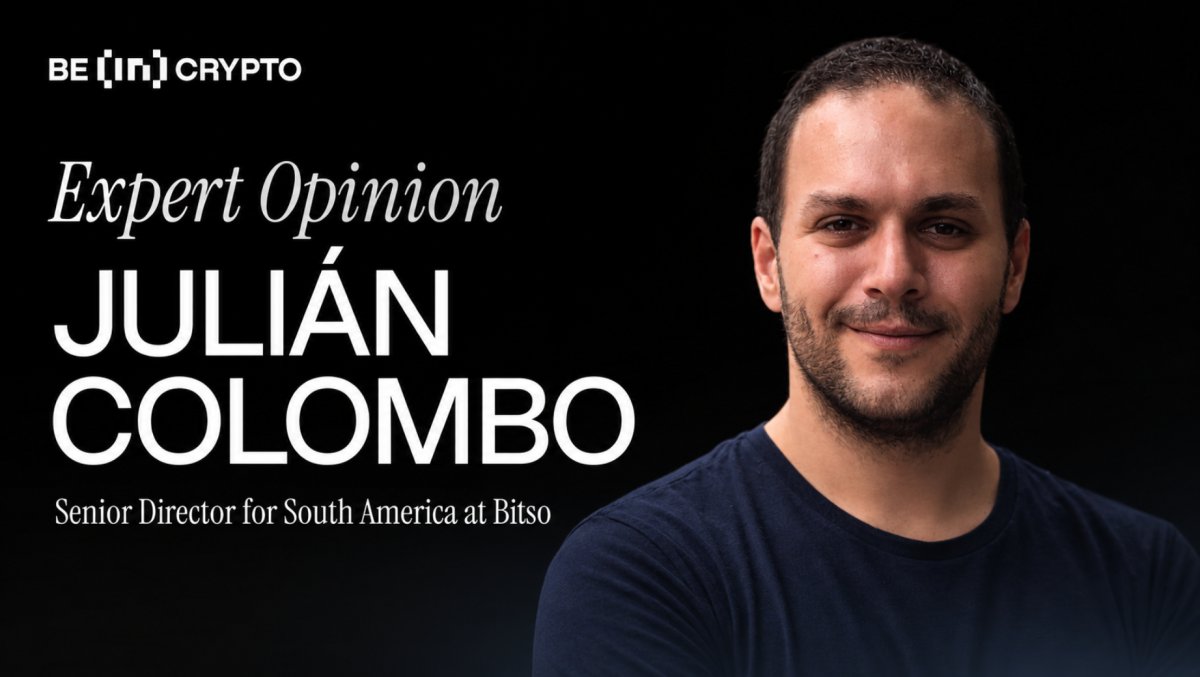
Where Do Latin America's Dollars Actually Live?

Where Do Latin America's Dollars Actually Live?

Washington’s stablecoin debate is about characteristics: who can issue one, what has to back it, and how it gets audited. The Federal Reserve, the US central bank, and the OCC, the regulator that supervises the country’s national banks, cannot simply accept that a token is worth one dollar; they have to control who is allowed to make that promise. 

Because a dollar-pegged token is, in a real sense, a representation of the country’s own currency.

Latin America is regulating something structurally different: access to a currency none of its governments control. For a saver in Buenos Aires, Bogota, or Mexico City, whether the token behind their savings is USDC, USDT, or whatever wins that fight barely matters, as long as it holds its peg and the custodian is solvent. 

That asymmetry explains a mistake regional regulators keep edging toward: importing Washington’s fight over issuer specs, when the real problem here is different, and harder.

The real question is not which stablecoin wins. It is where the dollars backing it should live.

Offshore Dollars Become a Domestic Policy Problem 

A dollar in a reserve account in New York does the same job, on a user’s screen, as a dollar in a reserve account in Buenos Aires or Sao Paulo. But for a regulator in a region where hard currency has been the state’s scarcest resource for decades, those two dollars are not equivalent. One is available to the local financial system under stress. The other is not. 

Argentina remains the world’s most dollarized crypto market by share of volume, but the pattern is regional: in Brazil, institutional stablecoin volume jumped from 5% of local crypto flows in 2024 to 84% in 2025, and Mexico’s Senate is now debating a bill to regulate peso-pegged stablecoins. 

A rising share of household and corporate dollars sitting in instruments reserved entirely offshore will, sooner or later, look like a policy problem worth solving, not a market outcome to shrug at.

Should Latin America Force Some of Those Dollars Back Home?

This has a preview. In July, Kenya’s Treasury proposed requiring stablecoin issuers to hold at least 30 percent of customer funds in banks domiciled in the country. No Latin American regulator has proposed anything like it yet, but the logic behind Kenya’s rule, chronic dollar scarcity meeting a financial system trying to claw back some claim on flows it can no longer prevent, is arguably more acute in Argentina or Venezuela than in Kenya. I would be surprised if nobody in the region’s finance ministries is already sketching something similar.

I do not think this is an easy call. None of the region’s frameworks so far, not Argentina’s PSAV regime, not Brazil’s rules in force since February, not the bill in Mexico’s Senate, have tried to solve this yet, and one of their underappreciated virtues is that they have not. 

My read: mandating local reserves would fragment liquidity that today lives almost entirely in USDT and USDC, strip domestically-backed instruments of the convertibility that makes them useful for remittances, and likely push demand toward unregulated rails instead of compliant ones. That defeats the point of the rule.

The alternative worth building toward is coexistence: locally-reserved and offshore-reserved dollar instruments operating under supervision, moving freely between each other, letting users decide where their dollars live. 

Whether the region gets there, or defaults to Kenya’s blunter instrument once dollarization is impossible to ignore, will decide how much of Latin America’s dollar savings stays inside a supervised system, and how much goes looking for the door.

Source: BeInCrypto

17-09-2026
Cryptocurrencies / Cryptocurrency News

Cryptocurrency News

Latam Digital Assets Conf to Bring Financial Institutions to Buenos AiresLatam Digital Assets Conf to Bring Financial Institutions to Buenos AiresOCC Says It’s ‘Open for Business’ as Crypto Firms Line Up for Bank ChartersOCC Says It’s ‘Open for Business’ as Crypto Firms Line Up for Bank ChartersCircle (CRCL) Wins Final OCC Approval for National Trust BankCircle (CRCL) Wins Final OCC Approval for National Trust BankSnap unveiled the SPECS augmented reality glassesSnap unveiled the SPECS augmented reality glasses

Random quote about money

"Деньги — как навоз: если их не разбрасывать, от них будет мало толку."

Фрэнсис Бэкон

Interesting posts in other sections of the blog
Information

Users of Guests are not allowed to comment this publication.

Latest articles

all articles →
Jim Cramer Ranks Winning and Losing Stock Sectors During Fed Rate HikesCryptocurrency NewsJim Cramer Ranks Winning and Losing Stock Sectors During Fed Rate HikesJim Cramer breaks down which stock sectors won and lost through the Fed's last hiking cycle, with lessons for today.18-09-2026Binance's EU Entry Personally Blocked by ECB President. What Did She Know?Cryptocurrency NewsBinance's EU Entry Personally Blocked by ECB President. What Did She Know?ECB President Christine Lagarde reportedly pushed Greece to reject Binance's EU crypto license bid, WSJ reports.18-09-2026iCapital Raises 10-Year Yield Target: What Happens to Stocks at 5.3%?Cryptocurrency NewsiCapital Raises 10-Year Yield Target: What Happens to Stocks at 5.3%?iCapital's Dan Suzuki raised his 10-year Treasury yield forecast to 5.3%, saying oil, not the Fed, will drive the move.18-09-2026Palantir CEO Alex Karp Says Anthropic Wants AI Nationalization to Simply Dodge LawsuitsCryptocurrency NewsPalantir CEO Alex Karp Says Anthropic Wants AI Nationalization to Simply Dodge LawsuitsPalantir CEO Alex Karp says AI labs like Anthropic are pushing nationalization to dodge liability, not for safety.18-09-2026Binance-backed AVA Token is Up Nearly 100% Today. Here's WhyCryptocurrency NewsBinance-backed AVA Token is Up Nearly 100% Today. Here's WhyThe AVA token nearly doubled intraday after Bithumb's new Korean won market, before easing back as leverage unwound.18-09-2026Dan Hillery: Digital Credit Could Rival BTC’s $1.5 Trillion Market CapCryptocurrency NewsDan Hillery: Digital Credit Could Rival BTC’s $1.5 Trillion Market CapBitcoin Magazine Dan Hillery: Digital Credit Could Rival BTC’s $1.5 Trillion Market Cap Two years ago, Bitcoin credit barely existed. Today, UTXO’s Dan Hillery18-09-2026Why Banks Suddenly Want Stablecoins, and Why It May Matter for YouCryptocurrency NewsWhy Banks Suddenly Want Stablecoins, and Why It May Matter for YouFor most of their first decade, stablecoins lived inside crypto, sitting on exchanges as dry powder between trades. Supply rose from $27 billion at the end of18-09-2026Polymarket Hires Coinbase's Failed Social-Coin ArchitectCryptocurrency NewsPolymarket Hires Coinbase's Failed Social-Coin ArchitectPolymarket hired Zora founder Jacob Horne to rebuild its onchain product as Kalshi powers Coinbase's US prediction markets.18-09-2026Polymarket Hires Coinbase's Failed Social-Coin ArchitectCryptocurrency NewsPolymarket Hires Coinbase's Failed Social-Coin ArchitectPolymarket hired Zora founder Jacob Horne to rebuild its onchain product as Kalshi powers Coinbase's US prediction markets.18-09-2026
Sign inMasterInvest
RUENUK