Key points
- Gate introduced PoSEC to report asset storage structure and cold-storage coverage alongside reserve verification.
- Gate reported 104.58% cold-storage coverage in a snapshot taken November 4, 2026, with 88.26% of total assets in cold storage and 11.74% in hot wallets.
- An independent audit firm is reviewing asset authenticity, control, valuation and calculations; Gate says it will publish the report when complete.
Gate’s PoSEC framework adds storage and risk coverage to reserve disclosure
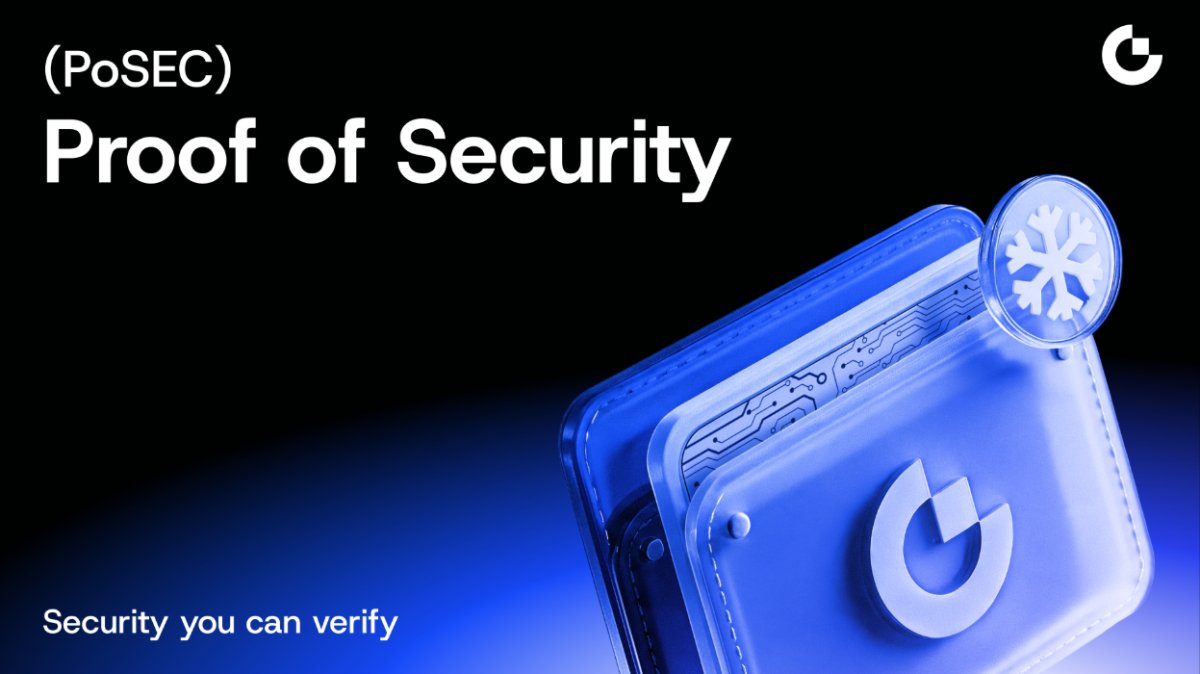
Gate has introduced Proof of Security, or PoSEC, a framework designed to disclose how platform assets are stored and how that storage relates to potential losses. The launch extends the company’s public security reporting beyond the reserve adequacy that Proof of Reserves is intended to address. Gate describes PoSEC as a way to make storage structure and risk coverage more visible to users, rather than as a replacement for reserve verification.
The central distinction in Gate’s explanation is that Proof of Reserves focuses primarily on whether asset reserves are adequate, while PoSEC adds information about where assets are held. Gate says it will publicly disclose the distribution between cold storage and hot wallets. That breakdown is meant to help users assess an additional part of custody arrangements: the share of assets held in each category and the stated capacity of cold storage to cover user assets.
PoSEC’s key metric is the cold-storage coverage ratio, which measures the extent to which qualifying cold storage covers total user assets. Gate says a ratio of at least 100% means cold storage alone would be sufficient to cover all user assets if all assets held in hot wallets were lost, under the applicable calculation methodology. The condition matters: the figure is a defined coverage measure, not a guarantee against every kind of loss.
A new measure alongside Proof of Reserves
Gate presents PoR and PoSEC as complementary checks with different purposes. One addresses reserve adequacy; the other is intended to disclose storage security and coverage capacity under an extreme scenario. Taken together, the two forms of reporting could give users more information about both the overall backing of assets and their storage distribution. The announcement does not say that PoSEC replaces other security controls or eliminates risks associated with custody.
The first reported PoSEC snapshot is dated 00:00 UTC on November 4, 2026. Gate gives a cold-storage coverage ratio of 104.58% and says cold-storage assets represented 88.26% of total assets, while hot-wallet assets represented 11.74%. These figures describe the platform’s reported asset distribution at that point in time; they should not be read as a continuously updated view of balances or as a forecast of future coverage.
Gate defines qualifying cold-storage assets to include digital assets held offline and traditional assets under independent custody. The company says eligible holdings must not be used directly for routine deposits and withdrawals, must be held offline or under independent custody, require multi-party authorization for transfers, and be independently verifiable. These stated criteria clarify what Gate includes in its cold-storage measure, although the published announcement does not provide individual asset-level figures.
November snapshot reports cold-storage coverage above 100%
The reported coverage figure is not yet described as independently verified. Gate says an external audit firm is reviewing the current data, including asset authenticity and control, valuation and calculation methodologies, and the coverage-ratio calculations. The scope is relevant because the percentage depends not only on balances but also on how qualifying assets are identified and valued. Until that review is complete, the announced result remains subject to the verification process Gate outlined.
Gate says it will publish the audit report on its official website once the review is complete. That report could provide users with further detail on the checks supporting the snapshot and the calculation behind the coverage ratio. The announcement does not give a completion date, name the audit firm, or reproduce the full methodology. Gate directs readers to its Proof of Security page for the methodology and current figures, but the audit outcome remains a pending development.
The company places PoSEC within a longer effort to disclose reserves. Gate says it was among the first platforms to introduce an open-source Proof of Reserves mechanism and a Merkle Tree-based asset verification solution in 2020, and later incorporated zk-SNARKs into its reserve-verification framework. These are the milestones stated in the announcement; the new framework broadens the disclosure focus from reserve checks to the storage and coverage information Gate says it will report.
Independent review and Gate’s existing security measures
For comparison, Gate reports that total reserves stood at approximately $8.688 billion on October 18, 2026, with an overall reserve ratio of 118.49%. Those reserve figures come from a date earlier than the November 4 PoSEC snapshot, so they are not a simultaneous set of measurements. The difference in dates and metrics is important: the reserve ratio and cold-storage coverage ratio describe distinct aspects of asset security and cannot be treated as interchangeable measures.
Gate also lists hot- and cold-wallet segregation, multi-signature technology, Multi-Party Computation, dynamic risk monitoring, and zero-trust access control among its security mechanisms. The announcement presents these as layers spanning reserves, storage management, and risk protection. PoSEC’s role in that account is to add public information about storage and coverage; the source does not provide operational performance results for these controls or quantify how much risk each one mitigates.
The practical value of the new framework will depend on the detail and verification users can examine over time. Gate says it intends to develop PoSEC standards and verification mechanisms and work with other industry participants, but offers no timetable or additional partners. The immediate points to watch are the independent audit report, the disclosed methodology, and subsequent figures. Until those appear, the November snapshot is a dated company-reported measure rather than a completed independent assessment.
Source: BeInCrypto