Key points
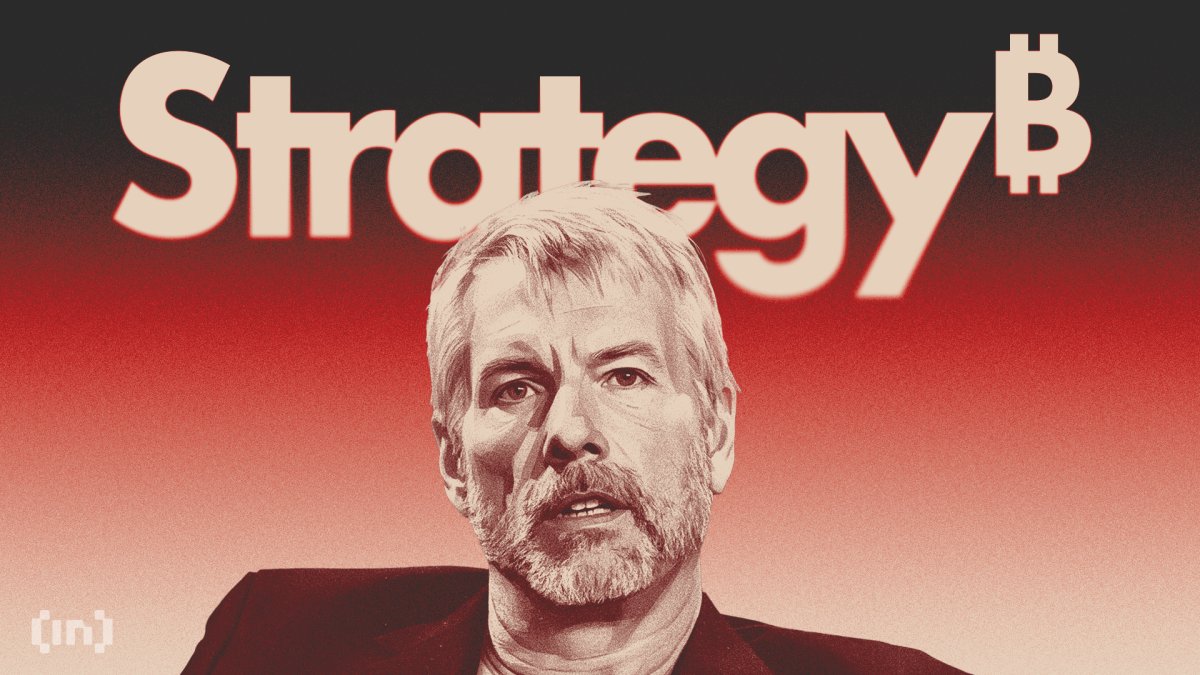
- Strategy CEO Phong Le described the company’s ambition to become the Bitcoin bank of the world.
- Bitcoin’s blockchain was reported at 780 GB in 2026, still small enough for a 1TB drive.
- Debate over chain growth and node requirements reflects competing views on access and decentralization.
Strategy’s financial ambition for Bitcoin
At the Money20/20 fintech conference, Strategy CEO Phong Le discussed Bitcoin as digital capital and described the company’s vision of becoming the Bitcoin bank of the world. His comments place the firm’s strategy at the intersection of conventional finance and decentralized networks. The pitch is not simply about holding Bitcoin: Le also addressed products and the convergence of traditional and decentralized finance.
Le characterized Strategy’s development as a move from enterprise software into a company holding 845,000 BTC. The figure, presented as part of his account of the firm’s evolution, shows the scale of its Bitcoin position. His conference discussion also included STRC preferred stock, tying the company’s proposed role in Bitcoin finance to a specific capital-market product rather than to network infrastructure alone.
Michael Saylor amplified the ambition on November 6, saying that the world needs a Bitcoin bank and that Strategy is building one. The idea had appeared earlier: in September, Saylor urged banks to hold Bitcoin and lend against it. Together, those remarks frame Strategy’s effort as part of a broader argument for bringing Bitcoin into established financial activity, although they do not establish what services the proposed bank would ultimately provide.
The blockchain still fits on ordinary storage
The financial pitch arrived alongside a separate measure of Bitcoin’s technical footprint. An on-chain researcher listed the blockchain at 0.3 GB in 2011, 3.6 GB in 2012, and 13.5 GB in 2013, before it passed 100 GB in 2017. The series continued upward, reaching 445 GB in 2022 and 635 GB in 2024. These figures describe accumulated chain data, not the size of a bank’s Bitcoin holdings.
The same researcher put the blockchain at 720 GB in 2025 and 780 GB in 2026. On that estimate, a 1TB drive still has enough capacity to store the full chain, allowing an individual to run a full node. A full node is central to Bitcoin’s self-verification model: the operator can check network data directly rather than relying entirely on a financial intermediary to confirm it.
That storage comparison is significant because the researcher connected it to the idea of being one’s own bank. If ordinary users can keep a full copy of Bitcoin’s history and operate a node, access to verification is not limited to institutions. But the reported 780 GB figure is a snapshot, not a guarantee that a 1TB drive will remain sufficient indefinitely; the chain has grown over time, and future requirements remain an open question.
Node growth renews a longstanding dispute
The rate of growth is itself disputed. Bitcoin Knots developer Luke Dashjr replied that 16 GB per year was the cap for now. The researcher challenged that figure, saying growth between July and September 2026 implied roughly 85 GB a year. The researcher also argued that even the older 1 MB block limit allowed about 52 GB of annual growth, so 16 GB per year was not a meaningful cap.
The disagreement sits within a wider debate about how much data users should need to store to run a node. Dashjr has long advocated smaller blocks so home users can continue operating nodes. The competing positions are not just about drive capacity: they concern the balance between accommodating more data and keeping independent verification practical for people running their own equipment.
Past examples in the source illustrate how that debate plays out among users. In September, Dashjr told a supporter of his fork to get a real computer after the supporter’s Raspberry Pi needed to resynchronize. Another user suggested deleting all blockchain history from before 2020. Earlier in the year, the same dispute prompted Knots supporters to claim the network was under attack; the report presents this as a claim, not a confirmed event.
Two models of Bitcoin access
Strategy’s proposed bank is being built on the financial side, where the company has promoted Bitcoin holdings and discussed STRC. The source describes STRC as a preferred stock with a 12% dividend and says it rebounded from its June low. It provides no additional detail on the rebound’s size or on the terms investors would face, so the reported figure should not be mistaken for a complete account of the product.
The contrast is between institutional access and direct participation, not necessarily between mutually exclusive systems. Strategy’s stated ambition is to create a prominent financial role around Bitcoin, while a full node lets users independently check the network. The blockchain-size figures show that independent operation remains possible on a 1TB drive at present, but they do not answer how easily users will maintain that access as data accumulates.
Important details remain unresolved. Le outlined a vision, but the supplied account does not specify the eventual services, operating model, or timetable for a Bitcoin bank. On the technical side, the researcher and Dashjr differ on the chain’s growth ceiling, and the figures do not settle what hardware future nodes will require. For now, Strategy’s financial project and the node debate represent distinct questions about who can access Bitcoin and how.
Source: BeInCrypto