How to Spot a Crypto Investment Scam: A Step-by-Step Guide
How to Spot a Crypto Investment Scam: A Step-by-Step Guide
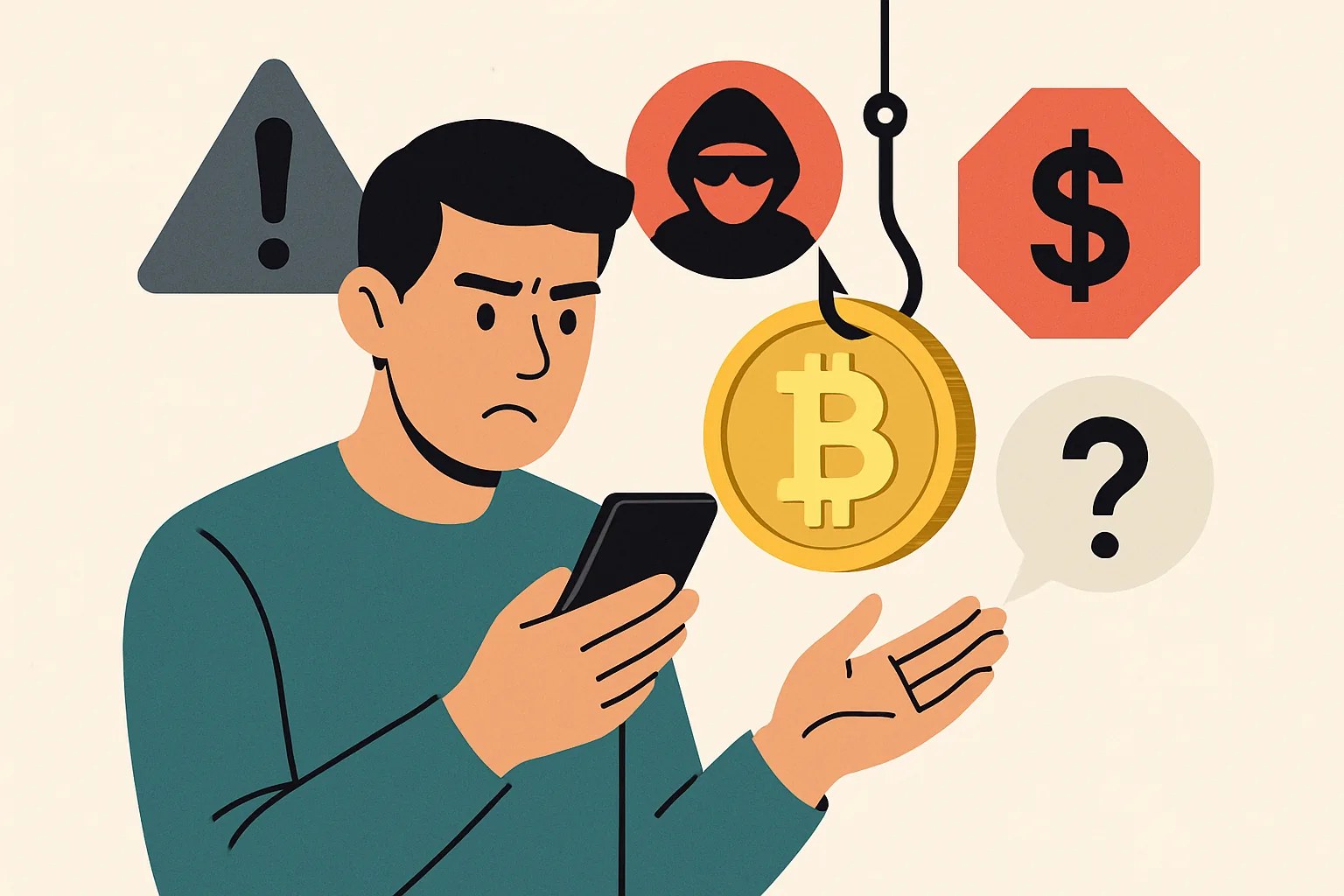
Crypto can be exciting, and that is part of the problem. The same speed, openness, and global reach that make digital assets appealing also make them easy to abuse. A polished website, a persuasive founder on social media, and a few carefully timed announcements can create the illusion of credibility long before anyone has checked what is actually behind the project.
That is why spotting a crypto investment scam is less about having perfect technical knowledge and more about learning a few disciplined habits. You do not need to be a blockchain engineer to ask the right questions. You need to slow down, verify basic facts, and treat extraordinary promises with the caution they deserve.
What a Crypto Investment Scam Looks Like
A crypto investment scam is any scheme that uses digital assets, token sales, wallet transfers, or blockchain branding to trick people into sending money or revealing access to their funds. Some scams are crude and obvious. Others are polished enough to pass a quick glance. The common thread is the same: the project’s real purpose is not to build value, but to extract money from investors.
The most common formats include fake token launches, fraudulent presales, impersonation of legitimate companies, and “investment platforms” that promise passive income for depositing crypto. Some scams rely on social engineering rather than code. A stranger sends a friendly message, builds trust, then introduces a “can’t miss” opportunity. Others dress themselves up as the next major protocol, with a whitepaper full of buzzwords and a roadmap that sounds ambitious but remains vague.
Watch especially for promises that sound too neat. Guaranteed profits, “risk-free” returns, or claims that a token will “100x soon” are not signs of insider access; they are usually signs of marketing pressure. Real projects talk about product development, uncertainty, and market risk. Scams talk about urgency, exclusivity, and easy money.
Crypto Scam Warning Signs to Watch For
The best crypto scam warning signs are often visible before any money changes hands. You just have to know where to look.
- Guaranteed returns. No legitimate investment can promise steady profit with no downside.
- Pressure tactics. “Act now,” “limited spots,” and “last chance” are classic ways to stop you from thinking.
- Fake urgency. A project that constantly pushes countdown timers or sudden bonus windows may be using panic as a sales tool.
- Anonymous or unverifiable teams. If no one can explain who is running the project, that is a serious concern.
- Unrealistic token claims. Promises of explosive growth without a working product or real demand should raise eyebrows.
- Poor or copied websites. Broken grammar, recycled templates, and stock images can indicate a rushed or dishonest setup.
- Missing documentation. If the whitepaper is thin, evasive, or full of hype, the project may be hiding a lack of substance.
- Fake social proof. Suspicious follower counts, repetitive comments, and coordinated praise often mean the popularity is manufactured.
One warning sign rarely proves a scam on its own. But several signs appearing together tell a much clearer story. A new token with no code, no identifiable team, and a website that looks copied from another project deserves a very careful pause.
It also helps to notice the emotional pattern behind the pitch. Scam projects often try to create one of two feelings: fear of missing out, or fear of being left behind. Both are designed to override judgment. If an opportunity seems to demand instant action, step away for a day and review it again with a cooler head.
Step 1: Check the Project’s Basics
Before you look at charts, influencers, or community hype, start with the basics. A legitimate project should have a clear identity. That includes a consistent project name, a real website, a whitepaper or documentation page, and a simple explanation of what the token or platform is supposed to do.
Begin with the name. Search for the project as written and compare what you find across the website, social channels, and blockchain listings. Scam projects sometimes use names that closely resemble reputable brands, changing only one letter or adding an extra word. That small difference matters.
Then inspect the website. Does it explain the product in plain language, or does it lean on vague phrases like “revolutionizing the future of finance”? A real project usually tells you what problem it solves, who it is for, and how users interact with it. A fake one may spend more time praising itself than explaining anything concrete.
The whitepaper should do more than sound impressive. It should outline the project’s goals, the token’s utility, the distribution model, and the risks. If the document is filled with grand language but thin on mechanics, that is not a good sign. And if it looks copied from another project, the concern is obvious. You do not need a plagiarism detector to notice when the same paragraph appears on multiple sites.
Finally, ask whether the project appears to have a real product or only marketing claims. Some teams build slowly and still deserve attention. But a project that speaks mainly about partnerships, price potential, and future dominance while offering little evidence of development may be selling a story rather than a service.
Step 2: How to Verify a Crypto Project
Learning how to verify a crypto project means moving beyond the presentation and checking whether the claims hold up. This is where careful research pays off.
Start with the team. Look for names, biographies, and previous work. Do the founders have a traceable history in crypto, software, finance, or a related field? Are their profiles consistent across the website, LinkedIn, interviews, and conference appearances? Real professionals leave a trail. Fabricated identities tend to be shallow, inconsistent, or strangely polished without substance.
Company registration is another useful checkpoint. If the project says it is incorporated, there should be a registration record in the relevant jurisdiction. That does not guarantee quality, but it does add a layer of accountability. If the business claims to exist but no legal entity can be found, you should ask why.
Next, check the smart contract details if the token is already live. Does the project publish the contract address on its official site and verified channels? Can you inspect it on a block explorer? Are ownership controls disclosed? Are there functions that allow a single party to mint, freeze, or drain liquidity under certain conditions? You do not need to read every line of code, but you should not blindly trust a token with hidden mechanics.
Code activity matters too. If the project claims to be building a serious platform, there should usually be some visible technical work, such as public repositories, commits, or development updates. A dead repository or one that was created only recently to support a marketing launch is worth noting. The same is true for sudden bursts of activity that appear only when a token sale begins.
Community presence can help, but it must be judged carefully. Genuine communities ask practical questions, discuss product updates, and challenge weak points. Artificial communities often repeat slogans, celebrate every announcement, and avoid specifics. If the entire conversation sounds scripted, it may be.
Finally, look for independent third-party references. Has the project been covered by reputable media, audited by known security firms, or discussed by researchers outside its own ecosystem? Independent mention does not prove legitimacy, but a complete absence of outside scrutiny is a caution flag. So is a project that cites only its own social posts as evidence of success.
Step 3: Research the Team, Token, and Tech
Scams often unravel when you examine the details behind the pitch. The team, token, and technology should fit together logically. If one part seems exaggerated, the others may be as well.
Start with the founders and advisors. Are they real people with real histories, or just names on a page? Search for past projects, published work, interviews, and professional profiles. Be skeptical of advisors who appear suddenly for a launch and then disappear from all serious discussion. A name-drop is not a track record.
Tokenomics deserves close attention. How many tokens exist? Who received them? Are large portions reserved for the team, insiders, or vague ecosystem funds? If the distribution is heavily concentrated, early buyers and insiders may control too much of the supply. A project that refuses to explain token allocation clearly is inviting suspicion.
Roadmaps can be helpful, but only if they are realistic. A genuine roadmap is specific, time-bound, and connected to actual deliverables. A fabricated one often stacks ambitious goals in neat phases while offering no explanation of how the team will get there. The language may sound confident, but the plan may be little more than a wish list.
Technical claims should also be checked against reality. If the project promises unique speed, privacy, interoperability, or automation, what exactly is different? Are those features already live, or merely announced? Has anyone outside the project tested them? Are there known limitations? Many scams depend on the assumption that most readers will not press for details.
It is also worth asking whether the project’s story makes sense as a whole. A tiny team claiming to build a complex global infrastructure protocol in record time may be overselling what can realistically be done. Sometimes the problem is not an outright lie, but a collection of half-truths designed to sound more mature than the project really is.
Step 4: Test for Transparency and Trust Signals
Transparency is one of the most reliable trust signals in crypto. Honest teams know that users cannot see everything on a blockchain by intuition alone, so they make important information easy to find.
Look for clear disclosure of risks. A serious project should not pretend that token prices are guaranteed to rise or that all technical issues have been solved. It should acknowledge uncertainty, security risks, market volatility, and the limits of its own product. Overconfidence is not a virtue in this space; precision is.
Audit reports are another useful sign, though they need context. If the project claims to be audited, the report should be accessible, readable, and tied to the correct contract or system. A vague mention of “security partners” without an actual report is weak evidence. Audits are helpful, but they are not magic shields.
Contract addresses should be published clearly and consistently across official channels. The same is true for liquidity information, token supply details, and any vesting or lockup terms that affect investors. If each channel tells a slightly different story, stop and compare them carefully. Inconsistency is often a clue.
Official channels matter too. A legitimate project usually has a coherent presence across its website, social accounts, documentation, and community spaces. The contact links should match. Announcements should be mirrored properly. If the Telegram, X account, and website all seem to point to different realities, that is not just untidy; it may be a warning.
Trust signals are strongest when they come from behavior, not branding. A project that answers hard questions, publishes updates, and corrects mistakes openly is generally more credible than one that hides behind polished graphics and vague optimism.
Step 5: Avoid Common Scam Traps
Some scams are not built around the project itself, but around the ways people are lured into interacting with it. These traps can appear even when the main website looks legitimate at first glance.
Fake giveaways are common. A post announces that a well-known founder, exchange, or influencer is giving away tokens if users send a small amount first. That is almost always fraudulent. Real giveaways do not ask you to “verify” by transferring funds to receive more back.
Impersonation accounts are another favorite tactic. Scammers copy the profile image, username style, and tone of real teams or support staff. They may reply to comments or direct message users after a public post. Before clicking anything, confirm that the account is official through the project’s own website and verified channels.
Phishing links deserve constant caution. A link can look almost right while leading to a malicious site designed to steal wallet access or seed phrases. Always check the domain carefully. When in doubt, type the address yourself or use a bookmark you created earlier.
Pump-and-dump schemes can be harder to spot. A token is aggressively promoted, often with coordinated posts and sudden excitement, then early holders sell into the surge. If a project seems more focused on hype cycles than utility, be careful. The loudest room is not always the safest one.
Recovery scams are especially cruel. After someone loses money, a new “specialist” appears claiming to recover funds for a fee or by using a private blockchain contact. These promises are often another layer of fraud. Once a scammer knows you are vulnerable, they may try to extract even more.
What to Do If You Suspect a Scam
If you think a project may be fraudulent, act quickly and calmly. First, stop sending funds. Do not make a “test” transfer or pay a fee to unlock anything. Scams frequently rely on one more payment to keep the illusion alive.
Preserve evidence. Save screenshots, wallet addresses, transaction hashes, emails, chat logs, website pages, and social media posts. If the project disappears later, those records may be essential for reports or investigations.
Then report the project to the relevant platforms or authorities. That may include the exchange, social platform, hosting provider, or financial regulator, depending on the situation. If you used a centralized service, alert its support team as soon as possible.
Review your wallet and security settings too. If you connected a wallet to a suspicious site, revoke unnecessary permissions, move assets to a safer wallet if appropriate, and change credentials linked to your accounts. If a seed phrase or private key was exposed, assume the wallet is compromised and treat the situation seriously.
Finally, be cautious about public posts promising help. When people are desperate, scammers often return disguised as rescuers. Slow down, verify identities, and avoid sharing sensitive details with strangers.
Spotting a crypto investment scam is not about cynicism. It is about structure, patience, and a willingness to verify what others want you to accept on trust. If a project cannot survive a few basic checks, it probably should not survive with your money. And if something still feels off after you have done the work, listen to that feeling. In crypto, a careful pause is often the cheapest form of protection.
HYIP Articles



Random quote about money
"С возрастом желание заработать переходит в желание сэкономить."
Interesting posts in other sections of the blog











 ↑
↑
* to search the proxy database, just enter a country name, e.g. Russia, USA, Thailand