How to Store Cryptocurrency Safely
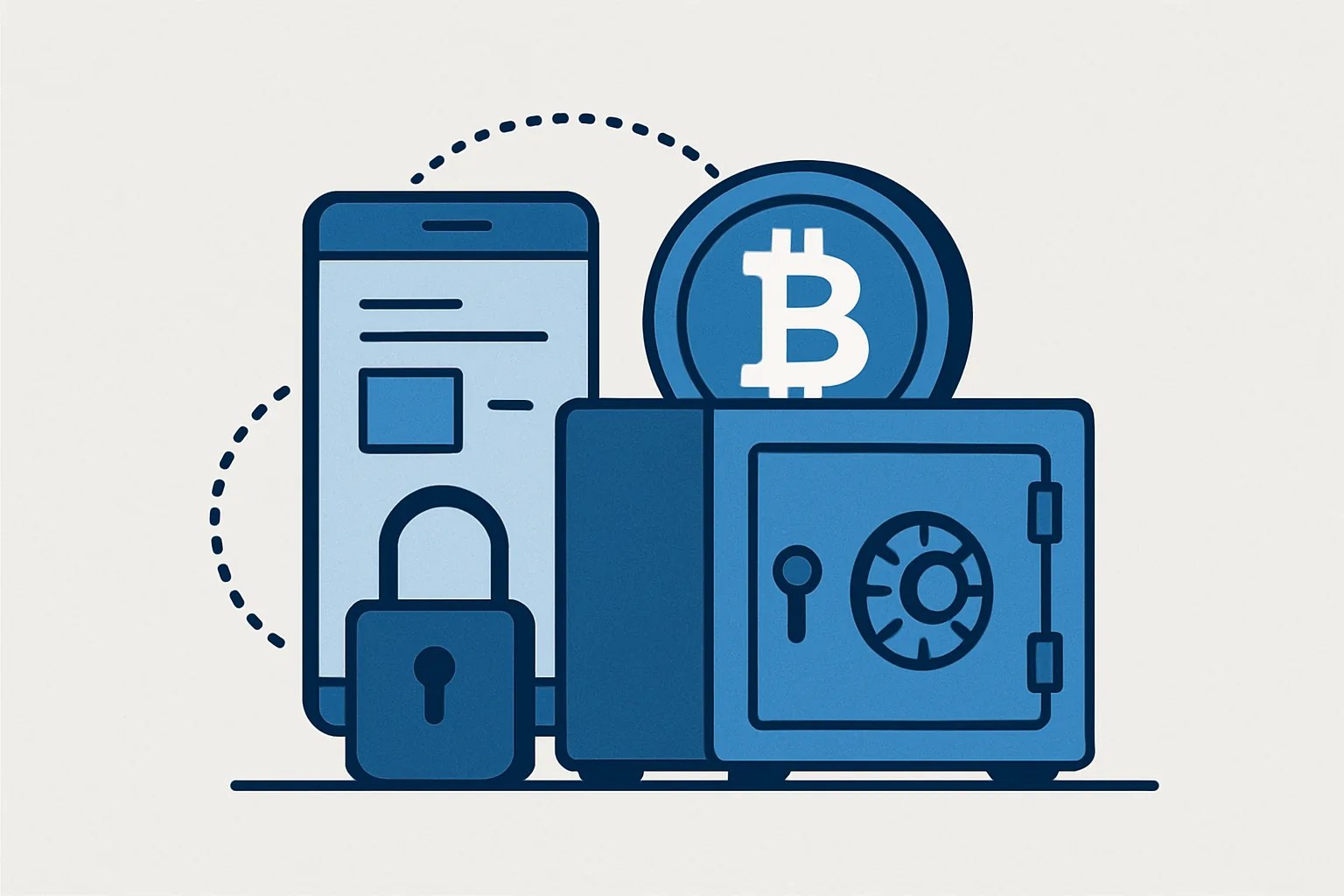
How “safe storage” really works for cryptocurrency
When people talk about storing cryptocurrency safely, they usually mean more than just “don’t lose your coins.” In practice, safe storage is about protecting two things at once: access to your funds and the private keys that control them. If someone gets the keys, they can move the crypto. If you lose the keys, the result can be just as final. There is no password reset desk in the background.
The risks are familiar, but they show up in different forms. Theft is the obvious one. Phishing is the sneaky one: a fake site, a cloned app, a message that looks routine until it is not. Then there is device loss, which sounds mundane until your phone, laptop, or hardware wallet disappears. Exchange failure is another problem altogether; if you leave everything on a platform, you are trusting that platform to stay solvent, secure, and available. And finally, there is plain user error. Sending funds to the wrong address, approving the wrong transaction, backing up a recovery phrase badly, or clicking through warnings too quickly can all cause damage.
The goal, then, is not to eliminate every risk. That is impossible. The goal is to reduce the number of points where a mistake or attack can take your funds, and to make sure you can still recover access if something goes wrong, which is why understanding how to store cryptocurrency safely matters so much.
Choose the right storage method: hot wallet vs cold wallet
The first decision is usually between a hot wallet and a cold wallet. The difference is simple in theory and important in practice. A hot wallet stays connected to the internet, which makes it convenient for sending, receiving, and trading. A cold wallet keeps private keys offline, which makes it much harder for an attacker to reach them.
Neither option is “best” in every situation. A hot wallet is useful for everyday activity: paying, swapping, interacting with apps, or moving funds quickly. A cold wallet makes more sense for holdings you do not plan to touch often, especially if you are thinking in months or years rather than hours. Many experienced users combine both. They keep a smaller amount in a hot wallet for spending and store the bulk offline.
In other words, the choice is really about trade-offs. Convenience is valuable, but so is a lower attack surface. If you are actively trading and need speed, a hot wallet may be the right tool. If you are holding a long-term position, cold storage deserves serious attention. The right answer depends on how often you use the funds and how much risk you are willing to accept.
If you are still choosing platforms or wallet ecosystems for specific coins, it can help to compare your options before you buy. Guides such as Где купить Ethereum ETH or Где лучше купить Bitcoin BTC often give a clearer picture of which services people actually use, and that can shape how you store the assets afterward.
Set up a secure crypto wallet
Once you have chosen a wallet, the setup process matters more than many people expect. Start by downloading the wallet only from the official source. That sounds basic, but cloned apps and fake websites are a common way people lose funds. A search result, an ad, or a random app store listing can all be misleading. When in doubt, check the provider’s official domain carefully and type it yourself rather than following a link from a message.
During setup, the wallet will usually provide a recovery phrase, sometimes called a seed phrase. This is the master key to your wallet. Anyone who has it can usually restore your wallet on another device and take control of the funds. That means the phrase should never be stored in a screenshot, a cloud note, or an email draft. Write it down offline. Keep it private. Treat it like a key to a safe, not like a login you can change later.
It is also worth pausing before clicking “agree” on any permission prompts. Some fake wallets or cloned interfaces try to rush the user. A legitimate provider should not need strange extra access just to let you create an account. If anything feels off, stop and verify the source first.
Build strong crypto wallet security habits
Good storage is not only about where you keep your crypto. It is also about how you use the device and account around it. Strong wallet security habits make a real difference, especially over time, because most losses happen through a chain of small mistakes rather than one dramatic breach.
Use a strong, unique password for every wallet-related account. Reused passwords are a gift to attackers. If one service is compromised, they often try the same credentials elsewhere. A password manager can help here, as long as it is protected properly itself.
Enable two-factor authentication wherever it is available, especially for email accounts tied to your wallet or exchange login. Email is often the first domino. If someone gets into your inbox, they may reset other accounts or intercept security messages. Authenticator apps are usually better than SMS because phone numbers can be hijacked or SIM-swapped.
Keep your operating system, browser, wallet app, and security software updated. Updates are not just about features. They often close vulnerabilities that attackers can use. The same rule applies to browser extensions: review them regularly and remove anything you no longer need. A cluttered browser is a risky browser.
Phishing checks should become automatic. Before entering a recovery phrase or signing a transaction, look at the URL, the spelling, the domain, and the context. Support teams will not ask for your seed phrase. Ever. If someone says they need it to “verify” or “fix” your wallet, that is a scam. No exception, no special case.
Finally, keep backup information offline. A note on paper stored securely is boring, and boring is good here. Boring survives power cuts, hacked inboxes, and app failures.
Use cold storage for long-term holdings
For larger balances or assets you plan to keep for a while, cold storage is the safer default. The most common version is a hardware wallet: a device that keeps private keys offline and signs transactions without exposing those keys to your computer. That separation is the whole point. Your laptop may be online, but the keys remain out of reach.
Setting up a hardware wallet requires the same discipline you would use with any other critical device. Buy it from the manufacturer or an authorized seller, not from a random marketplace listing where the packaging could have been tampered with. Initialize it yourself. Generate the recovery phrase during setup. Never use a phrase that arrived preprinted, prefilled, or “helpfully” included by someone else.
For long-term storage, also think about physical safety. A hardware wallet can be lost, damaged, or stolen like any other object. That is why the recovery phrase matters so much: it lets you restore access if the device fails. But the recovery phrase itself must be protected against fire, water, prying eyes, and casual discovery. Some people split backups across secure locations. Others use metal backups for durability. The exact method is less important than the principle: the backup should survive the same accidents the device might not.
If you hold several assets and want to understand where particular coins are often acquired before storage decisions are made, a focused guide such as Биржи для покупки Solana SOL can be useful. The same is true for other networks where wallet compatibility and exchange habits matter, including Где лучше покупать Cardano ADA. The better you understand the ecosystem, the easier it is to keep the storage side clean and simple.
Protect hot wallets for everyday transactions
Hot wallets are not bad. They are simply exposed. If you use one for routine transactions, the safest approach is to limit what sits inside it. Keep only the amount you need for near-term activity. Think of it like carrying cash in your pocket rather than leaving your entire paycheck there.
It also helps to separate spending funds from savings. One wallet for everyday use. Another for long-term storage. That way, even if the hot wallet is compromised, the damage is capped. This separation is especially sensible if you interact with decentralized apps, bridge funds between networks, or sign frequent approvals. Those actions carry more exposure than a simple receive-and-hold setup.
Review token approvals and permissions from time to time. Some services ask for more access than you need, and forgotten approvals can become weak points later. If a tool no longer seems trustworthy, revoke access. It is a small task that can prevent a bigger one.
It is also wise to be cautious with browser-based wallet extensions on a work machine or shared computer. If you can, use a dedicated device for crypto activity. At minimum, keep the environment clean, minimal, and regularly updated. The fewer unrelated apps and extensions installed, the easier it is to spot trouble.
Create and test your backup and recovery plan
A backup is only useful if it works when needed. That is why a recovery plan matters just as much as the wallet itself. Start by deciding where your seed phrase or other backup keys will live. The ideal setup is redundant and offline. Redundant means there is more than one copy in more than one secure place. Offline means it is not sitting in a cloud account or a photo library waiting to be breached.
Test your recovery plan before you have a crisis. That does not mean exposing your seed phrase to unnecessary software. It means making sure you understand the restore process, know which device can restore the wallet, and can verify that your notes are legible and complete. Some users test with a small wallet or a fresh device so they know the process works without risking their main holdings.
Document the basics in plain language for yourself. Which wallet is this? Where is the backup stored? What happens if the device is lost? Who, if anyone, should be able to find the backup in an emergency? The answers should be clear enough that a trusted family member could follow them if necessary, but not so detailed that an outsider can use them.
When a wallet or account offers export options, use them carefully and only if you understand what the file contains. Sensitive data should not be left sitting in downloads folders or unencrypted notes. It sounds obvious after the fact, but many people create a backup and then leave it in the exact place they were trying to protect.
Common mistakes to avoid when storing cryptocurrency
Most crypto losses come from a short list of avoidable errors. The first is sharing a seed phrase. If someone asks for it, they are trying to take control of your wallet. Support staff, moderators, admins, and helpers do not need it. Nobody does.
The second mistake is using an exchange account as storage for long periods. Exchanges are useful for buying, selling, and moving assets, but they are not the same as self-custody. If the platform freezes withdrawals, gets hacked, or changes policy, your access may be delayed or reduced. If you are weighing where to hold assets after purchase, it is sensible to read practical guidance like Как выбрать криптовалютную биржу and think about the storage plan at the same time.
Another common mistake is reusing passwords or protecting every account with the same email and weak recovery setup. If one point fails, the rest can follow. Ignoring updates is another problem, as is installing random browser extensions or apps without checking who built them. And perhaps the most underestimated risk of all: trusting unsolicited support messages. If a message arrives out of the blue, promising help, urgency, or a special fix, slow down. Verify independently before taking action.
There is also a more subtle mistake: making security so complicated that you no longer understand it yourself. A system you cannot explain is a system you may not be able to recover. Simplicity helps. Clear labels, offline backups, separate wallets, and routine checks are easier to maintain than a fragile maze of half-remembered steps.
A practical way to think about crypto storage
The safest crypto storage setup is usually not the most extreme one. It is the one you can actually maintain. For many people, that means a hardware wallet or other cold storage for long-term holdings, a small hot wallet for spending, strong passwords, two-factor authentication, and a backup plan that has been tested in advance.
That approach will not make you invulnerable. Nothing will. But it does remove the most common failure points and makes the remaining ones more manageable. In crypto, the difference between careful and careless is often the difference between a minor inconvenience and a permanent loss.
So treat storage as part of the investment process, not an afterthought. Buy carefully, set up slowly, verify everything, and keep your recovery plan as serious as the assets it protects. If you are looking for how to store cryptocurrency safely, a few disciplined habits can do more for your long-term safety than any flashy promise of “maximum security” ever will.
HYIP Articles


Random quote about money
"За деньги нельзя купить одного - бедности. Тут нужно обратиться к помощи фондовой биржи."
Interesting posts in other sections of the blog










 ↑
↑
* to search the proxy database, just enter a country name, e.g. Russia, USA, Thailand