Crypto Exchange Security Checklist
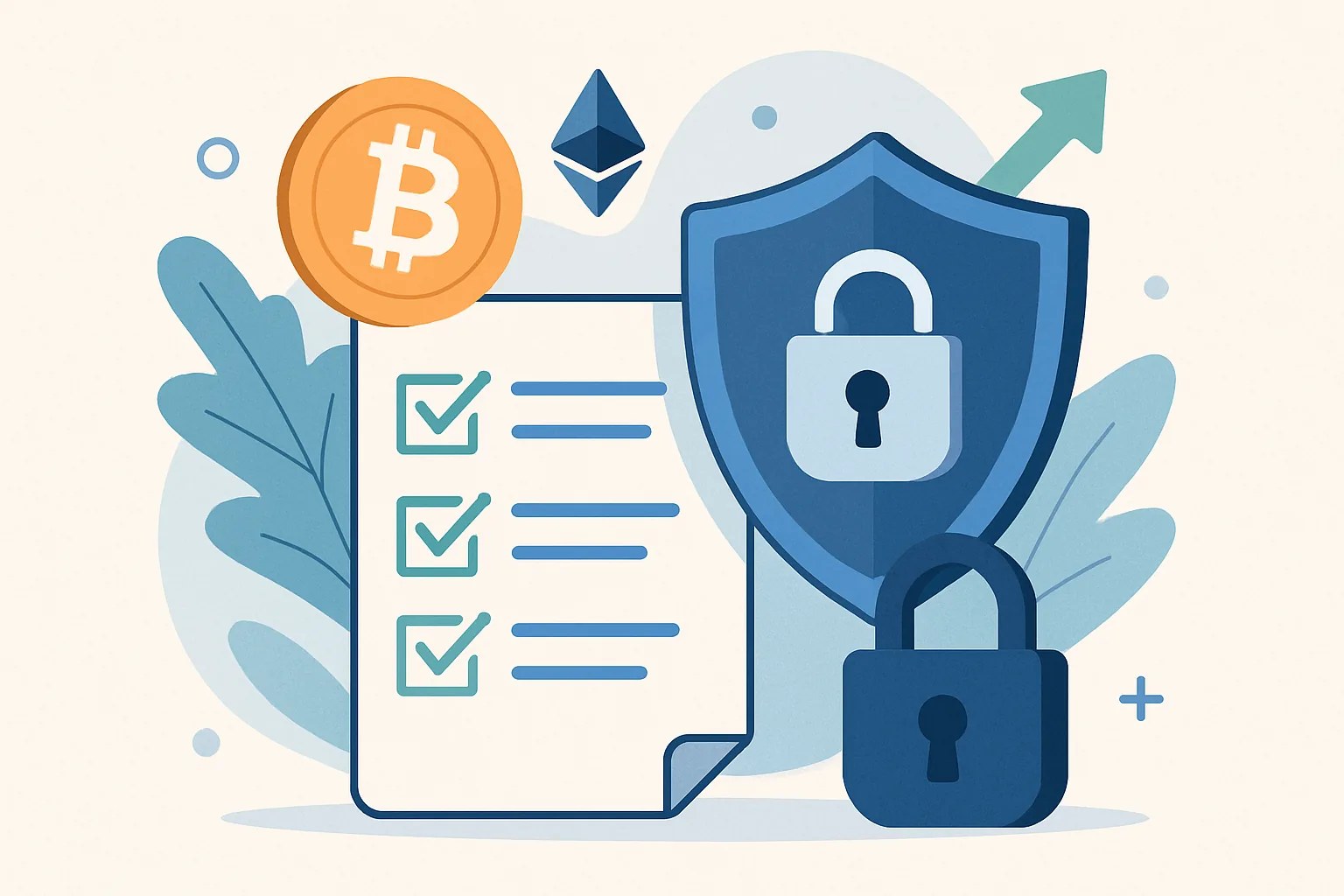
What “Secure Crypto Exchange” Means
A secure crypto exchange is not simply a platform that says it takes security seriously. It is a place where the technical controls, operating policies, and day-to-day user protections line up well enough to reduce avoidable loss. That sounds obvious, but in crypto it is easy to be distracted by low fees, flashy apps, or a long list of tradable coins. Security should come first, because once funds move to a platform, you are relying on someone else’s infrastructure, procedures, and incident response.
This checklist is meant to help you evaluate risk in practical terms. It is not about finding a “perfect” exchange; no platform is flawless. The real question is whether an exchange gives you enough control, visibility, and protection to fit your trading style. A long-term holder, a frequent trader, and someone using bots will all care about different details, but they all need the same foundation: strong account protection, credible custody practices, clear withdrawal controls, and transparent support when something goes wrong.
If you are still comparing platforms, it can help to separate the decision into two layers: first, choose a reputable exchange with the right markets and basic trust signals; then inspect the security features in detail. If you need a broader buying guide for major assets, it may also be useful to compare coin-specific pages such as Где лучше купить Bitcoin Bitcoin BTC. Сайты где можно купить… or Где купить Ethereum Ethereum ETH. Где купить Ethereum ETH… before you open an account.
How to Choose a Crypto Exchange
Start with the basics: reputation, jurisdiction, supported assets, fees, liquidity, and customer support. These may sound like trading considerations rather than security considerations, but in practice they overlap. A platform with poor liquidity can create bad execution and encourage rushed behavior. An exchange with weak support can turn a small account issue into a long, expensive headache. A confusing legal structure can make it hard to understand who is responsible for what if something goes wrong.
Reputation is more than marketing. Look for how long the exchange has been operating, how it handled past outages, whether it communicates clearly during incidents, and whether it has a pattern of unresolved user complaints. None of this proves absolute safety, but it does tell you whether the company tends to behave like a disciplined financial service or like a startup improvising under pressure.
Jurisdiction matters because it affects user protections, dispute handling, and regulatory obligations. You do not need to become a lawyer, but you should know where the company is registered and which entity actually holds your account relationship. If the platform’s legal structure is vague, that is a problem. If you cannot easily find its terms, compliance policies, or risk disclosures, that is another problem.
Supported assets matter because a broad asset list can be a strength or a distraction. More listings can be useful, but a thin, poorly maintained market can be a source of operational risk. If you are researching altcoins, it may help to compare where a specific asset is commonly available, such as Биржи для покупки Solana Solana SOL за криптовалюту. Где… or Где можно купить XRP XRP XRP. Сайты где купить XRP сегодня…. The goal is not to chase every listing; it is to understand whether the exchange is actually a good home for the coins you plan to hold or trade.
Fees and liquidity are also part of the security picture. High friction can push people toward bad habits, such as leaving larger balances on exchange to avoid repeated transfers, or using obscure platforms because they look cheaper on paper. Meanwhile, a thin order book can increase slippage and encourage overtrading. A secure exchange should be competitive, but also usable enough that you do not end up working around it in unsafe ways.
Customer support deserves more attention than it usually gets. Before depositing, check whether the exchange provides more than a generic help form. Look for live chat, ticket tracking, status pages, and clear support escalation channels. If you cannot imagine getting a timely answer during a withdrawal problem, think twice.
Crypto Exchange Safety Features to Look For
The most visible safety features are often the most important. Two-factor authentication, withdrawal whitelisting, login alerts, and session management should not be optional extras. They are the basic tools that reduce the chance of account takeover and unauthorized transfers.
- Two-factor authentication: Prefer authenticator-app 2FA over SMS when possible, because phone numbers can be attacked through SIM-swap tactics.
- Withdrawal whitelisting: This allows funds to be sent only to pre-approved addresses, which can stop a thief from cashing out quickly.
- Device and session management: You should be able to see active logins and revoke unknown sessions immediately.
- Login alerts: Email or push notifications for new logins can give you early warning of suspicious access.
- Anti-phishing tools: Some exchanges let you set a custom code or phrase that appears in official emails, helping you spot fake messages.
- Forced re-authentication: Sensitive actions such as changing withdrawal settings should require a fresh password or 2FA check.
Cold storage and multi-signature controls are less visible to the user, but they matter just as much. Cold storage means assets are kept offline or away from internet-facing systems for the majority of funds. Multi-signature controls mean moving funds may require approval from multiple keys or officers, which reduces the risk of one compromised credential causing a large loss. The exact implementation can vary, and the exchange may not disclose every detail, but it should at least explain the general model.
Another useful feature is an account-level anti-phishing code. This is a small thing that can save a lot of trouble: if an email from the exchange does not contain your custom code, you know to treat it with suspicion. It is not perfect, but it is cheap protection and easy to use.
For active traders, API security deserves special attention. If you use bots or portfolio tools, the exchange should allow permission scoping so an API key cannot withdraw funds unless absolutely necessary. Ideally, API keys should be limited to the minimum required rights, with IP restrictions where possible. If the platform offers only broad, all-powerful keys, that is a warning sign.
Crypto Exchange Security Checklist: Account Setup
Security starts the moment you create the account. Do not wait until you have funds on the platform. Set the account up as if it were a sensitive financial service, because that is exactly what it is.
- Enable 2FA immediately.
- Use a unique, long password that you do not reuse anywhere else.
- Secure the email account tied to the exchange with its own strong password and 2FA.
- Review recovery options so an attacker cannot easily reset access through weak backup methods.
- Save backup codes offline in a safe place.
- If you trade with bots, lock down API permissions and remove unused keys.
The email account is often the weakest link. If someone gains access to your inbox, they may be able to reset your exchange password, intercept withdrawal confirmations, or impersonate support messages. This is why exchange security and email security should be treated as one system, not two separate problems.
Recovery options are worth checking carefully. Some platforms still rely on older mechanisms that can become liabilities if your device is lost or your number changes. Before you deposit, ask yourself whether you would still be able to regain access if you changed phones, lost your authenticator, or traveled unexpectedly.
Crypto Exchange Security Checklist: Platform and Custody Review
After your account is secured, look at the platform itself. This is where many users become passive. They see a polished interface and assume the custody model is sound. That is risky. A good exchange should explain, in plain language, how it stores user assets, how it segregates accounts, and what happens if the company itself faces a technical or legal issue.
One thing to look for is a proof of reserves statement. If the exchange publishes one, read carefully. The important question is not just whether the exchange says it holds assets, but whether the methodology is credible, recent, and understandable. Proof of reserves can be helpful, but it is not a magic shield. It should be one signal among several.
Also examine the exchange’s custody description. Does it say how much is held in cold storage? Does it explain who controls the keys, whether there are third-party custodians, and how hot wallet balances are limited? If the platform says most user funds are held offline, that is generally encouraging, but the phrase needs context. You want to know how this is managed in practice, not just in a marketing summary.
Incident handling matters as well. A mature exchange should explain how it responds when there is a breach, wallet compromise, or infrastructure outage. Does it freeze suspicious withdrawals? Does it have a reimbursement policy? Does it communicate quickly and clearly, or does it go silent? Read the policies before you need them. It is much easier than trying to interpret them during a stressful event.
For traders comparing venues across different assets, security and custody policies can be as important as the market itself. That is especially true when you are moving funds in and out of exchanges frequently. If your strategy depends on fast access, choose a platform whose operating discipline you trust, not just one with the broadest list of coins.
Crypto Exchange Security Checklist: Withdrawals, Sessions, and Monitoring
Withdrawals are where security either proves itself or falls apart. A platform can look solid right up until someone tries to move funds. That is why withdrawal controls are essential.
First, check whether the exchange supports address whitelisting. If it does, enable it. Better yet, see whether there is a delay before a new address becomes active. That waiting period can stop an attacker from adding their own address and draining funds immediately. It is a small inconvenience that pays off.
Next, review your session history and login controls. The exchange should show recent logins, device names, IP regions, or at least approximate location data. You need a way to spot unfamiliar sessions quickly. If the platform hides this information, or if revoking access is awkward, that reduces your ability to respond to trouble.
Alert settings should also be tested before you deposit significant funds. Make sure the exchange sends notifications for withdrawals, password changes, 2FA changes, new API keys, and login attempts from unfamiliar devices. If possible, turn on every alert that is relevant. Too many notifications may be annoying, but silence is worse.
Anti-phishing codes should be checked not only during setup, but also during routine use. One common mistake is to configure a code and then forget to verify it when messages arrive. Train yourself to look for it every time. It becomes a habit, and habits are what make security sustainable.
Before depositing money, force yourself to imagine the worst reasonable scenario: your password is exposed, your email is compromised, or a browser session is hijacked. Would you still be able to stop a transfer? Would you notice it in time? Would you be able to react before funds left the platform? If the answer is no, keep the balance small and rethink the setup.
Red Flags Before You Deposit
Some warning signs are obvious, but people often ignore them because the platform offers a tempting promotion or a coin they want to trade. That is how trouble starts.
- Unclear ownership or a confusing company structure.
- Missing security documentation or vague help pages.
- No visible support channels, or support that seems unreachable.
- Weak login protection, especially if 2FA is optional or poorly implemented.
- Vague custody claims with no explanation of how user assets are protected.
- No obvious withdrawal controls, session history, or alert options.
- History of unresolved incidents without a credible explanation.
Be especially cautious if the exchange appears to rely on hype rather than substance. A clean homepage is not a security policy. Neither is a social media following. If the platform is reluctant to explain how it stores funds, how it handles incidents, or who is responsible for compliance, treat that reluctance as a signal.
Another subtle red flag is overpromising. If an exchange suggests that it is “unhackable” or guarantees complete safety, that is a bad sign. Real security teams speak in terms of controls, layers, and limits. They know risk cannot be eliminated. It can only be managed.
This is also where some users make the mistake of choosing an exchange based on a single convenience factor, such as low fees or a familiar app interface. Convenience matters, but it should never overpower basic trust. If you are still narrowing options and want a broader framework for platform selection, you may find the guide on Как выбрать криптобиржу для маржинальной торговли useful as a companion read, especially if margin trading is part of your plan.
Final Pre-Deposit Checklist
Before you send funds to any exchange, run a simple go/no-go review. Keep it practical. This is not about building a perfect security posture in one afternoon; it is about avoiding the easiest mistakes.
- Have you enabled 2FA and secured the linked email account?
- Can you see and revoke active sessions?
- Does the exchange offer withdrawal whitelisting and alert notifications?
- Are custody practices and incident handling explained clearly enough to trust?
- Do the support channels look reachable if you need them?
- Have you tested the platform with a small deposit first?
- Will you keep only the amount needed on the exchange, with the rest in your own wallet?
If the answer to any of those questions is no, pause. Security is easier to build before money is at risk than after. Start small, confirm the platform behaves as expected, and revisit your settings regularly. New devices, new passwords, new trading habits, and new market conditions all create opportunities for mistakes. A secure exchange helps, but disciplined account management is what makes the system hold together.
In the end, choosing a safe platform is less about chasing the biggest brand and more about choosing the exchange that gives you the clearest controls and the least ambiguity. That is the real crypto exchange security checklist: a sober read of the platform, a careful account setup, and a habit of checking the details before every deposit.
HYIP Articles



Random quote about money
"Нельзя бороться против денег без денег."
Interesting posts in other sections of the blog






 ↑
↑
* to search the proxy database, just enter a country name, e.g. Russia, USA, Thailand