How to Check a Crypto Exchange’s Withdrawal Limits Before Depositing
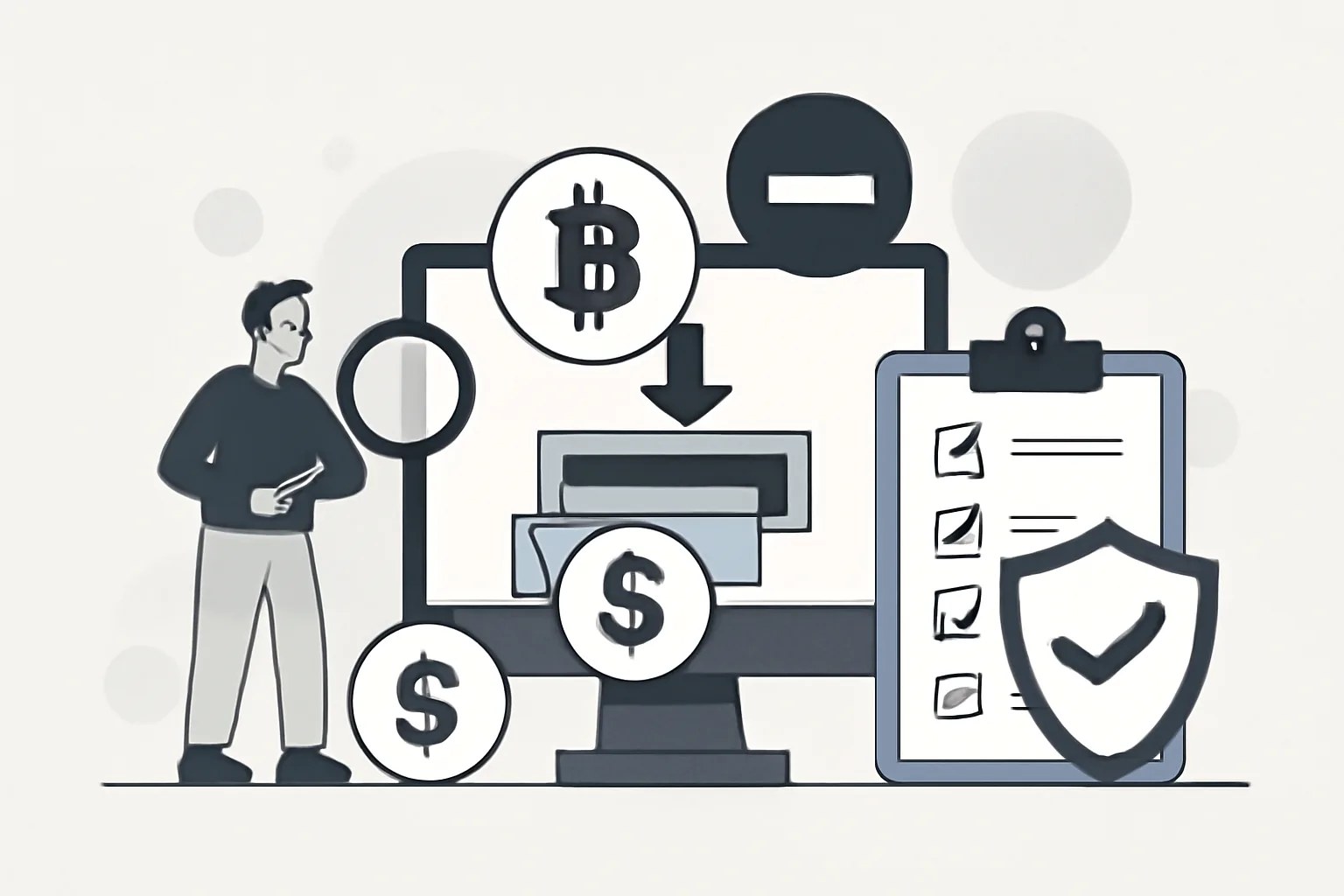
How to Check a Crypto Exchange’s Withdrawal Limits Before Depositing
One of the easiest mistakes to make in crypto is also one of the most annoying: depositing funds first and reading the rules later. An exchange may welcome your deposit without much fuss, but the withdrawal side can be a different story. Limits, verification rules, network restrictions, and temporary holds can all affect how and when you move your assets out.
That is why checking withdrawal limits before you deposit matters, and why knowing how to check a crypto exchange's withdrawal limits before depositing should be part of your routine. It is not just a technical detail. It can decide whether you can send coins to your own wallet, rebalance between exchanges, or exit a position quickly when market conditions change. Deposit rules and withdrawal rules also do not always match. A platform may let you put money in easily but require extra verification before you can take anything out.
If you are comparing exchanges, this issue is just as important as fees. In fact, it is often more important. A slightly cheaper trade is not much comfort if your funds are stuck behind a limit you did not notice. If you want a broader picture of costs as well, see How to Compare Cryptocurrency Exchange Fees.
Step-by-step: how to check a crypto exchange’s withdrawal limits
The safest approach is to check limits before you open an account or at least before you fund it. If you are wondering how to check a crypto exchange's withdrawal limits before depositing, here is a practical way to do that.
Start with the exchange’s official help pages.
Look for sections titled “limits,” “withdrawals,” “fees,” “verification,” or “account levels.” Many exchanges place the most important rules in a support article rather than on the trading screen.
Find the asset-specific withdrawal page.
Some limits are not exchange-wide. They may apply only to a particular coin or token. The rules for BTC, ETH, or stablecoins can differ, and the network you choose may also matter. If you are checking a major asset like Bitcoin, the exchange’s coin page or wallet screen is often the best place to spot the practical limit. For example, if you are comparing places to buy or move Bitcoin, you can also review Где лучше купить Bitcoin Bitcoin BTC. Сайты где можно купить….
Open the verification or account status page.
Withdrawal rights often depend on whether your account is unverified, basic, intermediate, or fully verified. Some exchanges show the expected limit only after you log in, while others publish a tier table in the help center.
Check the deposit and withdrawal sections separately.
Do not assume that a deposit cap tells you anything useful about withdrawals. They are separate rules. A platform may allow large deposits but restrict outbound transfers until identity checks are complete.
Record the exact details.
Write down the withdrawal limit, any minimum withdrawal amount, the relevant network, fee, and whether the limit resets daily, weekly, or monthly. This matters because “limit” by itself can be vague. A limit per transaction is not the same as a daily cap.
Look for exceptions and warnings.
Pay attention to mentions of new accounts, bonus funds, region restrictions, or temporary security reviews. Those can override the standard policy, sometimes without much fanfare.
The simplest habit is also the best one: do not rely on memory. Read the current policy, note the numbers, and check again before sending a large amount. Exchange rules change more often than people expect.
How to find deposit and withdrawal limits on an exchange
If you are hunting for the right page, think like the exchange’s support team. Where would they hide the answer? Usually in one of a few familiar spots.
Fee pages and limit tables
Many exchanges put withdrawal thresholds near fee information. This is partly for convenience, since users who check costs usually also need to see minimums and caps. The table may include trading fees, deposit fees, withdrawal fees, and per-asset withdrawal limits all in one place.
Help center and support articles
The help center is often where the fine print lives. Search for phrases such as “withdrawal limit,” “account limits,” “crypto transfer limits,” or the name of the asset you plan to use. If the exchange has separate pages for spot trading, margin, staking, or earned products, check each one. Funds in one section may not behave like funds in another.
Account verification pages
Verification pages are especially useful because they show what each account tier can do. You may see a basic tier with low transfer rights and higher tiers with larger limits, faster processing, or access to specific networks. In some cases, the page will say what documents are required to unlock a higher tier.
Asset withdrawal screens in the app or web platform
When you initiate a withdrawal, the exchange often displays the most practical details right there: minimum amount, available network, estimated fee, and current daily allowance. That screen can be the most accurate view of the rule as it applies to your account at that moment.
Still, it is better to check earlier. Once you are already ready to move funds, it is a poor time to discover that a token can only be withdrawn on a specific network or that your account level is not sufficient.
If you are exploring other coins, the same process applies. For example, before moving Ethereum, check both the asset and the network details carefully. You can also compare exchange options for Где купить Ethereum Ethereum ETH. Где купить Ethereum ETH….
Understanding crypto exchange withdrawal limits
“Withdrawal limit” is not a single rule. It is a family of rules, and the exchange may use more than one at the same time.
| Limit type | What it means |
| Per transaction | The maximum you can withdraw in one transfer. |
| Daily | The total you can withdraw over a 24-hour period. |
| Monthly | The total allowed over a calendar month or rolling 30-day window. |
| Account-tier-based | The limit changes depending on your verification level or account status. |
| Asset-specific | Different coins or tokens may have different withdrawal rules. |
Two users on the same exchange can face different limits if their account status differs. A new user might have a modest cap, while a fully verified user has far more room. Limits may also vary by region or payment route.
Another useful distinction is between available balance and withdrawable balance. You may see funds in your account but still be unable to send all of them out. Some of the balance might be locked in a pending trade, staking product, cashback program, or temporary security hold.
That is why the phrase “I have enough funds” is not the same as “I can withdraw enough funds.” Exchanges care about more than the headline balance.
What can change your limit
Several factors can affect the limit you actually receive. Some are obvious; others are easy to miss.
KYC level
Know-your-customer checks are one of the most common limit drivers. Basic accounts often have lower caps. More complete identity checks may unlock higher withdrawal limits, additional networks, or faster processing.
Country or region
Rules can change depending on where you live. An exchange may offer one set of limits in one jurisdiction and a different set elsewhere because of local regulation, licensing, or compliance policies.
Payment method and funding source
If you are buying crypto with a card, bank transfer, or third-party payment service, the deposit method can affect how long funds remain restricted. Some exchanges delay withdrawals after certain payment types as an anti-fraud measure.
Network selection
The network you choose matters as much as the asset itself. A token may be withdrawable on one chain but not another, or the fee and minimum amount may differ between networks. Always check that your receiving wallet supports the same chain.
Asset type
Large-cap coins, stablecoins, and lesser-known tokens can each follow different rules. Some assets have particularly tight minimums, while others may have network constraints that make small withdrawals impractical.
Account age and activity
New accounts can face temporary restrictions. So can accounts flagged for unusual behavior, incomplete verification, or security review. Even if the policy looks generous on paper, your personal account status may reduce what you can do right now.
Questions to ask before you deposit
A few careful questions can save a lot of frustration later. Before funding an exchange, ask yourself the following.
What is the minimum withdrawal amount for the asset I plan to use?
Which networks are available, and does my own wallet support them?
Are withdrawal fees fixed, dynamic, or network-based?
Is there a waiting period after deposit before withdrawals are allowed?
Are any funds likely to be locked because of staking, bonuses, rewards, or open orders?
Does the exchange allow withdrawals to my preferred wallet type, exchange, or custody solution?
What happens if I exceed a daily cap or trigger an automated security check?
These are simple questions, but they cut straight to the real issue: can you move your funds when you need to? That is especially important if you use multiple platforms or move between assets often. If you trade altcoins, it helps to apply the same discipline to each coin page, whether you are checking Биржи для покупки Solana Solana SOL за криптовалюту. Где… or another asset entirely.
What to do if the limits are too low
Sometimes the answer is simple: the exchange is not the right fit for your needs. But before you give up, there are a few sensible options.
Complete verification
If the platform offers higher limits after KYC, that may be the fastest route. Make sure the documentation is accurate and matches the exchange’s requirements exactly.
Wait for approval or cooling-off periods
New accounts sometimes face temporary restrictions after deposits or profile changes. If the exchange states a waiting period, you may simply need to let time pass before the withdrawal window opens.
Use a different network or asset
In some cases, a token can be withdrawn more efficiently on a different supported network. Just be careful: changing networks affects fees and compatibility, so confirm the receiving wallet first.
Choose another exchange
If the limits are fundamentally too tight for your workflow, compare platforms before depositing again. This is where a bit of pre-planning pays off. A better limit structure can save you from repeated verification requests or awkward partial withdrawals.
Users who frequently move funds may also want to compare practical access conditions across assets and platforms. For example, if you are considering a wallet or exchange route for XRP, check the relevant page in advance rather than assuming the process will be the same as for another coin. A useful starting point is Где можно купить XRP XRP XRP. Сайты где купить XRP сегодня….
Quick pre-deposit checklist
Before you add funds to any crypto exchange, run through this short list. It takes minutes and can prevent very expensive misunderstandings later.
I checked the withdrawal limit for my exact asset.
I confirmed whether the limit is daily, monthly, per-transaction, or tier-based.
I looked up the minimum withdrawal amount and the fee.
I verified which network the exchange uses and whether my wallet supports it.
I reviewed my account verification status and any pending restrictions.
I checked for deposit locks, holds, or bonus conditions that could affect access to my funds.
I know what to do if the current limit is too low.
If you remember only one thing, make it this: deposits are easy to make, but withdrawals are what determine whether you truly control your funds. Read the rules first, not after the fact. A few minutes of checking can spare you from delays, surprise fees, and the unpleasant discovery that your money is there, but not yet movable.
That final habit is worth repeating. Before you deposit anywhere, confirm the exchange’s withdrawal limits, the exact asset rules, and any exceptions that could affect access to your balance. In crypto, the fine print is not decorative. It is part of the trade.
HYIP Articles



Random quote about money
"Уберечь свои деньги стоит больших трудов, чем добыть их."
Interesting posts in other sections of the blog










 ↑
↑
* to search the proxy database, just enter a country name, e.g. Russia, USA, Thailand