

What users actually need to provide during exchange compliance checks
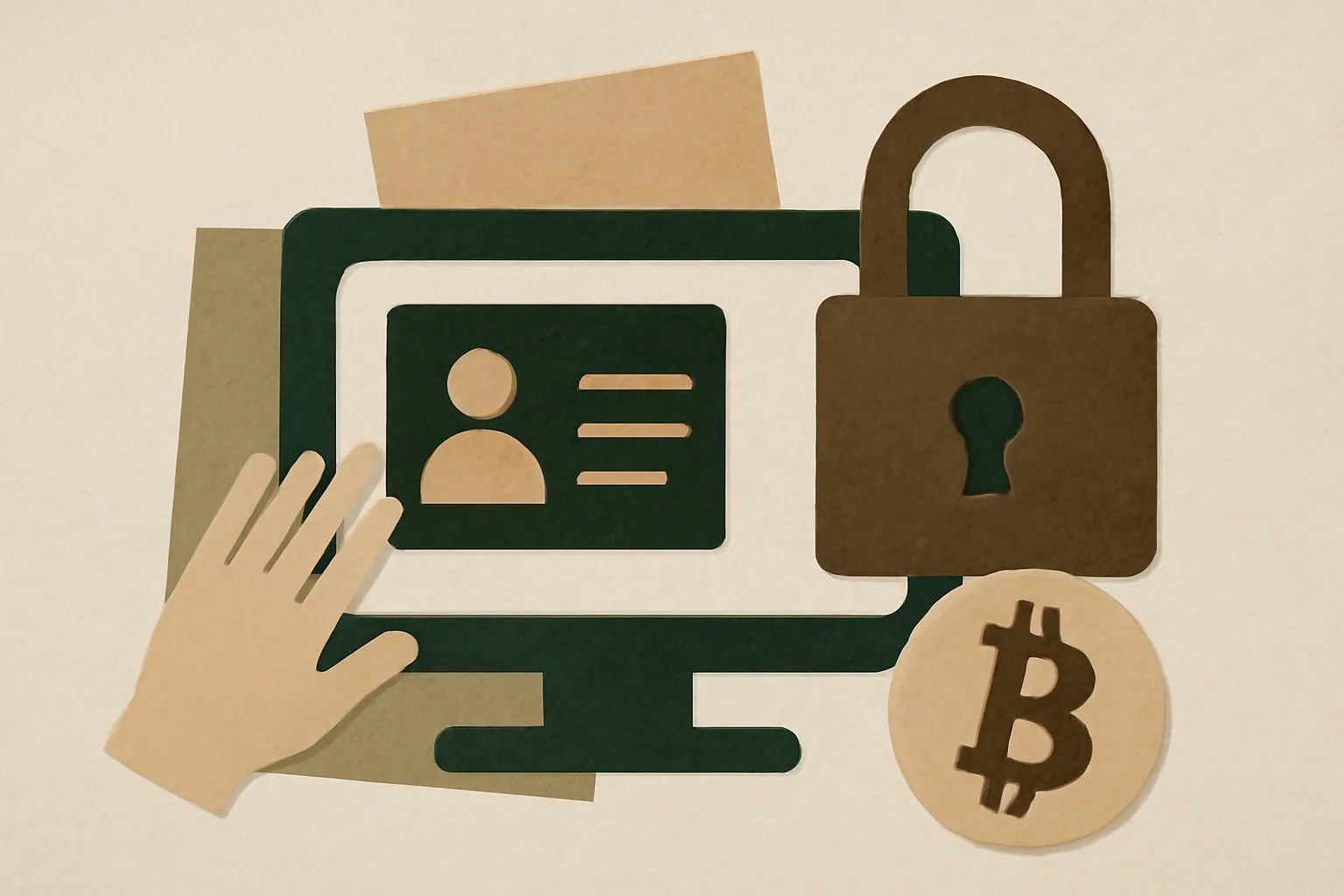
Most users meet crypto exchange KYC and AML compliance requirements for users with the same first packet of information: full legal name, date of birth, residential address, and a government ID. A passport usually works. So does a national ID card in many markets.
That first step can feel routine, but the exchange is not only checking that you exist. It is checking that the person on the screen matches the person on the document, and that the account details do not look borrowed, altered, or copied from someone else. One typo can matter.
After that, the request can widen. A platform may ask for proof of address, such as a recent utility bill or bank statement, and the document usually has to show your name and address in a readable way. If the address on your ID and the address on your bill disagree, expect another round.
Some users are also asked for source-of-funds information. That sounds dramatic, but the exchange often just wants a clean explanation: salary, savings, sale of an asset, business income, or a transfer from another wallet or exchange. Not every account gets that question. But when it appears, it is usually tied to a specific risk flag.
Enhanced due diligence can go a step further. In those cases, the exchange may ask for tax records, employment letters, company documents, bank statements, or a short explanation of account activity. Keep the answer narrow. A 2-page bank statement often says more than a 20-line story.
When a crypto exchange may request extra information from an existing account
Some users think verification happens once and never again. That is rarely true. A crypto exchange may reopen a review months later if your activity changes, if a regulator asks for a stricter check, or if the account hits a threshold set by the exchange.
Large deposits can trigger a fresh review. So can large withdrawals, especially if the destination wallet is new or the transfer pattern changes sharply from your usual behavior. One unexpected 5-figure transfer can be enough to pause an account for checks, even if the account was approved long ago.
Trading behavior matters too. If a dormant account suddenly starts placing frequent orders, moving between spot and derivatives, or showing a pattern that does not resemble normal retail use, the compliance team may ask for more detail. That does not mean wrongdoing. It means the account moved outside its usual profile.
Account recovery events are another common trigger. If you lose access, change devices, reset security settings, or regain control after a long gap, the exchange may ask you to prove that the same person is back in control. New phone number? New email? Expect questions.
Personal detail changes are also a reason. A legal name update, a new address, a different country of residence, or a change in business ownership can all cause the exchange to request a fresh document set. One small update can reopen the whole file.
How user AML screening differs from basic identity verification
KYC and AML are related, but they are not the same thing. KYC checks usually focus on identity: who you are, where you live, and whether your documents look real. AML screening looks at risk: who you may be connected to, whether your name appears on sanctions lists, and whether your activity fits patterns the exchange is required to monitor.
From the user side, the difference shows up in the questions. KYC asks for your passport. AML screening may never ask you anything at all, because it runs in the background. Your name can be checked against sanctions lists, watchlists, adverse media feeds, and internal risk models before you see the result.
Transaction monitoring is the part many users notice only after a delay. A deposit from a flagged source, or a withdrawal to a wallet the exchange deems high risk, can lead to a hold or a request for context. No one likes that. Still, the exchange often has to decide quickly whether the transaction should continue.
Basic identity verification can pass and AML screening can still fail. That mismatch confuses users. A clear ID does not cancel a sanctions match, and a verified account does not guarantee every transaction will move without review. Two checks. Two different questions.
If you want a broader view of account-level monitoring, see what crypto exchange metrics should i for a related look at how exchanges judge activity patterns.
What users should check before uploading documents
Before uploading anything, check the expiration date. An expired passport is the fastest way to slow a review. The same goes for a utility bill that is too old or a bank statement with no recent date visible.
Name matching deserves more attention than users usually give it. If your exchange account says “Alex J. Brown” and your document says “Alexander Brown,” the system may accept it or it may send it to manual review. Middle names, transliterations, and maiden names cause real delays.
Address matching matters just as much. If the exchange asks for proof of address, the document should show the same residence you entered in the profile. A seasonal rental, a PO box, or a business address may not count. One mismatch can be enough.
File quality is another small detail with big impact. Blurry edges, cropped corners, glare from a phone camera, and edited PDFs often slow the process. Use a clean scan or a straight photo in natural light. No filters. No screenshots of screenshots.
Document type matters, too. Some exchanges want a passport rather than a driver’s license. Some reject mobile phone bills. Some want a PDF bank statement, not a bank app screenshot. The exact rule sits in the upload screen or help page, and that detail saves time.
If your account review looks tied to a recent platform change, check what changed recently in crypto exchange for a related perspective on why exchange checks sometimes tighten without warning.
User rights and limits during a compliance review
While a review is pending, the exchange may place limits on deposits, withdrawals, trading, or card access. Some accounts stay read-only. Others allow logins but block outbound transfers. The exact restriction depends on the risk flag and the exchange policy.
Users often want a timeline. The honest answer is that the exchange may not give one. Compliance reviews can be manual, and manual reviews move at the pace of queue length, not customer frustration. That is annoying, but common.
Communication usually happens through support tickets, in-app messages, or email. Keep every reference number. If the exchange asks for one more file, upload only that file unless told otherwise. A flood of unrelated attachments can slow the review, not speed it up.
There are also disclosure limits. The exchange may refuse to explain a specific internal risk rule or a third-party screening result in full detail. That can sound evasive, but the platform may be bound by fraud controls, legal limits, or investigation rules.
Users still have a practical right to ask for status updates, to request clarification on what document type is missing, and to keep a copy of everything submitted. If a withdrawal is blocked, compare the situation with crypto exchange withdrawal stuck on pending for a closely related case.
How to respond to source-of-funds and source-of-wealth questions
Source-of-funds questions usually ask where the money for a particular deposit came from. Source-of-wealth questions go wider and ask how your overall assets were built. The first can be answered with a transaction trail. The second may need a broader paper trail.
Keep the answer direct. If the funds came from your salary, say so and attach the payslip or bank record they asked for. If the funds came from a property sale, provide the sale contract or closing record if you have it. If the funds came from a business, send company records that show the transfer path.
Do not add unrelated details. A user does not need to explain every investment ever made just because one exchange asked for proof on one transfer. Answer the question asked. Nothing more.
Where possible, build a clear chain. A bank transfer from your account to the exchange is easier to justify if the money arrived there from an employer, a sale, or a previous exchange withdrawal that can be traced. A gap in the chain invites follow-up, so fill it with the cleanest record you can find.
Two documents usually beat ten screenshots. A short explanation plus matching records often moves faster than a long message thread. If the exchange asks for more, respond to the new request only. Do not improvise a new backstory.
For users who want to compare account behavior against broader market activity, how to analyze crypto market trends can help frame why a large transfer may look unusual to a compliance team.
Privacy, data retention, and cross-border data handling
Compliance data is not just stored; it is often shared. An exchange may keep your documents in its own systems and also send them to identity vendors, screening providers, cloud hosts, or specialist review teams. That structure matters because your data may cross more than one border.
Read the privacy notice before uploading. Look for the retention period, the named processors, and the countries where data may be stored or accessed. If the notice says your data can be shared with affiliates or service providers outside your country, that is not a footnote. It is the operating model.
Jurisdiction changes the answer. A platform based in one country may store documents in another and use a third-party reviewer in a fourth. The user sees one interface; the data may move through several legal regimes. That is not a bug. It is ordinary infrastructure.
Retention periods also matter. Some exchanges keep KYC records for years after an account closes, especially where local law requires it. Users should know that deleting the app does not always delete the file. Closed account does not always mean erased record.
If personal data handling is a concern, check the exchange’s privacy policy and any vendor disclosures before you send sensitive records. You can also review crypto exchange privacy policy and personal for a related breakdown of what to look for.
When to escalate a compliance issue or consider another platform
Escalate after the second clear delay. First, contact support with your ticket number and ask what exact document is missing. Then wait for a direct answer. If the reply stays vague, ask for a manual review or a supervisor queue.
If the exchange keeps requesting the same file, or rejects each version without a specific reason, the issue may be process-level rather than user-level. At that point, a complaint channel can help. Some users also file with a local regulator or consumer protection body if the exchange is licensed in their jurisdiction.
Long freezes deserve a hard look. If the account is blocked for weeks, if withdrawals remain restricted without a clear status, or if support stops answering after multiple attempts, consider whether the platform still fits your needs. One platform is not the only platform.
Before moving funds elsewhere, confirm the exit path. An unresolved review can follow the account, and a rushed transfer may create a second problem. Save screenshots, ticket IDs, and any approval messages. Those records can matter later.
If you decide to leave, do it cleanly. Close open orders, export your records, and check whether the new exchange has the same crypto exchange KYC and AML compliance requirements for users, because a different platform can ask for the same documents on day one.