

A trader holding USDT can now move from Bitcoin into gold, oil or a product linked to SpaceX without opening a brokerage account. The balance, interface and trading hours may look familiar. What the trader owns can change with every click.
That difference matters as major centralized exchanges like MEXC expand beyond crypto. The exchange now offers commodities, equity futures, pre-IPO products, and access to US-listed shares. Its strategy reflects a wider race among exchanges and fintech apps to become the place where users trade almost anything.
The market is growing quickly. Tokenized stocks reached a record market value of about $2.3 billion in July, up from $329 million a year earlier.
Kraken says its xStocks products have generated more than $25 billion in cumulative transaction volume. Robinhood has also expanded its stock-token business, while Coinbase is developing its own tokenized equity offering.
The central question is whether exchanges can make traditional markets easier to access without blurring what users are actually buying.
The SpaceX Test
MEXC saw the appetite directly through its SPACEX(PRE) Launchpad. Across two rounds, the exchange says almost 80,000 users submitted close to $200 million in subscriptions.
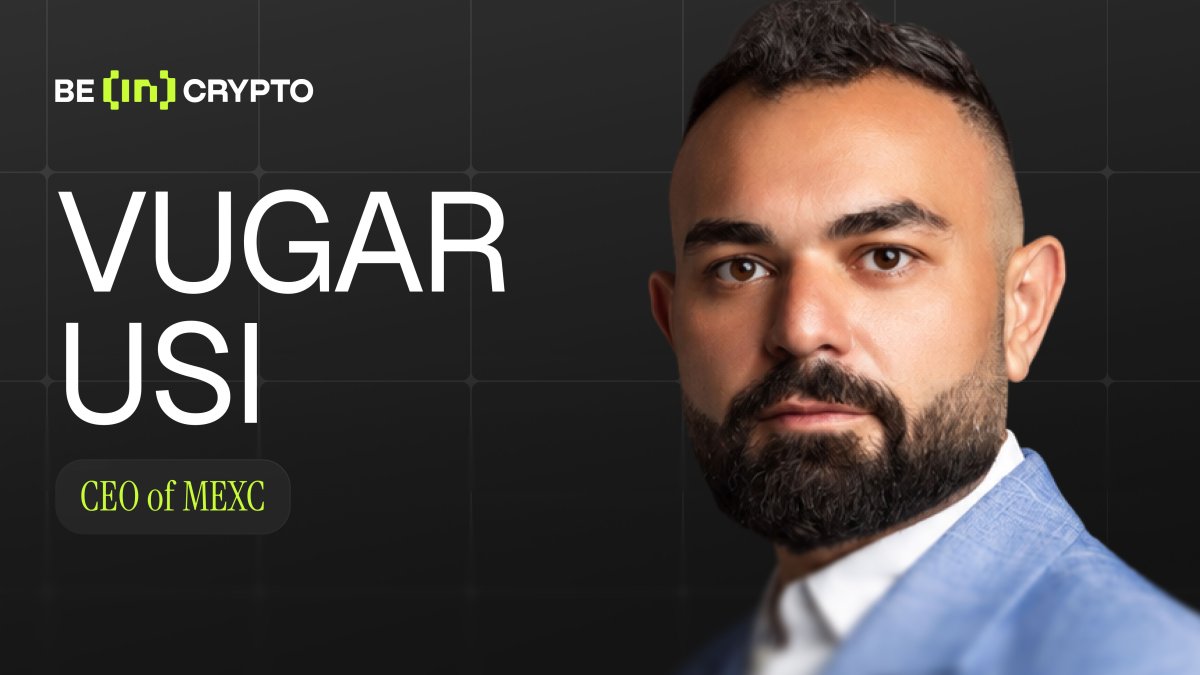
For Vugar Usi, MEXC’s CEO, the response showed that crypto traders are looking beyond digital assets.
“Users do not necessarily want separate platforms for separate asset classes,” Usi told BeInCrypto. “They want one place where they can move between crypto, equities, precious metals and other opportunities with lower friction.”
Yet SPACEX(PRE) also shows why that convenience requires clearer explanations. Despite being traded through a spot-style interface, the product does not represent direct SpaceX ownership.
MEXC describes it as a Mirror Credits product that tracks the company’s value. Holders receive no voting rights, dividends, or direct shareholder claim.
The exchange also offers equity futures, which let users speculate on stock prices with USDT and leverage. Again, traders do not own the underlying shares.
Its RealStocks service has a different structure. Launched in June, it gives eligible users access to US-listed equities through a securities brokerage partner. MEXC says these purchases represent actual shares and include dividends where applicable.
These distinctions can disappear when every product sits inside one app.
One Interface, Different Rights
US regulators have already identified several tokenization models. A token may represent an indirect interest in shares held by a custodian. It may also be a synthetic contract that tracks a stock without carrying any ownership rights.
In a January statement, the US Securities and Exchange Commission warned that third-party tokenized products can expose investors to risks they would not face when holding the underlying security, including the possible failure of the token issuer.
The label “tokenized stock” therefore tells users very little on its own. They need to know who holds the underlying asset, whether the product can be redeemed, and what happens if the issuer or exchange fails. Voting rights, dividends and transfer restrictions also vary.
Usi acknowledged that wider availability raises the platform’s responsibility.
“Wider access does not mean every product should be presented in the same way to every user,” he said. “For more complex products, platforms need clearer risk disclosures, appropriate user terms and educational content that explains how the product works, including potential losses and market-specific risks.”
Trust Becomes Harder to Measure
Moving into equities and commodities also expands an exchange’s compliance burden. Securities rules differ across jurisdictions, so a platform may retain a single interface while offering a different product catalogue in each country.
MEXC appointed Robert MacDonald as chief compliance officer in July. The company says it is expanding its compliance team and adding automated screening, while retaining human review for most fraud decisions.
It has also committed to expanding its Guardian Fund from $100 million to $500 million over two years and has added 1,000 BTC. These figures remain company-reported. A protection fund does not explain when users qualify for compensation or replace independent verification of liabilities.
Usi argued that users should examine regular Proof of Reserves disclosures, external security assessments and how platforms respond to incidents.
“But no single fund, audit or data point is enough,” he said. “Users should look for consistency.”
Crypto exchanges are getting closer to becoming global investment platforms. Demand is already visible. Their harder task is making each product as easy to understand as it is to trade.
Source: BeInCrypto