

Key points
- Cregis hosted a summit on institutional onchain finance infrastructure
- Stablecoins are seen as a solution for cross-border payments
- Compliance and security challenges were key discussion points.
Cregis’ Singapore Summit Highlights Infrastructure Needs for Institutional Onchain Finance
The Institutional Onchain Finance Summit 2026, held on October 6 in Singapore during TOKEN2049 Week, brought together industry leaders to discuss the critical infrastructure required for the next phase of institutional adoption of digital assets. Jointly hosted by Cregis, FOMO Pay, Stable, and Width, the summit focused on various aspects of onchain finance, including stablecoins, compliance, operational security, and the overall architecture necessary for institutional finance. Jason Ma, COO of Cregis, opened the event with a keynote emphasizing the importance of a solid foundation for businesses operating on-chain.
Cregis has developed its infrastructure to cater to the operational needs of businesses utilizing digital assets. This includes Wallet-as-a-Service (WaaS), fund-flow orchestration through Rails, and custody and governance capabilities. The company's products are designed to support a wide range of enterprise digital asset operations, which is crucial as institutional interest in digital assets continues to grow. The summit served as a platform for discussing how these infrastructures can facilitate smoother operations for businesses in the evolving digital landscape.
One of the primary topics of discussion was the role of stablecoins in cross-border payments. A panel moderated by Chiara Munaretto featured industry experts who examined how stablecoins can address common pain points in traditional cross-border transactions, such as high costs, slow settlement times, and lack of transparency. Panelists noted that while stablecoins are not intended to replace local payment systems, they can serve as an additional layer for cross-border transactions, enhancing efficiency and predictability in the process.
Key Themes of the Summit
Andres Kim, Regional Expansion Lead at Tether, highlighted the importance of stablecoins in markets like South Korea, where existing domestic payment infrastructure remains vital. Leandro Noel, COO of Avenia, described stablecoins as a potential “global ledger” that could connect markets without necessitating the reconstruction of financial infrastructure in every jurisdiction. This perspective underscores the growing recognition of stablecoins as a valuable tool for facilitating international trade and commerce.
Brian Mehler, CEO of Stable, further elaborated on the payment infrastructure supporting stablecoin-based transactions in his keynote, “Global Payments, Made Stable.” He emphasized that while stablecoins simplify payment operations, the increasing number of issuers and jurisdictions introduces complexity. As the stablecoin market becomes more fragmented, businesses must navigate a diverse array of assets, networks, and liquidity pools, which can complicate compliance efforts and operational efficiency.
Chye Kit Chioh, CEO of Width, addressed the evolving compliance landscape in his keynote, “The Future of Compliance 2027 and Beyond.” He emphasized the need for automation and real-time risk management as stablecoins become more integrated into payment flows. The panelists agreed that cross-border transactions often involve multiple regulatory jurisdictions, necessitating closer collaboration among banks, payment providers, stablecoin companies, and regulators to ensure compliance and mitigate risks.
Stablecoins and Cross-Border Payments
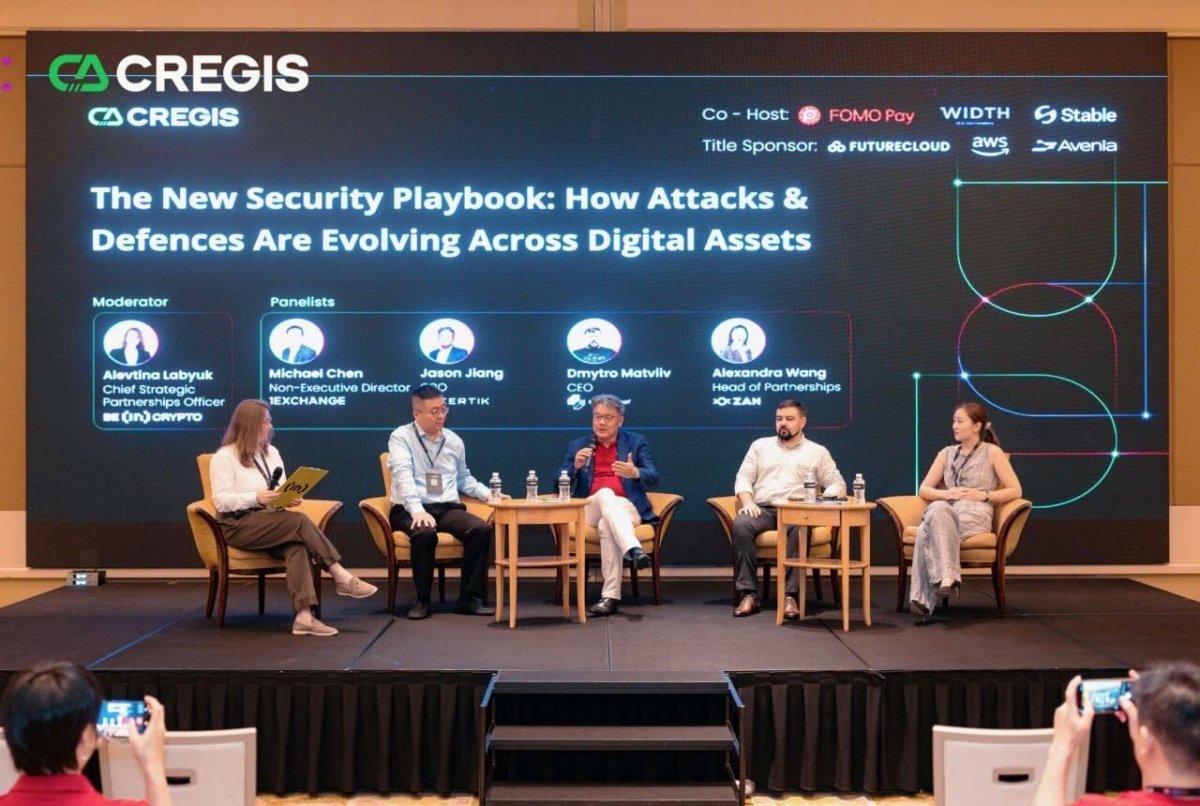
The summit also featured a panel focused on the security challenges associated with institutional onchain activities. Experts discussed how security risks have expanded beyond just smart contract vulnerabilities. They highlighted the importance of comprehensive audits, which are now considered a baseline requirement, but noted that these audits only provide a snapshot in time. Continuous monitoring, anomaly detection, and robust incident response strategies are becoming increasingly critical as institutional participation in digital assets grows.
Panelists, including Jason Jiang from CertiK and Michael Chen from 1exchange, stressed the need for strong operational controls around transaction authorization and asset management. They pointed out that as institutions adopt AI technologies for monitoring and decision-making, clear limits must be established regarding what these AI agents can execute, especially given the irreversible nature of many transactions in the blockchain space.
The discussions at the summit also highlighted the necessity for improved mechanisms for traceability, dispute resolution, and fund recovery as institutional engagement with digital assets increases. As the landscape evolves, institutions must adapt their operational frameworks to incorporate these new security measures while maintaining compliance with regulatory standards.
Security and Compliance Challenges
Eric Chen, CEO of Injective, presented the company’s Institutional Stack, which outlines a comprehensive approach to infrastructure for institutional financial applications. This presentation underscored the need for a cohesive architecture that supports the unique requirements of institutional finance, particularly as it relates to digital assets and onchain operations.
Throughout the summit, a consistent theme emerged: the integration of stablecoins into payment systems, the growing complexity of compliance, and the need for enhanced security measures are all critical factors shaping the future of institutional onchain finance. For businesses operating in this space, the challenge lies in effectively incorporating these capabilities into their existing financial and operational systems while ensuring control over payments, compliance, and security functions.
Cregis, founded in 2017, has made significant strides in the digital asset space, serving over 4,000 businesses across more than 50 countries and processing over $300 billion in cumulative transaction volume. As the company continues to expand its infrastructure and capabilities for institutional asset management and governance, the insights gained from the summit will likely play a pivotal role in shaping its future initiatives and offerings.
Source: BeInCrypto