How to Buy Ethereum Safely: A Step-by-Step Guide
How to Buy Ethereum Safely: A Step-by-Step Guide
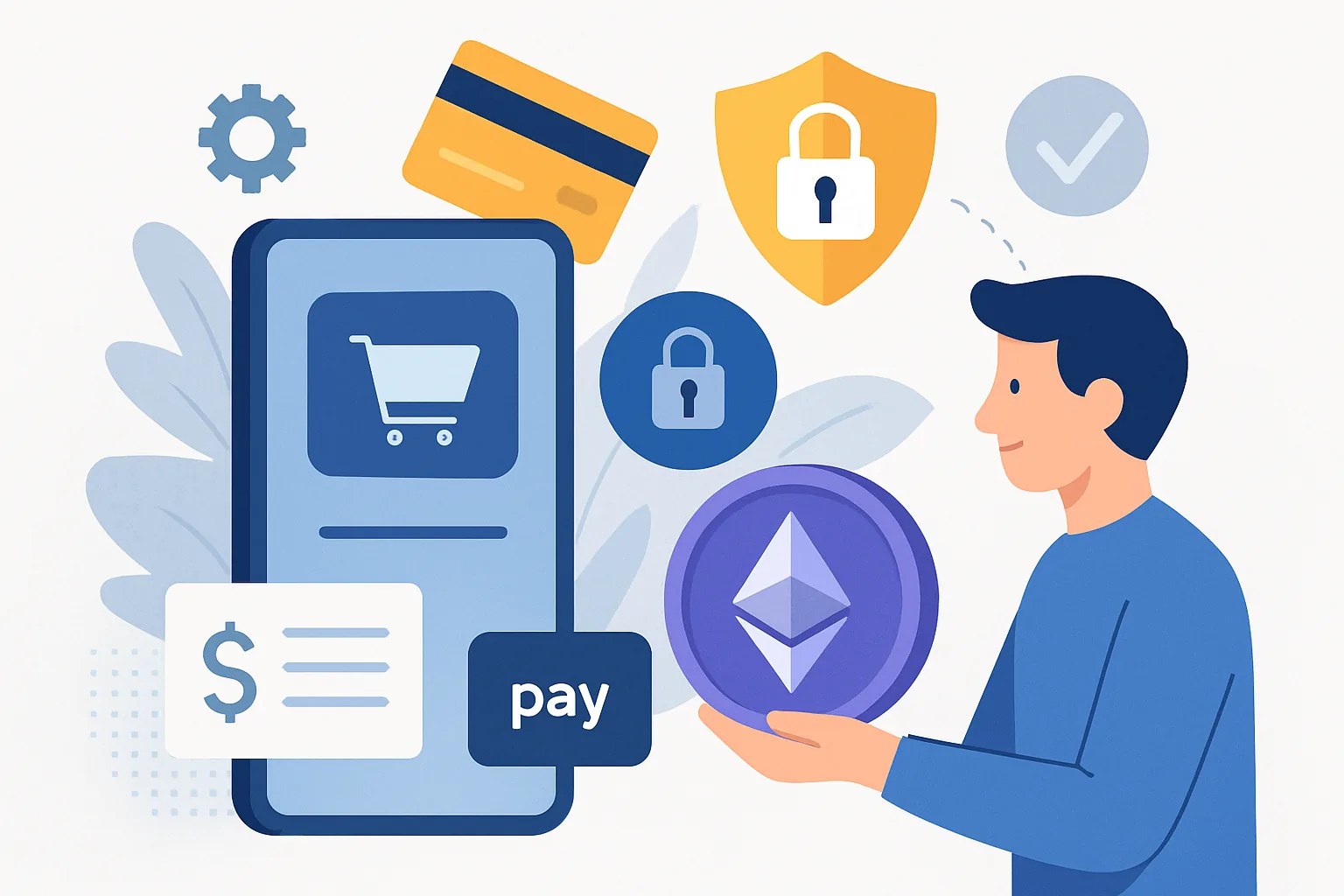
Buying Ethereum is no longer a niche activity reserved for crypto enthusiasts with technical patience and a stack of browser tabs open to forum threads. These days, the harder part is not finding a way to buy ETH; it is doing it safely. That means choosing a legitimate platform, understanding the real cost of the trade, and taking a few practical steps to protect both your account and your coins after purchase.
If you are comparing options and wondering where the best place to buy Ethereum is, the answer is not the same for every buyer. A careful first-time buyer may value simplicity and strong security more than the absolute lowest fee. Someone making larger or repeated purchases may care more about spreads, withdrawal charges, and whether the exchange offers a clean path to a personal wallet. There is no single perfect route, only the one that fits your needs without cutting corners.
1. What “Buying Ethereum Safely” Means
Safe buying starts before you click “deposit.” It begins with platform selection. Reputable providers tend to have a long operating history, clear company information, straightforward fee disclosures, and security features that are easy to find rather than hidden in a help page. If a platform looks vague about ownership, support, or terms, that is a warning sign, not a minor inconvenience.
Safety also means understanding that crypto purchases are irreversible in practice. If you send money to the wrong place, fall for a fake app, or approve a phishing email, there is often no undo button. That makes account security, careful address checking, and patience during the first transaction just as important as market timing.
Finally, buying safely means accepting risk honestly. Ethereum can move in price quickly. Even if the platform is secure and the process is flawless, the market value of your purchase can change between the time you submit the order and the time you finish reading the confirmation screen. That is part of the game, and pretending otherwise helps no one.
2. Best Place to Buy Ethereum
When people ask about the best place to buy Ethereum, they usually mean one of three routes: a centralized exchange, a brokerage-style app, or a peer-to-peer platform. Each has strengths, and each has trade-offs.
Centralized exchanges
Centralized exchanges are the most common starting point. They usually offer a familiar interface, charting tools, order types, and direct ETH withdrawals to external wallets. For many users, they are the practical default. The main advantages are liquidity, broad payment support, and an established process for identity verification and security settings.
What should you look for? Start with reputation, then check whether the platform offers two-factor authentication, address whitelisting, withdrawal confirmations, and account alerts. Security features matter more than glossy design. If you are comparing options for other coins too, you might notice that similar considerations apply whether you are evaluating where to buy Bitcoin or Ethereum: reliability first, convenience second.
Brokerage apps
Brokerage-style investing apps often make buying crypto feel as simple as buying a stock or ETF. That can be appealing, especially for beginners who do not want to learn a trading interface on day one. The trade-off is that these apps may offer less control over withdrawals, fewer order options, and less transparency around how prices are formed. In some cases, the user experience is so smooth that the underlying costs are easy to miss.
If you choose this route, check whether you can withdraw Ethereum to your own wallet, whether the app charges a spread, and whether the purchase is actually on-chain or just an internal account balance. Those details matter later.
Peer-to-peer platforms
Peer-to-peer platforms connect buyers and sellers directly. They can be useful in regions with limited banking options or for users who want alternative payment methods. But this route requires caution. Reputation systems, escrow services, and dispute resolution become critical. Without them, a low advertised price can become an expensive lesson.
For most beginners, a well-known centralized exchange is often the simplest balance of security and usability. That does not mean it is automatically the cheapest. It means the path is easier to verify, easier to secure, and easier to repeat safely when you buy again.
3. Check Ethereum Exchange Fees Before You Buy
Fees are rarely just one fee. They often appear in layers, and the platform with the lowest headline trading fee may not be the cheapest overall. Before you buy, compare the full cost, not just the number printed in the promotional banner.
Trading fees
Trading fees are the most obvious charges. Some exchanges use a maker-taker model, while others charge a flat percentage. If you are placing a market order, the fee structure may be different from a limit order. Read the fee page carefully and make sure you understand which category your purchase falls into.
Spread
Some platforms do not advertise a visible trading fee at all, but build cost into the spread: the difference between the buy price and the sell price. This is easy to overlook because the interface may look clean and simple. The total cost can still be higher than expected, especially during volatile market conditions.
Deposit and withdrawal fees
Funding your account may be free, or it may come with card charges, bank transfer charges, or currency conversion fees. Later, when you withdraw ETH or move fiat money out, additional charges may apply. These costs are particularly important if you plan to buy in smaller amounts or make several transfers over time.
It is worth comparing fee structures across platforms before opening an account. If you are still in research mode, a guide like How to Compare Crypto Exchange Trading Fees can help you think through the full picture rather than focusing on the first number you see.
Network fees
Ethereum transactions also involve blockchain network fees when you move ETH on-chain. These fees are not controlled by the exchange alone, and they can vary with network activity. If your plan is to send Ethereum to a wallet right after purchase, factor that cost into your decision. A platform with cheap trading but expensive withdrawals may not be the bargain it looks like at first glance.
4. Step-by-Step: Create and Secure Your Account
Once you have picked a platform, set up the account with the same care you would use for online banking. A rushed signup is often where problems begin.
Register with a real email address that you control and check regularly.
Choose a strong, unique password that is not reused on any other site.
Complete identity verification if the platform requires it. That may involve uploading a document and sometimes a selfie or proof of address.
Enable two-factor authentication as soon as the account is active.
Review account recovery options so you know how to regain access if you lose your device.
Two-factor authentication deserves special attention. Use an authenticator app if possible rather than relying only on SMS, which can be vulnerable to SIM-swap attacks. Also secure your email account, because email is usually the master key for password resets and login alerts. If your email is weak, your exchange account is only as strong as the inbox behind it.
Keep your phone and browser updated. Avoid logging in from shared computers or public Wi-Fi unless you have a compelling reason and understand the risk. A secure account is not just a strong password; it is a chain of cautious habits.
5. Step-by-Step: Fund Your Account and Place Your Order
Funding the account is where many first-time buyers become understandably cautious. That caution is good. The aim is to move money once, correctly, and without unnecessary detours.
Choose your payment method carefully
Bank transfers can be slower but may be cheaper. Card purchases can be quicker but sometimes come with higher fees. Some platforms support local payment methods, while others allow cash balance deposits or third-party payment processors. Before you proceed, read the platform’s deposit instructions closely and make sure the name on your payment method matches the account requirements.
When you are ready to buy, decide whether you want a market order or a limit order. A market order executes immediately at the best available price, which is convenient but less precise. A limit order lets you set the price you are willing to pay, which can offer more control, though it may not fill right away. For a first purchase, many buyers prefer simplicity. For a planned entry, a limit order can help avoid a rushed click.
Review before confirming
Take one last look at the order screen. Check the amount of fiat currency you are spending, the quantity of ETH you expect to receive, and the total fees. If the platform shows a preview of the final amount, read it carefully. Small mistakes often happen when people move too fast, especially on mobile screens.
Only confirm when everything matches your intent. It sounds obvious, but in crypto, obvious is often what saves money.
6. Step-by-Step: Move Ethereum to a Safe Wallet
Leaving all your ETH on an exchange is convenient, but convenience is not the same thing as control. Many buyers move funds to a personal wallet after purchase, especially if they plan to hold for a longer period. That reduces exchange-related risk and gives you direct custody of the asset.
Choose the right wallet
You will usually be choosing between a software wallet and a hardware wallet. Software wallets are easier to set up and use for smaller amounts or frequent activity. Hardware wallets add an extra layer of protection because the private keys stay offline. The best choice depends on how much you are holding and how often you plan to move funds.
If you are still exploring wallets and networks for different assets, it may help to compare what the process looks like for other coins too. For example, someone researching where to buy Ethereum may also want to understand how transfers and storage compare across similar platforms and assets.
Verify the address carefully
Before sending ETH, copy the destination address from your wallet and verify it character by character. Better still, check the first few and last few characters carefully and confirm you are on the correct network. Sending assets to the wrong chain is a classic mistake, and one that can be hard or impossible to reverse.
For added caution, send a small test transfer first if the amount is meaningful. That extra step takes time, but it can save you from a painful typo or a clipboard issue. Once the test arrives safely, you can move the rest.
7. Common Mistakes and Scam Warning Signs
The most expensive mistakes tend to be the simplest. A fake app, a rushed transfer, a too-good-to-be-true message in your inbox. Crypto scams often rely on urgency because urgency makes people stop checking details.
Using a fake exchange app or a link from an unsolicited message.
Entering login details on a phishing site that looks nearly identical to the real one.
Ignoring withdrawal fees and realizing later that moving ETH costs more than expected.
Sending Ethereum to the wrong network or the wrong address.
Leaving large balances on an exchange longer than needed.
Trusting strangers who promise guaranteed returns or “support” via direct messages.
Some scams are almost dull in how predictable they are. A support agent reaches out first. A deadline appears. A wallet needs “verification.” In practice, legitimate platforms do not usually ask for private keys or recovery phrases. Those belong to you and only you. If someone asks for them, stop immediately.
One more point that deserves repetition: always verify the platform address yourself. Bookmark the official site, and if possible access it through your saved link rather than a search result that could be imitated. This is especially important when you revisit the account weeks later and assume you are on the correct page.
8. Quick Safety Checklist Before You Buy
Before placing your order, run through a short checklist. It takes less time than recovering from a bad decision.
Check | What to confirm |
|---|---|
Platform reputation | Known provider, clear company information, and strong security features |
Fees | Trading fee, spread, deposit/withdrawal charges, and network costs |
Account security | Unique password, 2FA, secure email, and updated device |
Order details | Correct amount, correct currency, and correct order type |
Wallet plan | Where ETH will be stored after purchase and how the address will be verified |
Scam check | No suspicious links, no pressure, no requests for private keys |
If all of those boxes are checked, you are in a much better position to buy Ethereum safely. That does not remove market risk, and it does not turn crypto into a frictionless experience. What it does is reduce the avoidable mistakes—the kind that come from haste, not from price movement.
For readers who like to compare the process across assets, the same disciplined approach applies when evaluating other coins as well. Whether you are looking at Ethereum, Bitcoin, or another major token, the habit is the same: choose a reputable platform, understand the fees, secure the account, and move funds carefully.
That is the real secret to buying ETH safely. Not a clever trick. Not a special timing signal. Just a methodical process, carried out with enough attention to avoid the obvious traps.
HYIP Articles



Random quote about money
"Я знаю, нельзя иметь всего сразу, поэтому я начну с малого — с денег."
Interesting posts in other sections of the blog










 ↑
↑
* to search the proxy database, just enter a country name, e.g. Russia, USA, Thailand