

How to Choose a Crypto Exchange for Beginners
Choosing a crypto exchange for the first time can feel oddly similar to choosing a bank, a broker, and a shopping app all at once. You want something safe, easy to use, reasonably priced, and flexible enough to grow with you. That is a lot to ask from one platform, which is why beginners often benefit from slowing down and comparing options carefully instead of signing up for the first exchange they see in an ad.
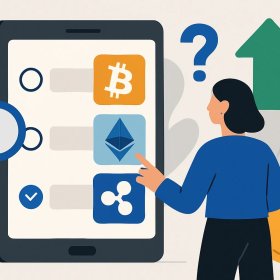
The right choice depends on what you want to do with crypto. Some people only want to buy Bitcoin or Ethereum and hold it for the long term. Others want to explore altcoins, learn how the market works, or trade more actively later on. If you are still deciding which coins interest you, it can help to read coin-specific guides such as where to buy Bitcoin or where to buy Ethereum before opening an account.
1. What a Crypto Exchange Is and Why Your Choice Matters
A crypto exchange is a platform where you can buy, sell, and sometimes trade cryptocurrencies. In practice, it is the gateway between your regular money and the digital asset market. Some exchanges are built for beginners, with simple “buy” buttons and clear menus. Others are designed for more experienced users, offering advanced order types, charts, and derivatives.
There are also different business models. Centralized exchanges are the most common. They act as intermediaries, hold user accounts, and usually offer a smoother onboarding process. Decentralized exchanges work differently, allowing people to trade directly from wallets, but they are generally less beginner-friendly and require more technical understanding. For most newcomers, a centralized exchange is the more practical starting point.
Your choice matters because the exchange influences nearly every part of your first crypto experience: how easy it is to fund your account, how much you pay in fees, how quickly you can execute a trade, and how well your assets are protected. A platform that looks simple on the surface can still be frustrating if withdrawals are slow, support is unhelpful, or the fee structure is hard to understand.
2. Step 1: Define Your Beginner Needs Before Comparing Exchanges
Before comparing exchange names and logos, take a minute to define what you actually need. This is the step many beginners skip, and it often leads to regret later.
Start with the coins you want to buy. Not every exchange lists the same assets. If you are focused on major coins such as Bitcoin, Ethereum, or maybe Solana, your choice is broader. If you want smaller or less common tokens, availability becomes more important. It is worth checking whether the exchange supports the assets you care about before you create an account. If Solana is on your list, for example, this guide may help: Where to buy Solana
Then think about usability. Do you want a very simple interface with minimal noise, or are you comfortable with a dashboard that has charts, order books, and market tabs? Beginners usually do better with a clean layout, especially if they are planning only occasional purchases rather than day trading.
Budget also matters. If you are starting small, fees and minimum deposit requirements can make a noticeable difference. A platform that seems convenient may be less attractive if it charges heavily on small transactions. On the other hand, if you expect to trade more actively later, you may care more about order execution, chart tools, and lower trading fees than about a polished beginner interface.
Finally, be honest about your level of involvement. Are you planning one or two purchases per month, or do you want to learn the mechanics of trading more seriously? That single question changes what “best” means. A casual buyer needs simplicity. A more active user needs deeper functionality and better control.
3. Step 2: Compare Security, Regulation, and Account Protection
Security should never be an afterthought. If an exchange is cheap but weak on protection, it is not a bargain. It is a risk.
Begin with the basics. Look for two-factor authentication, ideally available through an authenticator app rather than only by SMS. Check whether the platform offers withdrawal whitelists, so funds can only be sent to approved addresses. Those small controls matter more than many beginners realize, because they add friction for anyone trying to move your assets without permission.
Another point to review is how the exchange stores user assets. Many platforms say they keep a large share of funds in cold storage, which generally means offline storage not directly exposed to internet attacks. This is a positive sign, but you should still treat it as one part of a broader security picture, not a guarantee.
Regulation is equally important. Make sure the exchange is available in your country and that it is allowed to operate where you live. Availability is not a minor detail; it affects everything from account approval to deposit options and withdrawal access. Some platforms look attractive on paper but are simply not supported in your jurisdiction.
It is also worth checking whether the platform has a history of security incidents and how it responded. No exchange is immune to risk, but a responsible platform should communicate clearly, protect users promptly, and maintain sensible controls.
If you are still learning how to keep assets safe after purchase, it may help to read about storage options as well. Exchanges are useful for buying and selling, but they are not always the best long-term home for every coin. A dedicated guide such as Как безопасно хранить криптовалюту can be a good next step.
4. Step 3: Review Crypto Exchange Fees Before You Sign Up
Crypto exchange fees are one of the easiest things to overlook and one of the easiest ways to lose money unnecessarily. Many beginners focus only on the headline “trading fee” and ignore the rest. That is a mistake.
Start with trading fees. These are usually charged when you buy or sell crypto, and they may differ depending on whether you are placing a market order or a limit order. Some exchanges advertise low fees but apply different pricing depending on how you execute the trade. A beginner buying a small amount may not notice this at first, but the costs add up over time.
Next, review deposit and withdrawal fees. Depositing by bank transfer, card, or other payment method may come with its own cost. Withdrawals can also be charged separately, sometimes by the exchange and sometimes by the network itself. If you plan to move coins out regularly, these fees matter.
Spreads deserve attention too. Even when an exchange shows a low fee, the actual price you pay may be slightly worse than the market price shown elsewhere. In other words, a platform can look inexpensive while quietly building cost into the price difference. That is especially relevant for beginners who use simple instant-buy features.
Also watch for hidden costs. Currency conversion fees, inactivity charges, premium service tiers, and card processing surcharges can all make a “cheap” exchange surprisingly expensive. Read the fee schedule carefully, and do not rely only on the marketing page.
A simple rule helps here: if you cannot explain the fee structure in plain language after five minutes, keep looking.
5. Step 4: Check Ease of Use, Funding Methods, and Customer Support
An exchange can be safe and inexpensive but still unpleasant to use. For beginners, ease of use is not a luxury; it is part of safety. Confusing menus lead to mistakes, and mistakes in crypto can be costly.
Look at the interface from a beginner’s perspective. Is the buy button easy to find? Are deposit instructions clear? Does the platform explain what each step means, or does it assume you already know the jargon? Good design reduces stress. It also reduces errors.
Mobile app quality matters as well. Many users end up managing their accounts from a phone, not a desktop. A clunky app can make simple tasks feel harder than they should be. Test the app store ratings and, if possible, try the interface before committing real funds.
Funding methods are another practical filter. Some users want bank transfers, others prefer cards, and some may need local payment options. The more limited the payment menu, the less flexible the exchange. That said, more options are not automatically better if they come with higher fees or slower processing times.
Customer support is often undervalued until something goes wrong. Then it becomes the only thing that matters. Check whether support is available by chat, email, or phone, and whether users report reasonable response times. For first-time users, responsive support can turn a stressful verification issue into a minor inconvenience.
If you prefer a specific coin and want to compare platforms by usability as well as availability, you can also browse guides for assets like XRP, Dogecoin, or Litecoin before choosing where to open your account: Where to buy XRP, where to buy Dogecoin, and where to buy Litecoin
6. Step 5: Understand Spot Trading vs Futures
One of the most important decisions for beginners is whether to stick with spot trading or move into futures. The difference is simple in concept but very important in practice.
Spot trading means you buy the actual asset. If you buy one unit of a coin on the spot market, you own that coin. This is the straightforward approach, and for most beginners it is the right place to start. The risks are easier to understand, and the mechanics are less complex.
Futures are different. With futures, you are trading contracts based on the price of an asset rather than owning the asset itself. This introduces more moving parts, including leverage, which can magnify both gains and losses. It also creates liquidation risk, where a position can be closed automatically if the market moves against you too far.
That last point deserves emphasis. Futures can look exciting because they offer the possibility of larger exposure with less capital. But that same structure can punish beginners quickly. A small market move, especially in a volatile asset, can produce a much larger loss than a new user expects.
For that reason, most beginners should start with spot trading. It gives you time to learn how exchanges work, how orders are placed, and how volatility feels in real life. Futures can be studied later, after you have a better grasp of risk management and market behavior.
This is also why choosing a beginner-friendly exchange matters. If the platform aggressively promotes derivatives before you have even placed a first spot trade, that may be a sign that the product is designed more for volume than for education.
7. Step 6: Test the Exchange With a Small First Transaction
Once you have narrowed your options, do not go all in on day one. Test the exchange with a small first transaction. That one habit can save you time, money, and frustration.
Open the account and follow the registration process carefully. If verification is required, complete it using accurate personal information. Do not rush this step. Mismatched details can cause delays later, especially when you try to withdraw funds.
After the account is ready, make a small deposit using your chosen payment method. Check how long it takes to arrive and whether the platform’s instructions were easy to follow. Then place a simple trade. If the exchange offers a very basic “buy” flow, test that first. If you are comfortable, you can later try a limit order on a small amount, but there is no need to complicate your first experience.
Once the trade is complete, try a small withdrawal test. This is where many users discover whether the platform is truly convenient. A fast deposit is good. A confusing withdrawal process is a warning sign. Make sure you understand the network, destination address, and fees before sending anything.
Think of this first transaction as a dress rehearsal. It is not about making a perfect market decision. It is about checking whether the exchange behaves as expected when real money is involved.
8. Final Checklist: How to Choose the Best Crypto Exchange for Beginners
If you want a simple way to compare exchanges, use this checklist before opening an account:
- Does the exchange support the coins you actually want to buy?
- Is the interface simple enough for your current skill level?
- Does it offer strong account protection such as two-factor authentication and withdrawal controls?
- Is the exchange available in your country and compliant where you live?
- Do the trading, deposit, withdrawal, and spread costs make sense for your budget?
- Are funding methods convenient and clearly explained?
- Is customer support accessible and responsive enough for beginners?
- Does the platform make spot trading easy without pushing you too quickly into futures?
- Can you complete a small test transaction before committing serious funds?
In the end, the best crypto exchange for beginners is rarely the one with the loudest marketing. It is the one that matches your goals, keeps costs transparent, protects your account, and gives you room to learn without unnecessary pressure. Start with spot trading, compare fees honestly, and use a small first transaction to see how the platform behaves in practice. A careful beginning is usually the smartest one.