Crypto Exchange Withdrawal Fees Explained
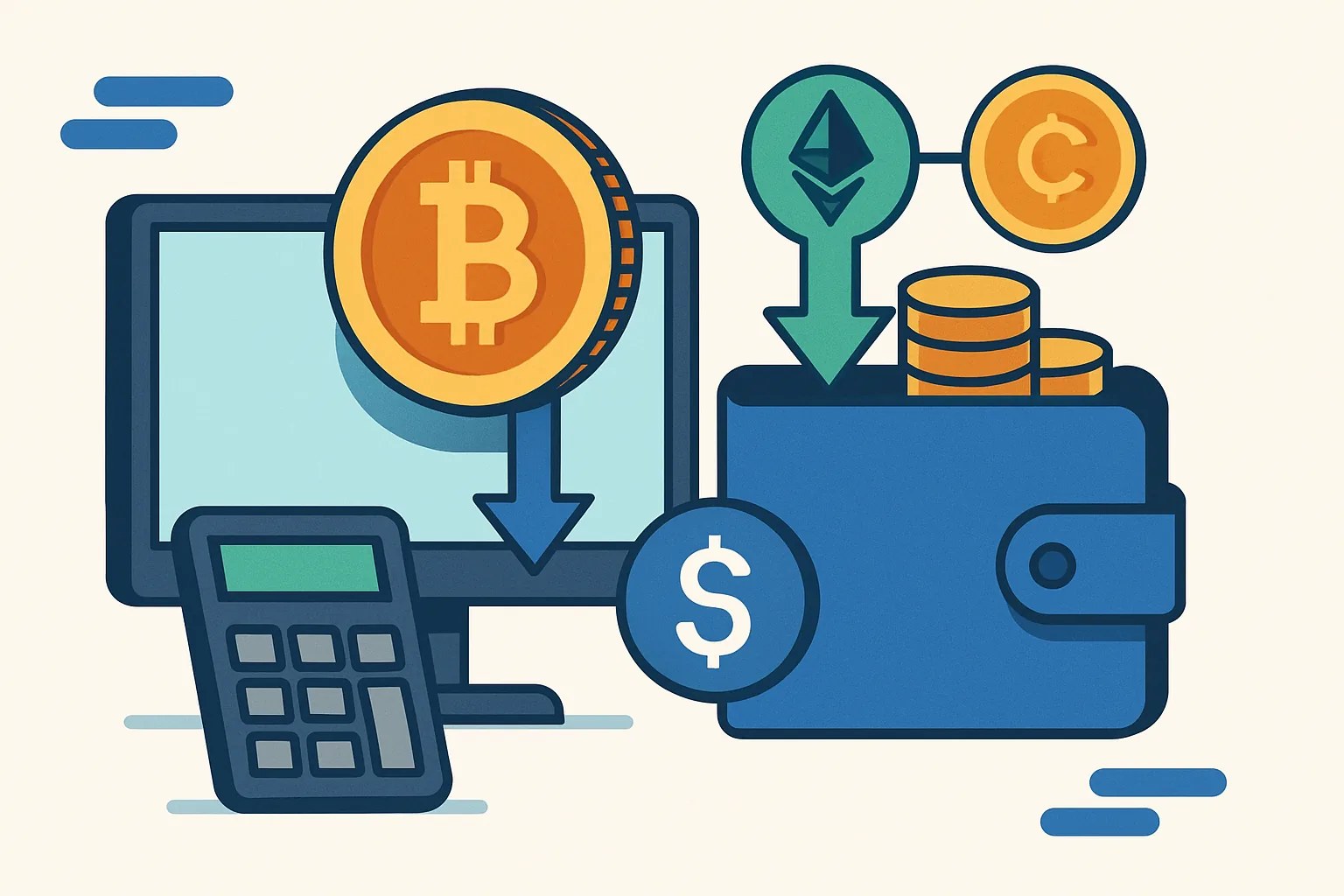
What crypto exchange fees are and why they matter
Crypto exchanges rarely charge in just one way. If you have ever moved funds in or out of an exchange, you have probably seen a mix of trading fees, deposit fees, withdrawal fees, and, in some cases, network charges that show up separately or are folded into the final number. That is why the headline “low fees” can be misleading if you do not look at the full path your money takes.
The most important of these for many users is the withdrawal fee. It is the cost you pay to take an asset off the exchange and send it to another wallet, another platform, or a bank account in the case of fiat. On the surface, that sounds simple. In practice, withdrawal fees can affect everything from day-to-day portfolio management to the cost of moving a position after a market move. If you trade actively, transfer often, or use multiple platforms, even modest fees can add up.
For traders, investors, and casual users alike, exchange fees matter because they change the net result. A trade that looks profitable may shrink once you account for the cost of moving the asset. A transfer meant to save time may cost more than expected if the exchange uses a pricey network or applies a fixed withdrawal charge. This is why smart users do not just ask “How much does this coin cost?” They also ask, “How much will it cost to get it where I want it?”
Crypto exchange withdrawal fees explained
Withdrawal fees are charged when you send funds out of an exchange. For crypto, the fee may be set by the exchange itself, by the blockchain network, or by a blend of both. For fiat withdrawals, the fee structure often depends on the payment method, the destination bank, and the country involved.
There are two broad ways exchanges set crypto withdrawal fees: fixed and variable. A fixed fee is the same regardless of the amount you withdraw. That can be convenient, but it may feel expensive for small transfers. A variable fee changes with market conditions or network demand. In times of congestion, the fee may rise; when activity drops, it may fall.
Network-dependent pricing is one of the biggest reasons fees change. Different blockchains have different cost profiles, and the same asset may be available on multiple networks. For example, a token can sometimes be moved on a low-cost chain or on a busier, more expensive one. The exchange may pass through the chain’s current conditions, or it may apply its own fee table. Either way, the final amount can vary significantly depending on the asset and the blockchain used.
This is also why users often compare not just the asset, but the route. If you are moving a major coin such as Bitcoin or Ethereum, the network choice and exchange policy can matter a lot; see also where to buy Bitcoin and where to buy Ethereum for related exchange-selection context. For smaller transfers, a fixed withdrawal fee can be especially painful because it may take a larger percentage of the transfer value.
There is another detail people often miss: fees can differ by asset even on the same exchange. A withdrawal fee for one token may be high, while another token on the same platform is relatively cheap to move. That is not necessarily a hidden charge; it often reflects blockchain conditions, the exchange’s internal treasury policy, and liquidity considerations.
Crypto exchange deposit fees explained
Deposit fees are the charges, if any, applied when you move money into an exchange. In many cases, crypto deposits are free. That said, “free” from the exchange does not always mean cost-free in the broader sense. You may still pay a blockchain network fee to send crypto from your wallet or another platform to the exchange.
For fiat deposits, the structure is usually more complicated. An exchange may charge for bank transfer processing, card funding, or third-party payment rails. The fee can depend on the currency, the payment method, your region, and sometimes the size of the deposit. A bank transfer may be cheaper than a card payment, but slower. A card payment may be instant, but more expensive.
Some exchanges advertise zero deposit fees, especially for crypto. That is useful, but it only tells part of the story. If you deposit ETH, for example, the exchange may not charge you directly, yet you still paid the Ethereum network fee to send it there. The same pattern can apply to many other assets and blockchains.
Fiat and crypto deposits therefore live in different worlds. Fiat fees are often connected to banking infrastructure and payment processors; crypto deposit costs are more often tied to blockchain activity and wallet behavior. This distinction matters if you are comparing total funding costs across platforms.
Other costs that can appear on exchanges
Withdrawal and deposit fees are only part of the picture. Other costs can quietly shape the total amount you spend.
Trading fees: charges applied when you buy or sell an asset on the exchange. These can be maker/taker fees or flat commissions.
Spread costs: the difference between the buying and selling price. Even when the fee looks low, a wide spread can make execution more expensive.
Network gas fees: blockchain fees paid to validators or miners to process a transaction. These are especially relevant when moving assets on busy chains.
Minimum withdrawal limits: some exchanges require you to withdraw at least a certain amount. That can force you to leave small balances behind or combine transfers.
Conversion charges: if you need to swap one asset for another before withdrawing, you may pay a trading fee and spread on top of the transfer cost.
There are also less obvious costs. A platform may offer low headline fees but set a large minimum withdrawal threshold. Or it may support a token on a higher-cost network by default, while a cheaper route exists elsewhere. Users who do not look closely can end up paying more than they expected.
For people who move funds between exchanges, these “small” charges can matter a great deal. If you are transferring tokens like Solana, XRP, Litecoin, Dogecoin, Cardano, or Chainlink, it is worth checking asset-specific fee details before sending anything. Relevant exchange guides such as where to buy Solana or where to buy XRP can help you compare platforms with that question in mind.
How crypto transfer costs are calculated
To estimate the real cost of moving crypto, think in layers. The total is usually made up of the exchange fee, the blockchain network fee, and any conversion cost that comes before or after the transfer.
A simple way to view it is this:
Cost component | What it covers |
|---|---|
Exchange withdrawal fee | The amount charged by the exchange for sending funds out |
Blockchain network fee | The fee needed to process the transaction on-chain |
Conversion cost | The cost of swapping one asset into another before transfer |
Fiat processing fee | Any bank or payment-rail charge for fiat withdrawals or deposits |
Here is the practical part. If you want to move an asset from Exchange A to Wallet B, ask yourself: do I need to convert it first? Is the withdrawal fee fixed or network-based? Does the network charge vary by congestion? Will the destination wallet accept the chain I plan to use? Those questions sound basic, but they are what separate a clean transfer from a costly surprise.
Suppose you hold a token on one exchange and want to send it to another. If the exchange charges a withdrawal fee, the blockchain charges a network fee, and you first had to convert from another coin, the transfer is no longer “just a transfer.” It is a sequence of paid steps. That is the real cost you should estimate.
How to lower crypto transfer costs
The good news is that transfer costs are not fixed forever. You can often reduce them with a bit of planning.
Choose lower-fee networks when available. Some assets can move across more than one blockchain or layer. If the exchange supports it and your wallet does too, the cheaper route may be the better one.
Batch withdrawals instead of sending many small transfers. Fixed fees hurt less when spread over a larger amount. This can be especially helpful for users moving funds regularly.
Time transfers when the network is less congested. Blockchain fees often rise when the network is busy. Waiting for calmer periods can make a meaningful difference.
Compare exchange fee schedules before moving funds. Two platforms may look similar on trading fees but differ sharply on withdrawal costs.
Avoid unnecessary conversions. If you can withdraw the asset you already hold instead of swapping into another one first, you may save on both spread and trading fees.
Check whether a centralized exchange or a direct wallet route is cheaper for your purpose. Sometimes the easiest path is not the cheapest one.
One practical example: if you are deciding where to hold a token before a transfer, it can make sense to look at the platform’s asset-specific withdrawal fees, not just its general reputation. That is especially relevant for commonly moved coins like Litecoin or Dogecoin, where the fee structure can be more favorable on one exchange than another. For broader exchange comparisons, pages such as where to buy Litecoin and where to buy Dogecoin are useful reference points.
How to compare exchange fee structures before signing up
Before opening an account, do a little detective work. Good exchanges make their fee information public, but the details are often spread across several pages: fee schedules, support articles, deposit and withdrawal tables, and asset-specific notes.
Start by looking for the fee page, then read beyond the headline numbers. You want to know how the platform treats crypto deposits, crypto withdrawals, fiat funding, and withdrawals to bank accounts or cards. If a platform advertises “zero deposit fees,” check whether that applies only to crypto, only to specific payment methods, or only above a certain threshold.
Next, inspect asset-specific withdrawal tables. This is where real differences show up. Some exchanges list distinct fees for each coin and network. That is the level of detail you need if you care about total cost, not just marketing.
Support documentation can also reveal important limits. For example, an exchange may explain which chain it uses for a token, what minimum withdrawal applies, or whether withdrawals are temporarily restricted during maintenance. These are the kinds of details that save you from an awkward delay later.
If you are choosing an exchange for a particular asset, it helps to review the relevant buying guide and then compare the fee structure with your intended use. For example, a user interested in tokens like ADA or LINK would do well to examine both the market access and the transfer rules; see where to buy Cardano and where to buy Chainlink for more context.
Finally, look for consistency. A polished fee page is nice, but the important question is whether the policies are easy to understand and still make sense after you add network costs, conversion costs, and minimums. If the answer is no, keep comparing.
Key takeaways for minimizing fees
Crypto exchange fees are not just a line item. They shape how efficiently you can move money, rebalance a portfolio, and shift assets between platforms or wallets.
The main lesson is simple: always check both deposit and withdrawal fees, and do not stop there. Include network costs, trading fees, spread, and any conversion charges in your estimate. A transfer that looks cheap on the surface may not be cheap once everything is counted.
Withdrawal fees deserve special attention because they are the most visible part of the moving process and often the most variable. They may be fixed, network-based, or different for each asset and blockchain. Deposit fees are often lighter, but fiat and crypto deposits can follow very different rules.
If you want to keep costs down, use a fee-conscious strategy. Compare exchanges before signing up. Pick the right network. Avoid unnecessary swaps. Batch small transfers when possible. And when in doubt, read the fee page one more time. It is a boring habit, perhaps, but a profitable one.
In the end, the cheapest exchange is not always the one with the lowest headline number. It is the one whose full fee structure fits the way you actually move funds.
HYIP Articles




Random quote about money
"На прихоти у нас всегда найдутся деньги, мы скупимся только на затраты полезные и необходимые."
Interesting posts in other sections of the blog











 ↑
↑
* to search the proxy database, just enter a country name, e.g. Russia, USA, Thailand