How to Check if a Crypto Exchange Is Safe
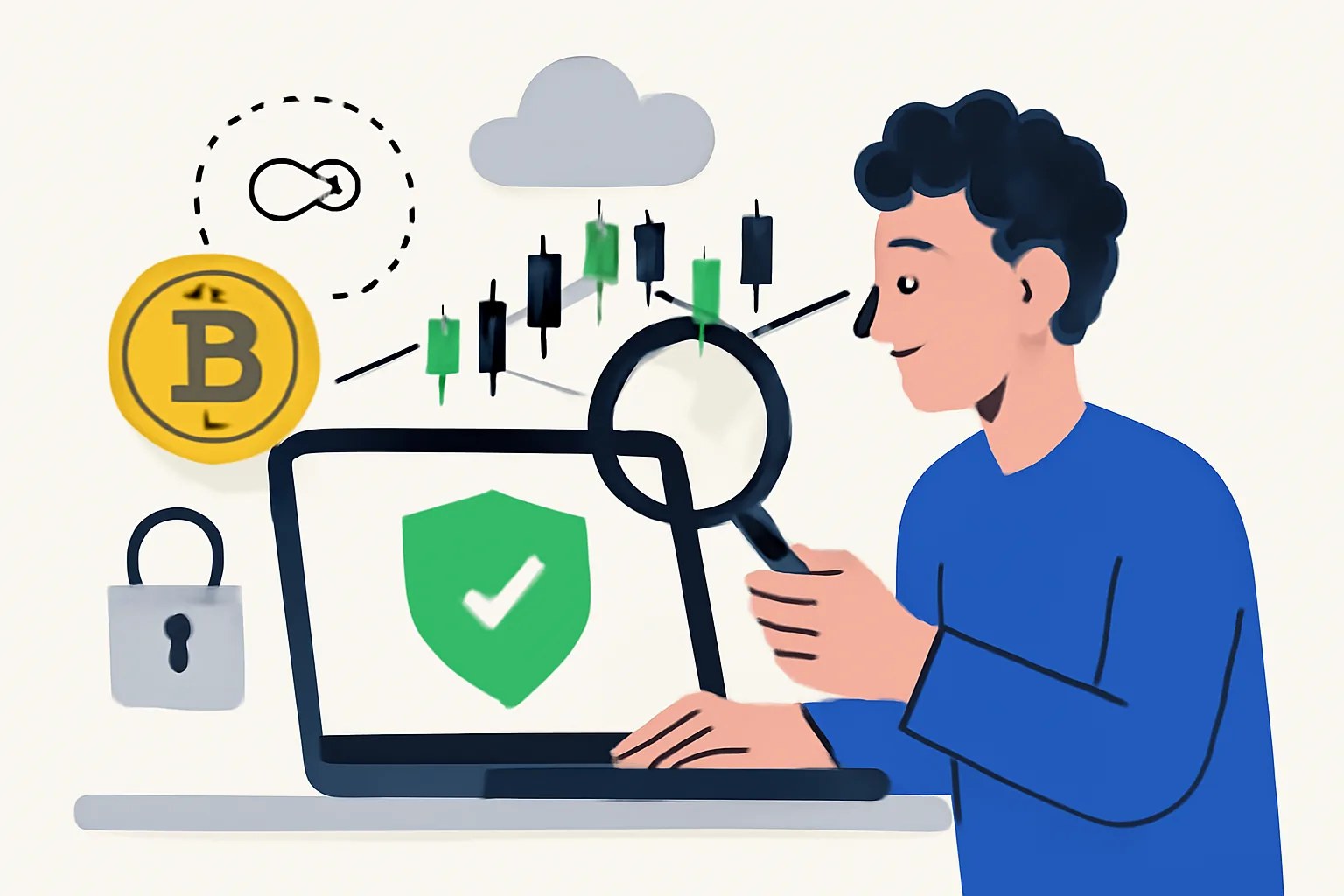
How to Check if a Crypto Exchange Is Safe
Choosing a crypto exchange is a little like choosing where to keep a wallet in a crowded city. You want convenience, sure, but not at the cost of waking up one morning and discovering the door was left open. The problem is that many exchanges look polished on the surface. Good branding, slick app, tidy charts — none of that tells you much about what happens when you deposit funds, try to withdraw, or need help after something goes wrong.
That is why exchange safety should be checked before you sign up, not after your first transfer. A safe platform reduces the risk of hacks, withdrawal freezes, fake websites, and weak account protections. A risky one can leave you stuck in support queues, fighting for access, or worse, unable to recover funds at all. If you are also comparing where to buy specific assets, such as Ethereum ETH or Bitcoin, the safety review matters just as much as the trading pair list.
1. Why exchange safety matters before you deposit funds
Crypto exchanges sit at the center of several common failure points. The first is technical risk. Platforms can be hacked, wallets can be compromised, or internal systems can fail. The second is operational risk: withdrawals may be delayed, accounts may be frozen during reviews, or a platform may simply not have the controls needed to handle surges in activity. The third is the most unpleasant one — fake or deceptive platforms that look real enough to attract deposits but were never designed to return them.
There is also a simpler issue: user protections vary widely. Some exchanges give you strong login controls, device alerts, address allowlists, and recovery tools. Others offer a password field and little else. When money is involved, those differences are not cosmetic. They can determine whether a stolen password becomes a bad day or a total loss.
The goal, then, is straightforward: before you trust any exchange with your funds, check whether it behaves like a serious financial platform or like a website that merely looks the part.
2. How to choose a safe crypto exchange
The safest exchanges usually share a few traits. None of them is a guarantee on its own, but together they paint a useful picture.
- Regulation and licensing: A platform that is properly registered or licensed in relevant jurisdictions is usually more accountable than one with no visible legal footprint.
- Company transparency: Look for a named legal entity, a real office address, management or ownership information, and accessible terms. If the company hides behind vague language, that is a problem.
- Reputation: Search for long-running complaints, especially around withdrawals, account freezes, and identity verification. One angry post is noise; repeated patterns are signal.
- Security features: A serious exchange should offer strong login protection, withdrawal controls, and account recovery tools. These are not extras. They are the basics.
- Custody model: Some exchanges hold most user assets in custodial wallets; others offer more self-directed structures. Understand who controls the private keys and what happens if the platform fails.
- Legal availability in your region: A platform may look excellent and still be a poor choice if it is not allowed to serve users where you live. That can create account closure or withdrawal issues later.
If you are comparing exchanges for a particular coin, the same rule holds. Whether you are looking at XRP, Litecoin, or Cardano, the first question is not “Can I trade it here?” but “Can I safely use this platform in my jurisdiction?”
3. Crypto exchange security checklist
Before opening an account, run through a practical checklist. It takes only a few minutes and can save a great deal of trouble.
| Check | What to look for |
| URL and app verification | Make sure the domain is correct, the site uses HTTPS, and the mobile app is the official one from the store publisher. |
| Two-factor authentication | Prefer authenticator apps or hardware keys over SMS if possible. |
| Withdrawal whitelist | See whether the platform lets you approve only preselected addresses. |
| Cold storage claims | Some exchanges say most funds are held offline. Check whether that statement is explained clearly and independently supported. |
| Proof of reserves | Look for transparent reporting, but confirm what is actually being proven and what is not. |
| Incident history | Research past hacks, outages, and withdrawal suspensions, and see how the company responded. |
| Fee policy | Read deposit, trading, withdrawal, and inactivity fees carefully. Hidden costs are not a security issue, but they often reflect poor transparency. |
| Support quality | Test response times and the usefulness of help articles or live chat before sending serious funds. |
| Account recovery | Find out how the exchange handles lost 2FA devices, identity checks, and recovery delays. |
One more practical point: if you are reading about how to avoid withdrawal issues, it helps to also understand broader account risk. Our guide on How to avoid problems with withdrawing funds on a crypto exchange covers several related pitfalls that often show up only after users try to move money out.
4. Step-by-step: how to check if a crypto exchange is safe
Research the company first. Do not start with the sign-up page. Start with the name of the legal entity, the country of registration, and the platform’s public history. Look for press coverage, user complaints, and regulatory notices.
Verify the domain and app. Crypto phishing is common, and fake exchange pages can be startlingly convincing. Type the web address manually, bookmark the correct site, and confirm the app publisher before installing anything.
Read the security documentation. A trustworthy exchange usually explains how it stores assets, protects logins, and handles suspicious activity. If the security page is vague, full of marketing language, or missing entirely, treat that as a warning.
Test support before funding the account. Ask a simple question about verification, withdrawals, or account recovery. You are not just checking whether support answers. You are checking whether the answer is clear, specific, and consistent with the help pages.
Review account protections. Enable 2FA, review notification settings, and check whether you can set withdrawal allowlists or device approvals. The best time to discover these controls is before money arrives.
Start with a small amount. A small first deposit is not a superstition. It is a test. Try a deposit, a trade, and a withdrawal. If the full cycle works smoothly, you have learned something valuable. If it does not, you learned it cheaply.
5. Security features that separate safer exchanges from risky ones
Not every security feature matters equally. Some are genuinely useful; others are more like decorative armor. Here are the protections that deserve close attention.
Hardware security keys
Hardware keys are among the strongest login protections available. They reduce the risk of account takeover because a thief would need the physical device, not just your password. If an exchange supports them, that is a serious plus.
Anti-phishing codes
These are small but effective. The exchange shows a custom code or phrase in its emails, allowing you to confirm that a message really came from the platform. Without them, phishing emails become much harder to spot.
Address allowlisting
This feature lets you restrict withdrawals to approved addresses only. If an attacker gets into your account, they still cannot send funds to a new destination without passing additional checks. For long-term users, this is one of the most useful controls available.
Session controls and device management
A safer exchange gives you visibility into active sessions and connected devices. You should be able to log out of all sessions, revoke unfamiliar devices, and see when and where your account was accessed. If you cannot review those details, you are partially blind.
Withdrawal delays
Some platforms insert a time delay before withdrawals to new addresses. That can be annoying in a hurry, but it also gives you a window to stop an unauthorized transfer. In security terms, a short delay is often a feature, not a flaw.
Internal access controls
Good exchanges limit employee access to sensitive systems, separate duties across teams, and maintain monitoring for unusual behavior. These controls are rarely visible from the outside, which is why company transparency and incident disclosures matter.
6. Red flags that suggest an exchange may not be safe
Some warning signs are loud. Others are subtle. Either way, they deserve attention.
- Unrealistic promises, especially guaranteed returns or “risk-free” trading language.
- Unclear ownership or a lack of named legal entities.
- Poor disclosure about fees, custody, or withdrawal rules.
- Pressure tactics, such as urgency banners or aggressive referral messaging.
- Broken website security, missing HTTPS, or suspicious login pages.
- No clear legal information, terms of service, or jurisdiction details.
- Repeated complaints about withdrawal delays, frozen accounts, or unexplained verification requests.
- Customer support that responds with canned text and never addresses the actual issue.
Watch especially for exchanges that seem to change rules after you deposit. That pattern — easy onboarding, difficult exits — is one of the oldest warning signs in the book.
7. What to do after you pick an exchange
Once you have selected a platform, the work is not finished. In some ways, it has just started.
First, enable every sensible security setting available: 2FA, anti-phishing protection, withdrawal allowlists, login notifications, and device alerts. Second, create a unique password and store it in a password manager. Reusing passwords across accounts is one of the fastest ways to turn a minor breach into a major one.
Next, confirm your withdrawal settings. Make sure you know which addresses are approved, whether withdrawals are delayed, and what steps are required if you lose your authenticator device. A few minutes now can prevent a lot of panic later.
Finally, avoid leaving large balances on the exchange unless you need them there for active trading. Exchanges are tools, not vaults. If you are holding coins like Dogecoin, Solana, or Chainlink for the long term, consider whether you really need all of them on the platform at once. Convenience has a cost, and the safest balance is often the one not exposed to platform risk.
8. Final safety decision: when to use an exchange and when to avoid it
The decision is not always binary. Some exchanges are appropriate for small, active trading balances but not for long-term storage. Others are fine for residents in one region but unsuitable in another. Your own risk tolerance matters too. A casual user making modest trades may accept a simpler platform with fewer bells and whistles. A larger account, or a more cautious investor, should demand stronger protections and clearer disclosure.
A practical rule is this: if the exchange is transparent, legally available to you, well reviewed for withdrawals, and strong on account security, it may be worth using. If ownership is unclear, security claims are fuzzy, or the platform has a pattern of unresolved complaints, step back.
And one last reminder: verify the exchange’s own claims directly. Do not rely on marketing pages alone, and do not assume that a feature listed today will operate the same way tomorrow. If you are comparing platforms for assets like Bitcoin or Ethereum, the safest choice is the one that can explain its rules clearly and consistently.
Crypto exchanges can be useful, efficient, and perfectly legitimate. But they are not all built to the same standard. A short safety check before you deposit funds is one of the simplest habits an investor can build, and it is often the difference between smooth trading and a very expensive lesson.
HYIP Articles

Random quote about money
"Обладание всякого рода благами – еще не все. Получать наслаждение от этого обладания – вот в чем счастье."
Interesting posts in other sections of the blog









 ↑
↑
* to search the proxy database, just enter a country name, e.g. Russia, USA, Thailand