


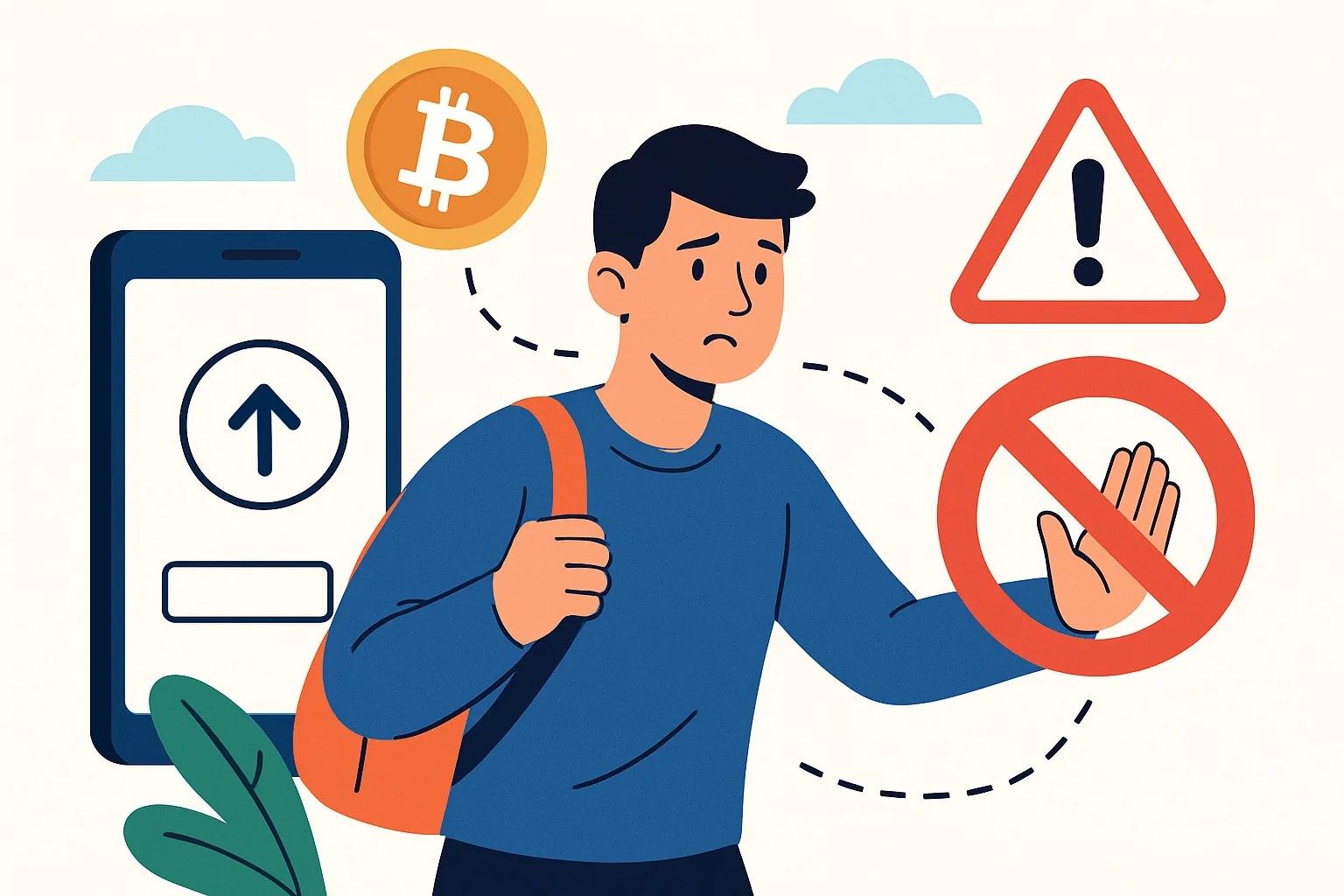
How to Avoid Crypto Exchange Withdrawal Problems
Withdrawing crypto sounds simple enough: choose the coin, paste the address, confirm, done. In practice, that last step is where many users run into friction. A withdrawal can be delayed, rejected, or sent to the wrong network if a small detail is missed. And because blockchain transfers are irreversible, even a minor mistake can turn into a long support thread and a very bad day.
The good news is that most crypto exchange withdrawal problems are preventable. If you know what typically blocks a payout, how exchanges check accounts, and which details matter most before you click confirm, you can avoid most headaches. This article walks through the practical checks that matter, without the drama.
1. Understand the most common withdrawal blockers
Before fixing a problem, it helps to know what usually causes it. Withdrawals fail for a few recurring reasons, and most of them are not mysterious.
Account restrictions. Some exchanges pause withdrawals if your account is under review, flagged for unusual activity, or not fully verified.
Incomplete verification. KYC and security checks often have to be finished before you can send funds out.
Network congestion. On busy blockchains, transactions may sit in a queue longer than expected.
Incorrect address details. A wrong character, an unsupported address type, or a missing memo can stop the transfer or make funds hard to recover.
Exchange maintenance. Platforms sometimes suspend withdrawals for a coin while they upgrade wallets, perform maintenance, or respond to chain issues.
There is also a subtler issue: sometimes the exchange is fine, but the receiving wallet or chain is not. For example, a token may exist on several networks, and the exchange only supports one of them. If you are comparing assets or moving funds between wallets, the same attention you’d use when choosing where to buy Ethereum, Bitcoin, or another coin is worth using here too.
That may sound obvious, but people often trust the name of the coin and ignore the network underneath it. That’s where trouble starts.
2. Check your account status before you withdraw
Think of withdrawals as a permissioned action, not just a button. Before you start, confirm that your account is actually eligible to send funds at that moment.
Confirm KYC completion
Most regulated exchanges require identity verification before withdrawals are allowed, especially if you are moving larger balances or using fiat-linked rails. Check whether your profile shows verification as complete. If it still says pending, partially verified, or needs a document update, the exchange may block the withdrawal silently or during final review.
Review your security settings
Some platforms require extra safeguards before a withdrawal can go through. That can include two-factor authentication, anti-phishing codes, email confirmation, SMS confirmation, or withdrawal address whitelisting. If you recently changed your password or reset your 2FA, the exchange may impose a temporary hold.
Check withdrawal limits and cooldowns
Every exchange sets its own limits. These may depend on verification level, region, asset type, or even recent account behavior. Also watch for cooldown periods after key changes. If you just added a new withdrawal address, changed a trusted device, or updated security settings, you may need to wait before sending funds.
Look for account notices
Open your notifications, support inbox, and exchange status page. A platform may post short maintenance alerts, wallet suspensions, or delayed processing notices there. Users often miss these details and assume the exchange is broken, when in fact the answer is sitting in a banner at the top of the page.
3. Verify the withdrawal details carefully
This is the part where patience pays off. A few seconds of checking can save hours of recovery attempts.
Double-check the destination wallet address
Copy and paste the address, then compare the first and last characters against the destination wallet. Clipboard malware is rare, but it exists, and simple copy errors happen more often than people admit. If your wallet supports QR scanning, that can reduce the risk, though it still deserves a visual check.
Select the correct network
This is one of the most common mistakes. The same coin can move on different networks, and the sending exchange must match the receiving wallet. For example, a token may be available on Ethereum, BNB Chain, or another supported network. Sending on the wrong chain may delay recovery or make recovery impossible.
If you are moving assets commonly used across multiple chains, it helps to be extra deliberate. A lot of confusion around network choice comes from habit: users remember the coin name, but not the chain. That is exactly why a simple withdrawal routine matters.
Check memo, tag, and payment ID fields
Some assets require an extra identifier, often called a memo, tag, or payment ID. This is common with exchange deposit addresses and certain wallets. If the destination requires one and you leave it blank, the deposit may never be credited automatically. The exchange might be able to help, but only after manual review and evidence.
Respect the minimum withdrawal amount
Exchanges usually set a minimum amount for each asset. If your balance is below that threshold, the withdrawal may not be available. Even if the balance looks close, fees may reduce the final transferable amount. Check the confirmation screen before you proceed.
Use a small test transfer first
When you are sending to a new address or a new network, a small test amount is a sensible habit. It is slower, yes. It is also cheaper than learning about a mismatch after a larger transfer is already on the chain. If the test arrives correctly, you can send the rest with more confidence.
4. Review crypto exchange withdrawal fees before confirming
Crypto exchange withdrawal fees can be straightforward or surprisingly layered, depending on the platform and the asset. Some exchanges charge a flat fee. Others base the charge on current network conditions, and some combine an exchange fee with a blockchain fee in the final estimate.
Why does this matter? Because a withdrawal that looks affordable in the asset screen can become less attractive once fees are added. More importantly, the fee can affect the amount that actually reaches the destination if you are transferring a near-minimum balance.
Flat fees versus network-based fees
A flat fee stays the same regardless of network activity. That makes planning easier, but it may not reflect changing blockchain costs. Network-based fees are more dynamic and can rise or fall with congestion. Some exchanges pass the current on-chain cost through to the user. Others estimate it in advance and update the final screen before confirmation.
Where to find the final fee estimate
Always read the final confirmation page. That is where exchanges usually show the destination amount, withdrawal fee, and any note about processing time. If the amount seems lower than expected, stop and check the breakdown before confirming. It is much easier to cancel at that stage than to ask support what happened afterward.
Fees vary by coin, by blockchain, and by platform policy. If you are comparing which assets are easier or cheaper to move, it can help to look at the support pages for the specific coin you use most often. The rules for Bitcoin will not match those for Litecoin, XRP, or other assets, and that difference matters when you are planning a transfer.
5. What to do when your crypto withdrawal is pending
A crypto withdrawal pending status is not automatically a problem. In many cases, it simply means the exchange has accepted your request and is moving through its internal checks before broadcasting the transaction to the network.
Common processing stages
A withdrawal may pass through several steps: request received, security review, internal approval, blockchain broadcast, and network confirmations. If any stage slows down, the status can remain pending longer than you expected. On some platforms, the user interface only shows one word, which does little to clarify where the delay is actually happening.
How long pending may last
The length of a pending period depends on the exchange, the coin, the network, and account checks. Some withdrawals clear within minutes. Others may take longer during busy periods, scheduled maintenance, or when manual review is involved. If you are waiting, avoid repeating the withdrawal request unless support specifically tells you to do so. Duplicate requests can make the situation messier.
When pending becomes a real issue
If the transaction remains pending far longer than the exchange’s stated processing window, start collecting evidence. Save screenshots of the withdrawal page, the status, the amount, the destination address, and any email confirmations. If a transaction ID is available, record it immediately. That information will matter if support asks for proof.
6. Use safer withdrawal habits to prevent future issues
A few disciplined habits can prevent a lot of repeat problems. These are not glamorous, but they work.
Withdraw during stable network conditions. If a chain is visibly congested, consider waiting unless the transfer is urgent.
Send a test amount first. Especially for new addresses, new wallets, or large transfers.
Use address whitelists. If your exchange supports it, whitelisting can reduce the risk of sending to the wrong recipient.
Avoid unsupported tokens and networks. Always confirm that the exchange and the wallet both support the same chain.
Keep your security clean. Use strong passwords, 2FA, and a separate email account for exchange notifications if possible.
For users who are still learning how wallets and withdrawals connect, it can be useful to read a plain-language guide such as how to choose a crypto wallet. A better wallet setup often means fewer surprises when it is time to withdraw.
And if you have not yet moved crypto off an exchange before, a practical walkthrough like moving crypto to a wallet can help you get familiar with the process before you make a live transfer.
7. Troubleshoot unresolved withdrawal problems
If the withdrawal still has not arrived, resist the urge to guess. Use a methodical approach.
Check the transaction status
Look at the withdrawal history inside the exchange. If the exchange has broadcast a transaction, there should usually be a transaction hash or ID. Paste that ID into the relevant blockchain explorer to see whether the transaction is confirmed, pending, or not broadcast at all.
Review exchange notices again
Sometimes a problem that looks personal is really platform-wide. Check the status page, the asset’s withdrawal page, and any recent maintenance announcements. If the exchange is temporarily pausing withdrawals for that coin, support may simply confirm what the notice already said.
Contact support with complete evidence
When you reach support, be specific. Include:
your account email or user ID
the asset name and network
the withdrawal amount
the destination address
the transaction ID, if available
screenshots of the pending status and any confirmation emails
Good support requests are easier to solve. “My withdrawal is stuck” is a complaint. “Here is the transaction hash, the address, the network, and a screenshot of the pending page” is a case file.
Document every step
If the issue remains unresolved, keep a simple timeline of everything you did and when you did it. Save chat transcripts, ticket numbers, and any answers from support. If the matter escalates, you will want an accurate record instead of trying to reconstruct events from memory.
8. Build a simple withdrawal checklist
The easiest way to avoid crypto exchange withdrawal problems is to use the same checklist every time. It does not need to be elaborate. In fact, simple is better, because simple is repeatable.
| Check | What to confirm |
|---|---|
| Account status | KYC complete, no security hold, no maintenance alert, withdrawal allowed |
| Destination address | Correct wallet, correct chain, copied accurately |
| Memo or tag | Required fields entered, if the asset needs them |
| Amount | Above minimum withdrawal amount, fee considered |
| Fee | Final crypto exchange withdrawal fees checked on the confirmation page |
| Test transfer | Small trial sent first when using a new address or network |
| Status after submission | Transaction ID saved, pending status monitored, support contacted if needed |
If you use that checklist consistently, most withdrawal mistakes become rare. You may still encounter delays from the exchange or the network, because those things happen. But you will be less likely to create avoidable problems yourself, and that makes a big difference when money is involved.
Final thoughts
Crypto withdrawals are not hard once you treat them with the respect they deserve. The main risks are usually familiar: account restrictions, wrong network selection, missing memo fields, fees that reduce the final amount, and crypto withdrawal pending delays that need a little patience. None of these are exciting problems, but all of them can be managed with routine checks and a calm process.
Before every withdrawal, pause for a minute. Check the account, the network, the address, the fee, and the platform status. If the transfer is important, send a test amount. If something stalls, gather evidence before opening a support ticket. These habits will not make blockchain faster, but they will make your withdrawals safer, cleaner, and far less stressful.