Crypto Exchange Proof of Reserves Explained: What It Means and Why It Matters
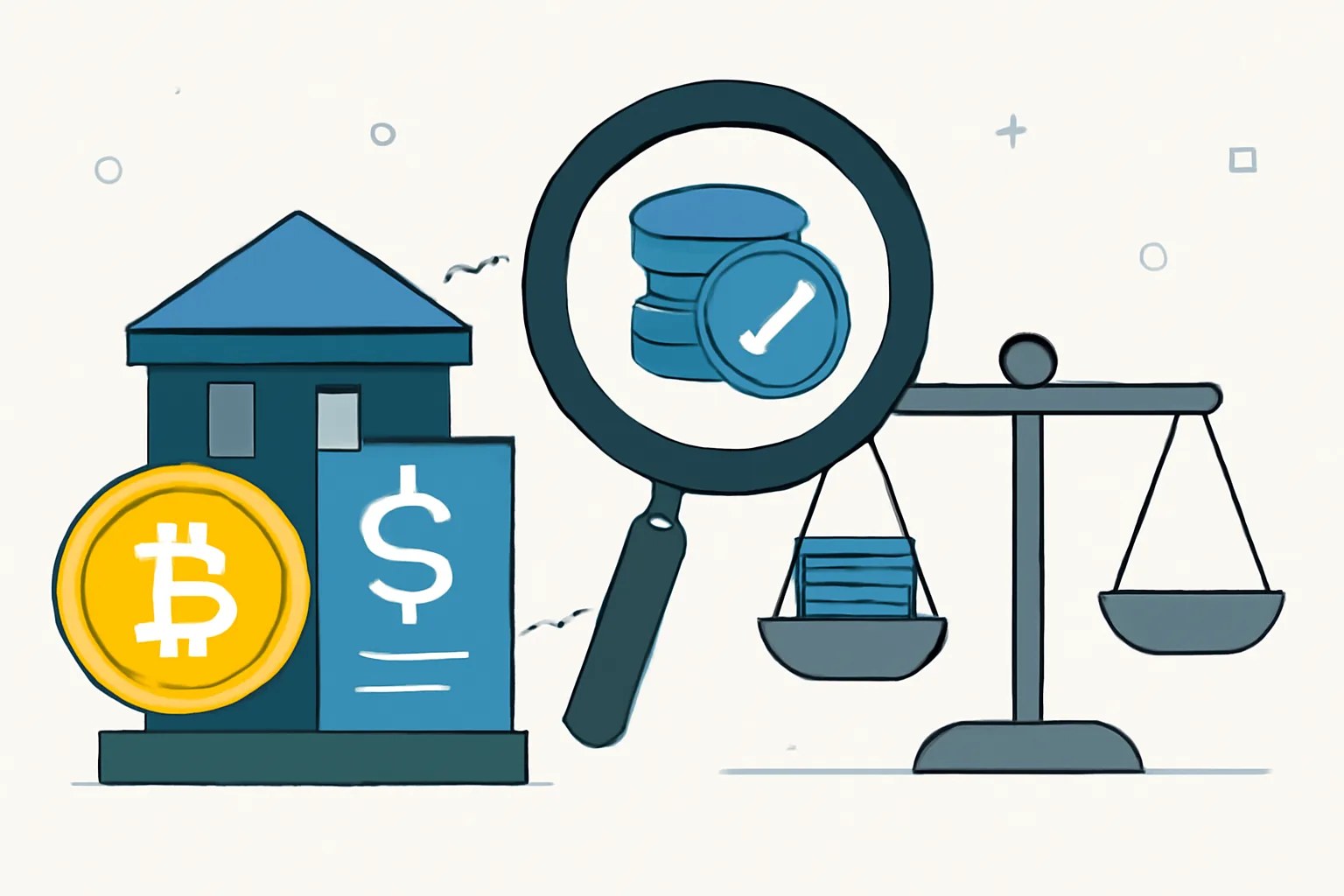
Crypto Exchange Proof of Reserves Explained: What It Means and Why It Matters
A lot of people first meet this topic after a scare. One exchange freezes withdrawals, another makes a vague statement, and users suddenly want numbers, not slogans. That is where crypto exchange proof of reserves explained becomes more than a phrase on a blog post.
In plain English, proof of reserves is a way for an exchange to show that it holds customer assets on chain. The exchange points to wallets, sometimes with a cryptographic proof, and claims those balances match what users are owed. Simple idea. Harder practice.
The reason people care is obvious: if you deposit 2 BTC or 15 ETH, you want to know the platform is not treating your coins like a blank check. That trust question is one reason exchanges publish reserve reports at all.
What proof of reserves is
Proof of reserves is a snapshot, not a magic spell. At a chosen date and time, an exchange shows certain wallet balances and says, in effect, “these assets exist and belong to us or to our custody structure.”
Sometimes the exchange also tries to connect those assets to customer balances using a liability check. That part matters because assets alone do not tell the full story. An exchange can hold billion on chain and still owe .2 billion to users. Math is rude that way.
Think of it as a 3-part picture: assets, liabilities, and the method used to link them. If one of those parts is missing, the report is weaker. If two are missing, it is mostly marketing.
This is also why the phrase is not the same as “the exchange is safe.” It may show reserves on one day, but it does not automatically tell you what happened last month, or what the company owes outside the wallets it disclosed.
How a crypto exchange proves reserves
There are a few common methods, and real reports often combine them. The first is wallet signing. The exchange proves control of an address by signing a message with the private key. That shows ownership, at least for the wallet it chose to reveal.
The second is snapshot reporting. A platform takes a record of balances at a specific block height or timestamp. This can show holdings on chain, but only at that moment. Five minutes later, the picture can change.
The third is third-party attestation. An accounting firm or auditor reviews selected data and signs off on the process. That sounds reassuring, yet the meaning depends on scope. Was it a full audit, a limited review, or just a statement based on management records? Those are not the same thing.
Some exchanges use a Merkle tree to let users verify that their account was included in a liabilities snapshot without exposing other users’ balances. The method is clever, but the question is still whether the inputs were complete and the procedure was honest.
If you trade major coins, the underlying asset does not matter as much as the process. Still, many users start with familiar pairs and then compare platforms that list them, such as where to buy Bitcoin or where to buy Ethereum, because the biggest markets usually attract the loudest reserve claims.
One more detail: a proof report should say which wallets were included. If the exchange only discloses 4 addresses out of 40, that is a narrow picture. If it uses custodians, cold storage, or lending desks, the structure should be spelled out.
What proof of reserves does and does not confirm
Proof of reserves can confirm that certain assets existed at a point in time. It can even confirm that the exchange controlled those assets. That is useful, and users should not dismiss it just because it is incomplete.
What it does not confirm is just as important. It does not always prove every liability. It may not show off-chain obligations, loans, rehypothecation, or internal transfers that distort the picture. One wallet statement is not a full balance sheet.
It also does not guarantee solvency. An exchange may hold enough coins on Tuesday and still face a problem on Friday. Market losses, frozen counterparties, legal claims, and operational failures can all change the picture fast.
Here is the blunt version: proof of reserves is evidence, not a verdict. Users who treat it like a guarantee often skip the hard questions. Then they are surprised later. That surprise tends to be expensive.
Why proof of reserves became important
Reserve transparency became a major issue after exchange failures made users much less patient with vague promises. A polished homepage and a social post were no longer enough. People wanted on-chain proof, not reassurance in 280 characters.
The broader market also changed. In a cycle where users move funds quickly, one rumor can trigger withdrawals across several platforms. A single weak report can create a larger trust problem than the exchange’s own balance sheet might suggest.
Regulators noticed too. They may not agree on the exact standard, but they understand the risk of hidden liabilities and incomplete disclosure. That is why proof reports, attestations, and custody disclosures now appear in more discussions than they did 5 years ago.
Even traders who never read an audit report started asking better questions. If an exchange can prove reserves for BTC but not for smaller coins, users notice. If it can publish wallet data for one chain and nothing for another, users notice that too. Silence is loud in this business.
People shopping for altcoins often compare platforms first and ask questions later. A trader looking at where to buy Solana or where to buy XRP may not read a reserve report line by line, but reserve transparency can still affect which exchange gets the deposit.
How to evaluate a proof-of-reserves report
Start with the date. A report from 18 months ago is not much help if the exchange’s balance sheet changed twice since then. Check whether the report is current, and whether the timestamp is clearly disclosed. If you want a practical framework for how to evaluate a proof of reserves report, begin with freshness and scope.
Then read the methodology. Ask whether the work was a full audit, a limited review, or a management attestation. Those labels matter. A limited review may involve fewer procedures than a true audit, and a user should not confuse the two.
Look at the asset coverage. Does the report include only BTC and ETH, or does it also cover stablecoins and lesser-traded tokens? If you hold 6 different assets on the platform, a report covering only 2 of them is incomplete for your decision.
Check liabilities next. If the exchange only shows wallet balances but does not show customer obligations, the report answers half the question. Half answers can still sound polished. They are still half answers.
Custody structure matters too. Are the coins held in one corporate wallet, multiple cold wallets, or with a third-party custodian? If a report does not explain who controls the keys, the user cannot judge whether the disclosure is meaningful or merely neat.
Finally, look for repeat reporting. A single one-off publication is weaker than a routine process. Monthly, quarterly, or another fixed schedule gives users something to compare. One report is a snapshot. Several reports tell a story.
If an exchange serves users in multiple markets, the reserve approach may also differ by asset class. That is why traders comparing coin access sometimes check guides like where to buy Dogecoin or where to buy Cardano, because the listing side and the custody side are not always the same thing.
Limitations and common risks
The biggest weakness is scope. A report can be technically correct and still leave out important liabilities. If the exchange borrows against assets, lends customer funds, or has affiliate obligations, the report may miss those exposures unless they are explicitly included.
Timing gaps are another problem. A snapshot on Monday may say little about what happened on Wednesday. A fast-moving exchange can change its position several times in a week, especially during periods of stress. One day is not a season.
There is also the issue of hidden or delayed liabilities. Customer balances can be misstated, internal records can be incomplete, and off-chain commitments can sit in another database entirely. A clean reserve page does not automatically catch those problems.
Marketing language is a risk on its own. “Proof of reserves” sounds strong, so some platforms use it loosely. They may publish a wallet list or a nice graphic and imply more than they have actually shown. That is not proof; that is presentation.
Independent verification can help, but only if the verifier has enough access and enough independence. A report signed by a provider that depends heavily on the exchange for future work should be read carefully. The name on the page is not the whole story.
Traders who diversify across smaller assets should stay alert here. A platform may have decent disclosures for one token and poor disclosures for another. Someone checking where to buy Litecoin or where to buy Chainlink should still ask whether the exchange’s reserve report covers those holdings at all.
What users should look for before depositing funds
Start with 5 basic checks. First, can the exchange show a recent report? Second, does it explain the method? Third, are liabilities included? Fourth, are the covered assets listed clearly? Fifth, is the custody setup described in plain language?
After that, look at the exchange’s public history. A company that has changed custodians 3 times in a year deserves more scrutiny than one with stable processes. Past behavior is not a guarantee, but it does tell you where to look.
Security controls matter too. Proof of reserves is about transparency, not about stopping phishing, SIM swaps, or bad passwords. If the platform has weak account security, a perfect reserve report will not save your funds from a stolen login.
Reputation still counts. That sounds old-fashioned, yet it remains relevant. Users talk, forums remember, and withdrawal history leaves a trace. A good report from a platform with a bad operating record should not erase the record.
For some investors, it also helps to separate trading from storage. They keep only the amount needed for 1 or 2 sessions on the exchange and move the rest elsewhere. That habit lowers the stakes if a platform’s reserve reporting turns out to be thin.
There is another practical point. If you outsource research or routine checks, make sure the person doing it knows what they are reading. Reserve reports can be tedious, and that is exactly why they are worth reading carefully. For investors who want help with repetitive due diligence tasks, even a side reference like outsourcing research grunt work can be useful as a reminder that the boring work is often the work that saves money.
Final takeaway
Proof of reserves is best treated as one layer of evidence. It can show a real wallet balance, expose a weak disclosure, and make an exchange answer questions it would rather avoid.
It cannot prove everything. It cannot replace custody controls, legal review, or a full understanding of liabilities. If an exchange wants trust, it has to earn it with repeated, clear reporting, not a single splashy announcement.
So keep the phrase crypto exchange proof of reserves explained in its proper place: useful, practical, and limited. That is the real point.
HYIP Articles



Random quote about money
"Говорят, что деньги — корень всякого зла. То же самое можно сказать о безденежье."
Interesting posts in other sections of the blog












 ↑
↑
* to search the proxy database, just enter a country name, e.g. Russia, USA, Thailand