Best Cryptocurrency Investment Strategies: A Practical Guide
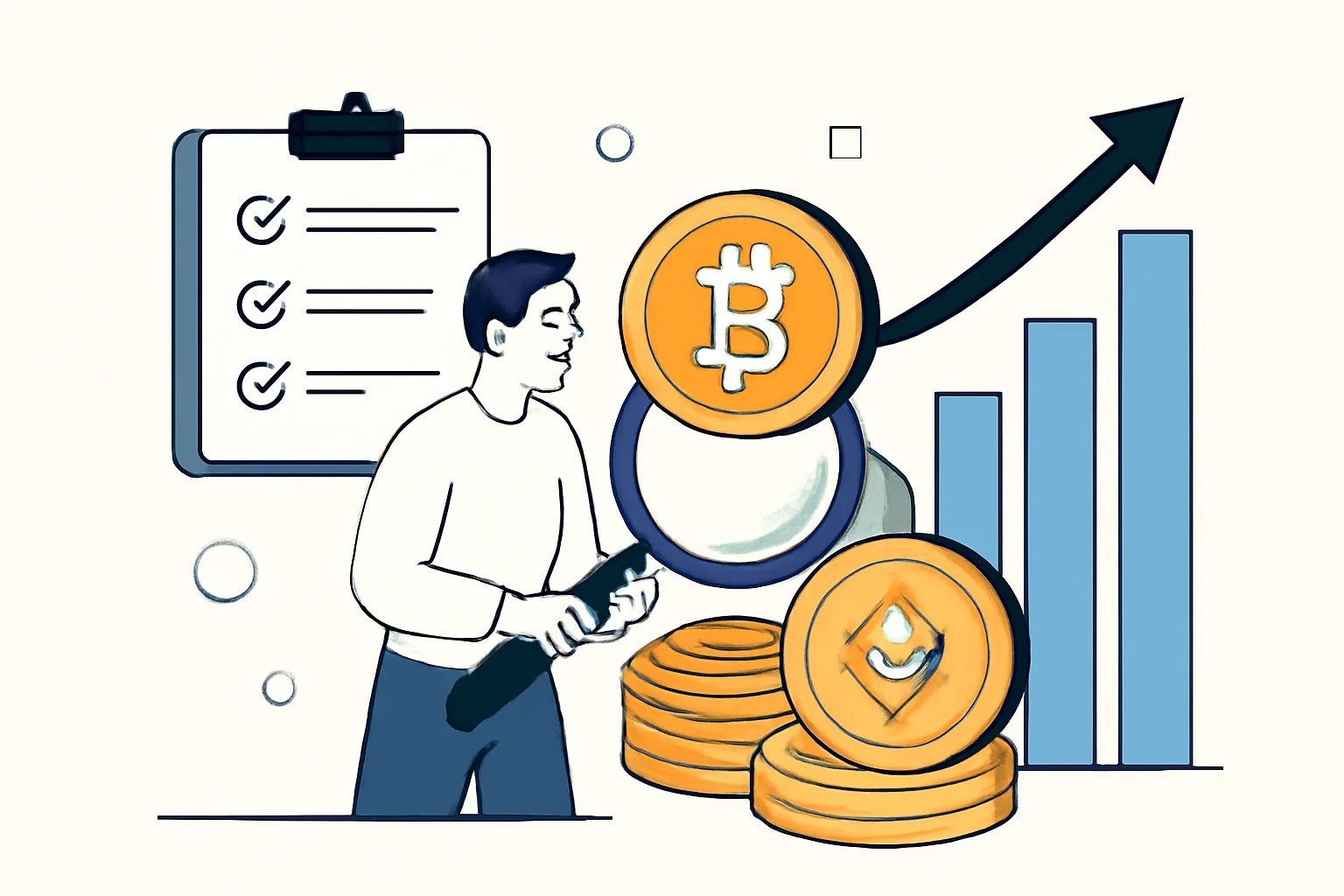
Best Cryptocurrency Investment Strategies: A Practical Guide
People chase crypto for different reasons. Some want growth over 5 years. Others want a clean routine and fewer surprises. The best cryptocurrency investment strategies are not about guessing the next big candle; they are about making decisions that still make sense after a bad week, a wild month, and a quiet year.
That sounds plain, because it is. A good plan beats excitement. A bad plan usually arrives with a chart and a story.
This guide keeps the focus on seven methods that investors actually use. Some are slow. Some are strict. One of them may fit your schedule better than your personality, which is often the real test.
1. Buy and Hold (HODL) for Long-Term Growth
Buy and hold works best for investors who want a simple, low-maintenance approach focused on holding strong cryptocurrencies through market cycles. The idea is straightforward: buy assets you believe can survive more than one hype wave, then keep them through volatility instead of reacting to every 12% move.
That means choosing quality first. Bitcoin and Ethereum still anchor many long-term portfolios, not because they are perfect, but because they have larger markets, broad recognition, and more history than most tokens. A 3-month chart can look scary. A 3-year chart often tells a different story.
HODL also has a behavioral advantage. Fewer trades mean fewer mistakes. Less staring at a screen can help you avoid a common trap: selling after a red day and buying after a green one.
There is a catch. A long-term plan still needs standards. If a project loses its main use case, disappears from major exchanges, or becomes a security headache, holding it just because you bought it at a higher price is not discipline. That is attachment.
A simple holding rule
Pick 3 to 5 assets. Review them every quarter. Ask one question for each: would I buy this today at the current price? If the answer is no for 2 quarters in a row, the position deserves attention.
2. Dollar-Cost Averaging to Reduce Timing Risk
Dollar-cost averaging best suits people who want to invest regularly in fixed amounts and avoid trying to predict short-term price swings. If you invest $100 every Friday, the market can rise, fall, or stall; your schedule stays the same. That regularity matters more than many beginners admit.
The method works because it reduces the pressure to find a perfect entry. Perfect entries are rare. Most investors miss them anyway. A fixed schedule turns a hard timing decision into a repeatable habit.
Example: someone who buys every 2 weeks during a 6-month stretch will likely purchase at several different price points. Some buys feel expensive. Some feel smart. The point is not to win every trade; the point is to average out the entry over time.
There is also a practical angle. Dollar-cost averaging is easier to automate than to improvise. If your platform supports recurring buys, the habit becomes boring. That is a good sign.
For investors who also compare market mood, the cryptocurrency fear and greed index can add context, but it should not replace the schedule. A mood gauge is a signal, not a plan.
3. Diversifying Across Coins and Asset Types
Diversifying across major cryptocurrencies, altcoins, and related assets helps reduce concentration risk. One coin can fail for a technical reason. Another can lag for 18 months. Spread the risk, and one bad narrative does less damage.
That does not mean buying 20 random tokens. It means owning different exposures. A portfolio might include a large-cap coin, a smart contract platform, and one smaller position tied to a specific use case. The mix matters more than the number.
Think in categories. Large caps are usually the core. Mid-caps can offer growth. Smaller projects can add upside, but they can also swing hard and vanish faster than people expect. That last part is not drama. It is history.
Risk also exists outside the coin list. If your exchange is weak, your portfolio is weak. Reading about what changed in crypto exchange security can help you judge where your assets sit and what protections matter.
One more practical point: diversification should fit the size of your account. A small portfolio split into 9 positions can become impossible to follow. A cleaner 4-position plan often works better than a messy 12-position plan.
Examples of useful categories
- 1 large-cap coin for stability
- 1 smart contract platform for ecosystem exposure
- 1 payments or infrastructure token for a different use case
- 1 smaller speculative position with a clear reason
4. Rebalancing a Crypto Portfolio Over Time
Rebalancing keeps portfolio risk aligned with your goals by adjusting allocations as prices change. If one asset doubles and becomes 70% of your portfolio, your risk is no longer the same as it was at the start. Rebalancing puts the weights back where you wanted them.
This is where discipline matters. A strong rally can make a position feel untouchable. A portfolio does not care about feelings. If your target was 40% BTC, 30% ETH, and 30% cash or other assets, a sharp move may break that balance in just a few weeks.
The method can be calendar-based or threshold-based. Some investors review every 3 months. Others rebalance only when a position moves beyond a set range, such as 5% or 10% away from target. Either way, the rule should exist before the market tests it.
Rebalancing also forces you to do the hard thing: trim winners and add to laggards when the numbers justify it. That feels backward, especially after a big run. Still, it often keeps a portfolio from becoming a one-coin bet.
If you trade while rebalancing, order choice matters. The guide on crypto exchange order types explained can help you decide whether a limit order or market order fits your plan.
5. Using Fundamental Analysis to Choose Projects
Fundamental analysis helps investors evaluate token utility, adoption, team quality, and long-term project strength before buying. This is where you ask whether the token does anything real, whether people use it, and whether the project can survive competition.
Start with utility. What problem does the token solve? Then look at adoption. Are people actually using it, or just talking about it on social media? Team quality matters too, though a polished website is not the same thing as execution.
A concrete checklist helps. Review the whitepaper. Check the roadmap. Read recent updates. Look for partnerships that are specific, not vague. One project may claim “mass adoption” and deliver 2 small integrations. Another may be quiet and still ship useful code. Quiet is not always weak.
Fundamental analysis is also a good defense against fashionable mistakes. A token can rise 40% on attention and still be a poor long-term asset. Good research makes that easier to see before the buy, not after the dump.
Investors who want a broader scam filter can also study how to spot a HYIP scam. The page is about HYIPs, not crypto projects, yet the habit of checking claims and promises transfers well.
What to check first
- Real use case
- Active users or partners
- Development progress over the last 6 to 12 months
- Token supply and unlock schedule
- Whether the project depends on one hype cycle
6. Taking Profits with a Clear Exit Plan
Taking profits protects gains by setting target prices, staged sell levels, or rules for reducing exposure during strong rallies. Plenty of investors can buy. Fewer know when to sell. That gap costs money.
A clear exit plan removes guesswork. For example, you might sell 20% at one target, another 20% at a higher target, and leave the rest for a longer move. Or you may decide that once a position doubles, you recover your original capital and let profits ride. Both can work if the rule is written before emotion enters.
This is not about selling everything too early. It is about avoiding the common mistake of watching a 5x gain turn into break-even because the chart looked “still strong.” Charts can always look strong until they do not.
Profit-taking also helps with portfolio hygiene. A large win in one asset can distort the rest of the portfolio. Selling a portion and moving it to a cleaner plan can reduce regret later, especially after a market retrace of 25% or more.
People who move funds between platforms should understand the mechanics first. The guide on how to move crypto from coinbase is useful if your exit plan includes shifting assets instead of holding them in one place.
Short sentence. Sell rules help.
7. Managing Risk with Position Sizing and Stop-Loss Rules
Position sizing and stop-loss rules limit losses by controlling how much capital goes into each trade and defining downside protection in advance. This is where many investors separate speculation from discipline. If one trade can hurt your account badly, the size is too large.
Position sizing should match conviction and volatility. A high-conviction large-cap position can be larger than a thin small-cap token. A token that can move 15% in a day deserves a smaller place in the portfolio than one that moves 3% a day. Simple math, useful consequence.
Stop-loss rules are not magical. They do not save every trade. They do, however, prevent one mistake from becoming a disaster. A clear stop at 8% or 12% below entry may feel uncomfortable, but it gives the trade a defined loss instead of an open-ended one. The exact level needs testing.
Some investors use stops on every trade. Others only on short-term positions. Long-term holders often avoid mechanical stops because crypto can wick hard before recovering. That is why the rule should fit the strategy, not the other way around.
If you also trade actively, remember that liquidity matters. Reading what crypto exchange trading volume means can help you avoid thin books where a stop-loss gets hit too easily.
One small sentence. Size first.
How these strategies fit together
You do not need all 7 at once. A cautious investor may use dollar-cost averaging, diversification, and rebalancing, then add profit-taking later. A more active investor may combine fundamental analysis with position sizing and stop-loss rules, while still keeping a few long-term holdings.
The strongest plans usually look boring on paper. They define how much to buy, when to buy, when to trim, and where to stop. That structure matters more than predicting the next 30-day move, because crypto can punish confidence faster than it rewards it.
One last practical note: keep records. If you trade or rebalance, the paperwork side can matter as much as the market side. For that, crypto exchange tax reporting for trades is worth understanding before tax season turns into a scramble.
Strong plans are built step by step. One decision. Then another. That is how the best cryptocurrency investment strategies hold up when the market stops being polite.
HYIP Articles




Random quote about money
"Философия богатого отличается от философии бедного следующим: богатый инвестирует свои деньги и расходует то, что осталось; бедный же расходует свои деньги и инвестирует то, что осталось."
Interesting posts in other sections of the blog











 ↑
↑
* to search the proxy database, just enter a country name, e.g. Russia, USA, Thailand