How Litecoin Fits into a Safe First Purchase
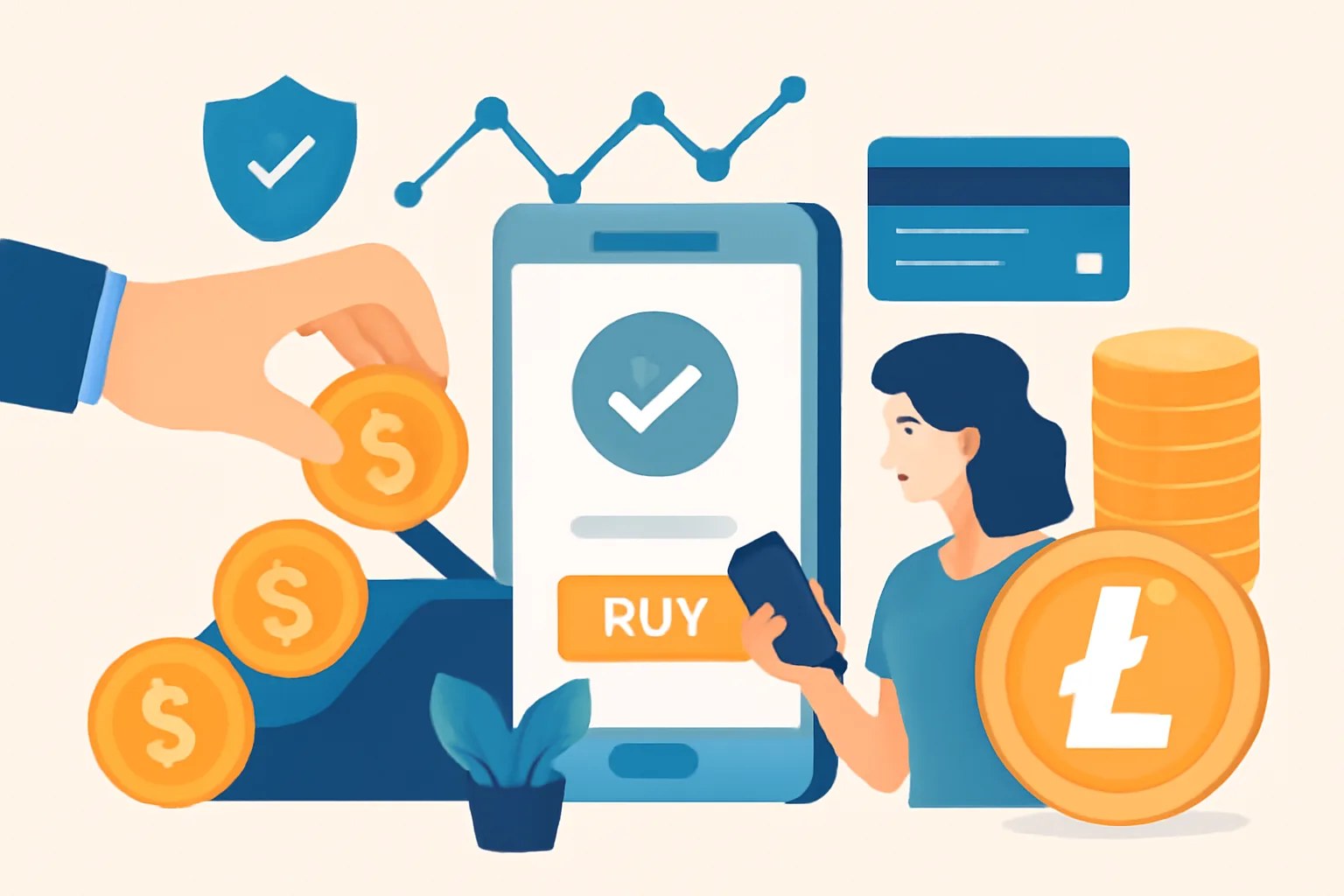
How Litecoin Fits into a Safe First Purchase
Litecoin is one of the older cryptocurrencies, launched in 2011 by Charlie Lee. People buy it for a few plain reasons: fast transfers, lower fees than some larger networks, and a long track record that makes it feel less exotic than a fresh token with a loud campaign. That said, price history does not remove risk. It only changes the shape of it.
If you are learning how to buy Litecoin safely, the first thing to accept is that the purchase itself is only one step. The bigger risks often show up before and after the trade: a fake platform, a rushed payment, a weak password, or a wallet address copied wrong by one character. Small mistake. Large consequence.
Litecoin also attracts buyers who are new to crypto, which is exactly why safety matters. A beginner may focus on the price chart and ignore platform permissions, withdrawal rules, or whether the app is real. That is how people lose money without ever making a “bad trade” in the usual sense.
Choose a Trusted Crypto Platform
Start by comparing exchanges and brokers on three concrete points: security controls, reputation, and supported payment methods. A serious platform usually offers two-factor authentication, withdrawal whitelist features, and clear account recovery steps. If the site cannot explain those basics, walk away.
Look for signs that the company is properly registered or compliant where it operates. Regulations vary by country, so this is not a box to tick once and forget. A platform that accepts your bank card may still be a poor fit if it has weak support, a history of account freezes, or confusing fee rules. I would rather see plain-language terms than glossy marketing.
Reputation matters, but not in the lazy “people seem to like it” sense. Check how the platform handles complaints, how long it has been live, and whether its app store listing matches the official website name. One useful habit is to cross-check the platform’s domain, social accounts, and download links before you sign up. If the names do not line up, that is a warning.
For readers comparing coin-specific buying guides, the same screening logic applies to how to buy solana safely and how to buy chainlink safely. The asset changes, but the platform risk does not. Same trap, different token.
Set Up and Secure Your Account
Create the account only on the official site or official app. Then set a strong password that is unique to that platform. A reused password turns one breach into several, and crypto accounts are attractive targets because transfers can move fast. Fast is convenient. Fast is also unforgiving.
Enable two-factor authentication immediately, and use an authenticator app rather than SMS if the platform allows it. Text messages can be intercepted or redirected through SIM swap attacks. An authentication app is not magical, but it removes one easy route for attackers. That one change can save a future headache.
Identity verification may be required, especially on regulated exchanges and brokers. Be ready to provide a government ID, proof of address, or a selfie check. The process can feel tedious, yet it is often what allows deposits, withdrawals, and higher account limits. If verification fails, fix the document issue rather than trying to force a workaround. That shortcut usually ends badly.
If you run into document problems, the patterns are similar to crypto exchange account verification problems. Blurry photos, expired IDs, and mismatched names cause most delays.
Fund Your Account the Safe Way
Use funding methods that leave a clear record, such as bank transfer, debit card, or another payment method supported by the platform. Avoid sending money through informal channels, pressure-filled “support” contacts, or anyone asking you to pay outside the platform. If a stranger promises faster crediting in exchange for a direct transfer, stop there.
Before depositing, review the fee table carefully. Deposit fees, card fees, conversion fees, and spread costs can all change the real price of your Litecoin purchase. A low headline fee can hide a higher total cost. The number you feel is the final one, not the number on the banner.
Check whether your bank or card provider classifies crypto purchases as cash advances or higher-risk transactions. That detail can affect cost and approval. Some users prefer bank transfer for this reason, even if it takes longer. Time costs less than surprise charges.
Funding choices also depend on broader exchange rules. If a platform has changed its limits or payment support, read what changed in crypto exchange regulations before you deposit. A rule change can block a payment method that worked last month.
Place Your Litecoin Order
Most platforms offer market orders and limit orders. A market order buys Litecoin at the current available price, while a limit order lets you set the price you are willing to pay. A market order is quicker. A limit order gives you control. That trade-off matters.
Before you click confirm, check the asset name, the amount, the estimated fee, and the final quantity of Litecoin you will receive. One wrong tap can change a small purchase into a larger one than intended. Double-check the decimal point too. It sounds obvious until it happens.
If the platform shows a preview screen, read it fully. Some screens separate the quoted price from the spread or add a short validity window. If the market moves during that window, your final result may differ. That is normal, but it should never be a surprise.
Buyers who also trade other crypto assets often follow similar habits on projects such as how to buy uniswap safely and how to buy avalanche safely. The order screen is where discipline pays off.
Store Litecoin Securely After Purchase
Leaving Litecoin on an exchange is convenient, but convenience is not the same as safety. If you plan to hold for more than a short period, consider moving it to a wallet you control. Many buyers use a software wallet for quick access and a hardware wallet for larger balances. The second option adds a physical device, which can be worth the extra step.
Private keys and recovery phrases deserve strict protection. Never share them in chat, email, or screenshots. Never type them into a website that “supports” you. A real wallet provider does not need your recovery phrase to fix a login issue. If anyone asks, it is a scam.
Write the recovery phrase offline and store it in two separate secure places. Paper is simple, though fire and water are real risks. Some users keep one copy in a home safe and another in a different location. That sounds old-fashioned because it is. Old-fashioned can be good.
Wallet choice is part of broader crypto planning, just as strategy guides matter for other assets. For a wider view, see best cryptocurrency investment strategies. Different coins, same habit: think about custody before excitement takes over.
Avoid Common Scams and Mistakes
Phishing remains one of the most common threats. A fake email or message may copy a platform’s logo, then push you to “verify” your account through a cloned login page. One wrong click can expose your password and 2FA code together. That is enough for an attacker.
Fake apps are another problem. Download only from official app stores, and still check the publisher name, reviews, and website link. Some clones are polished enough to fool people for 10 seconds, which is all they need. Ten seconds is not long.
Impersonation scams often start with a chat message pretending to be support. The fake agent may ask for your seed phrase, a remote desktop login, or a fee to “unlock” withdrawals. Real support does not need any of those. Real support also does not rush you.
Sending funds to the wrong address is a permanent mistake on most crypto networks. Litecoin transactions do not come with a friendly undo button. Copy the address carefully, confirm the first and last characters, and send a tiny test amount if the platform or wallet allows it. That small test can expose a bad address before a larger loss.
People comparing scams across different coins often notice the same pattern in many buying guides, including crypto payments for investment blogs. The lure changes. The fraud does not.
Review Your Purchase and Plan Next Steps
After the purchase, check your transaction history, wallet balance, and any email receipts. Save screenshots or PDFs of the order confirmation, fee breakdown, and transfer record. If a dispute appears later, those records matter more than memory. Memory is usually the weakest document in the room.
Decide what you want Litecoin to do for you. Hold it, transfer it, or sell it. That decision should be tied to a goal, not to a random price move. If you bought Litecoin for long-term holding, set a review date instead of checking the chart every hour. If you bought it for a near-term trade, record the price level that would change your plan.
Track the wallet address you used, the exchange account email, and the two-factor backup codes in a secure place. If you ever lose access, those details can speed recovery. They can also prevent a small issue from becoming a locked account.
Some readers compare Litecoin with other assets before making the next move, and that is sensible. The logic behind the differences between forex and crypto trading helps here, because crypto trades settle differently and custody matters more than in many traditional markets. A plan beats guesswork.
One final check: if you can answer where your Litecoin sits, who can reach the account, and what fee you paid, you are already ahead of many first-time buyers. Keep those three answers current. Then leave the trade alone for a while.
HYIP Articles
Random quote about money
"Нельзя гоняться за деньгами — нужно идти им навстречу."
Interesting posts in other sections of the blog







 ↑
↑
* to search the proxy database, just enter a country name, e.g. Russia, USA, Thailand