

How to Check a Crypto Exchange Before Depositing: A Step-by-Step Guide
Depositing money into a crypto exchange should never feel like a leap of faith. Yet that is exactly how many people treat it: they open an account, see a clean interface, maybe a few polished badges, and send funds before asking basic questions. If the platform is genuine, that may be fine. If it is weak on compliance, security, or customer support, the damage can be immediate and frustrating.
This guide is meant to slow that process down in a useful way. It does not assume you are paranoid, and it does not assume every exchange is a trap. It simply shows how to verify a crypto exchange before you deposit, using practical checks that anyone can perform. The goal is not to guarantee perfection. The goal is to reduce avoidable mistakes.
If you are comparing exchanges for major assets such as Bitcoin or Ethereum, it helps to think beyond the trading pair itself and look at the platform behind it. A convincing listing is not the same thing as a trustworthy business. That distinction matters whether you are buying Bitcoin, exploring Ethereum, or checking a smaller asset with thinner liquidity. The exchange is part of the risk.
1. Why Checking a Crypto Exchange Matters
People usually focus on price, spread, or the number of coins available. Those are useful, but they are not the only things that can affect your money. An exchange can have decent rates and still be a poor place to store funds, especially if withdrawal rules are unclear or support disappears when problems arise.
There are a few common risks. The first is simple fraud: a site that looks legitimate but is built to collect deposits and delay withdrawals. The second is operational weakness: a platform that is real but poorly managed, with weak security or no meaningful customer support. The third is regulatory uncertainty. A business may operate in one country and not another, and the legal framework can change quickly.
Checking before depositing gives you time to notice warning signs. It also helps you separate marketing from substance. That is especially important in crypto, where platform branding can look more polished than the underlying controls. A little verification now is far cheaper than a long support ticket later.
2. Step 1: Confirm the Exchange’s Identity and Legal Presence
Start with the basics: who runs the platform, and where is it registered? A trustworthy exchange should not hide behind a vague brand name with no business details. Look for the legal entity name, the operating company, the terms of service, and the jurisdiction it claims to operate in. If that information is missing, buried, or contradictory, treat that as a warning sign.
Check the website domain carefully. Scam sites often imitate real brands with slight spelling changes, extra words, or odd subdomains. Make sure the URL matches the official brand and is served over a secure connection. A padlock icon alone does not prove legitimacy, but it does at least mean the connection itself is encrypted. That is only one part of the picture.
Read the legal pages. You are looking for more than polished language. Is there a real company name? A physical address? A complaints process? A privacy policy that explains how data is handled? If the exchange serves users in regulated regions, there may also be licensing information or a registration number that can be checked through the relevant authority. If the exchange claims to be licensed, do not take the claim at face value.
Be careful with brand confusion. Some platforms have similar names, and fraudsters often exploit that resemblance. Cross-check the name in official app stores, social channels, and the exchange’s own announcements. If you cannot confidently match the company to the website, stop there and do more research before sending money.
3. Step 2: Review Crypto Exchange Safety Signals
Security features are not a guarantee, but they are important evidence. A serious exchange will usually explain how it protects accounts and funds. Look for two-factor authentication, withdrawal whitelisting, anti-phishing codes, device management, login history, and session controls. If those tools exist, they should be easy to find and easy to activate.
Pay attention to the security page. A legitimate platform often describes how users can secure accounts and what internal protections are in place. Claims about cold storage, multi-signature wallets, or segregated funds should be treated carefully unless they are independently confirmed. A platform can say anything in a marketing section. What matters is whether the claims are specific and consistent with other evidence.
Device and session controls are worth checking yourself. Can you see where your account is logged in? Can you revoke unknown sessions? Can you set withdrawal locks or address allowlists? These are practical safeguards, not decorative features. If the exchange offers them, test them before depositing a meaningful amount.
Another useful sign is how the exchange communicates risk. Good platforms explain that users should protect their own credentials, not share codes, and not trust support messages that ask for sensitive information. If the company sounds casual about account safety, that is not reassuring. If it says all the right things but offers no actual controls, that is also a problem.
4. Step 3: Check Reputation, User Feedback, and Public Records
Reviews can be messy, but they are still worth reading. Do not focus on one angry comment or one glowing endorsement. Look for patterns. Are users repeatedly complaining about delayed withdrawals, frozen accounts, slow verification, or missing support replies? Are those complaints recent, or do they go back years without a meaningful response?
Search beyond the exchange’s own website. Independent review sites, discussion forums, social media threads, and consumer complaint databases can reveal recurring issues. If you see a wave of identical praise, be cautious; if you see a wave of identical anger, be just as cautious. The goal is not to believe strangers automatically. The goal is to spot trends.
Support responsiveness matters more than many traders expect. A platform may work fine until something goes wrong. Then the tone of the support team becomes decisive. Try asking a simple question before depositing: how long do withdrawals take, what documents are needed for verification, or how to update security settings. The quality of the answer tells you something useful. Slow, scripted, or evasive replies are worth noting.
Also check whether the exchange has a public incident history. Security breaches, withdrawal freezes, or unresolved legal disputes do not automatically make a platform unusable, but they do change the risk profile. A trustworthy company usually addresses incidents directly and explains what happened, what was affected, and what was changed afterward. Silence is less comforting than candor.
5. Step 4: Test the Platform Before Depositing
You do not need to send funds immediately just to see how the platform behaves. In fact, you should avoid doing that. Create an account first and explore the basics. Confirm the email. Enable two-factor authentication. Review account settings. Look at the security menu, the withdrawal section, and the help center. None of this costs you anything, and it tells you a great deal.
Try a small, low-risk test of the interface. Can you find deposit and withdrawal instructions without hunting through support articles? Are the steps clear? Is the language precise, or are there gaps and odd translations? A platform that is hard to navigate when nothing is wrong may become a serious headache when you need help quickly.
If the exchange offers live chat or ticket support, test that too. Ask a straightforward question and see whether the answer makes sense. You are not looking for perfection. You are looking for signs of competence and consistency.
This is also a good moment to check whether the exchange’s educational material matches the platform itself. For example, if you are researching how to buy a specific asset, such as Solana or Litecoin, the platform should explain the process cleanly and without pressure. If you are also comparing where certain coins can be traded, it may help to look at dedicated buying guides like Solana or Litecoin for context. Clear communication tends to cluster with better operations.
6. Step 5: Examine Fees, Limits, and Withdrawal Rules
Fees are more than a trading detail. They can shape your ability to move money in and out efficiently. Review the maker and taker fees, conversion fees, deposit fees, and withdrawal fees. If the fee schedule is complicated or hidden behind multiple pages, take your time. You are not just checking price; you are checking transparency.
Withdrawal rules deserve particular attention. Some exchanges advertise easy deposits but make withdrawals expensive, slow, or conditional. Look for minimum withdrawal amounts, fixed versus variable fees, processing times, and any requirements tied to account verification. If there are tiered limits, note what changes at each level and whether you are comfortable with the restrictions.
Read the fine print around dormant accounts, compliance reviews, or manual withdrawal checks. A legitimate exchange may need to pause suspicious activity or request extra verification. That is normal. What is less normal is vague language that gives the company broad power to delay withdrawals without explanation. If the policy sounds one-sided, be cautious.
It also helps to test the clarity of the numbers. Can you see what you would pay before confirming a trade or transfer? Do rates change in the final step? Are network fees separated from platform fees? If the answer is no, you may be dealing with a system that profits from confusion.
7. Step 6: Review Asset Coverage, Custody, and Proof Claims
Asset coverage is not just about how many coins are listed. It is also about how the exchange handles custody and what it says about storing customer funds. A platform should explain whether user assets are held in omnibus wallets, segregated accounts, or another model. The clearer the explanation, the better.
Look at the actual listing quality. Are the assets supported with proper market data, deposit instructions, and network details? If you are checking a platform because you want access to a specific token, make sure the exchange supports the correct chain and transfer method. A mismatch here can create permanent loss if you send assets to the wrong network.
Some exchanges make proof-of-reserves claims. That can be helpful, but it is not a magic shield. Ask what exactly is being proved, how often the proof is updated, whether liabilities are included, and whether an independent auditor or technical verifier is involved. A partial proof can still leave important questions unanswered.
Custody deserves a practical mindset. If the platform tells you your funds are safe, ask yourself safe in what sense, and under whose control? Exchanges can be useful for trading, but they are not all suitable as long-term storage. If the custody model is not clearly described, consider keeping only the amount you need for active trading.
When users compare exchanges for assets like Cardano, XRP, or Chainlink, the list of supported coins can become a deciding factor. That is fair enough, but the asset list should never outrank the platform’s operational quality. If you need broader market access, you can also review dedicated guides for Cardano, XRP, or Chainlink to compare where those coins are commonly offered.
8. Final Checklist Before You Deposit
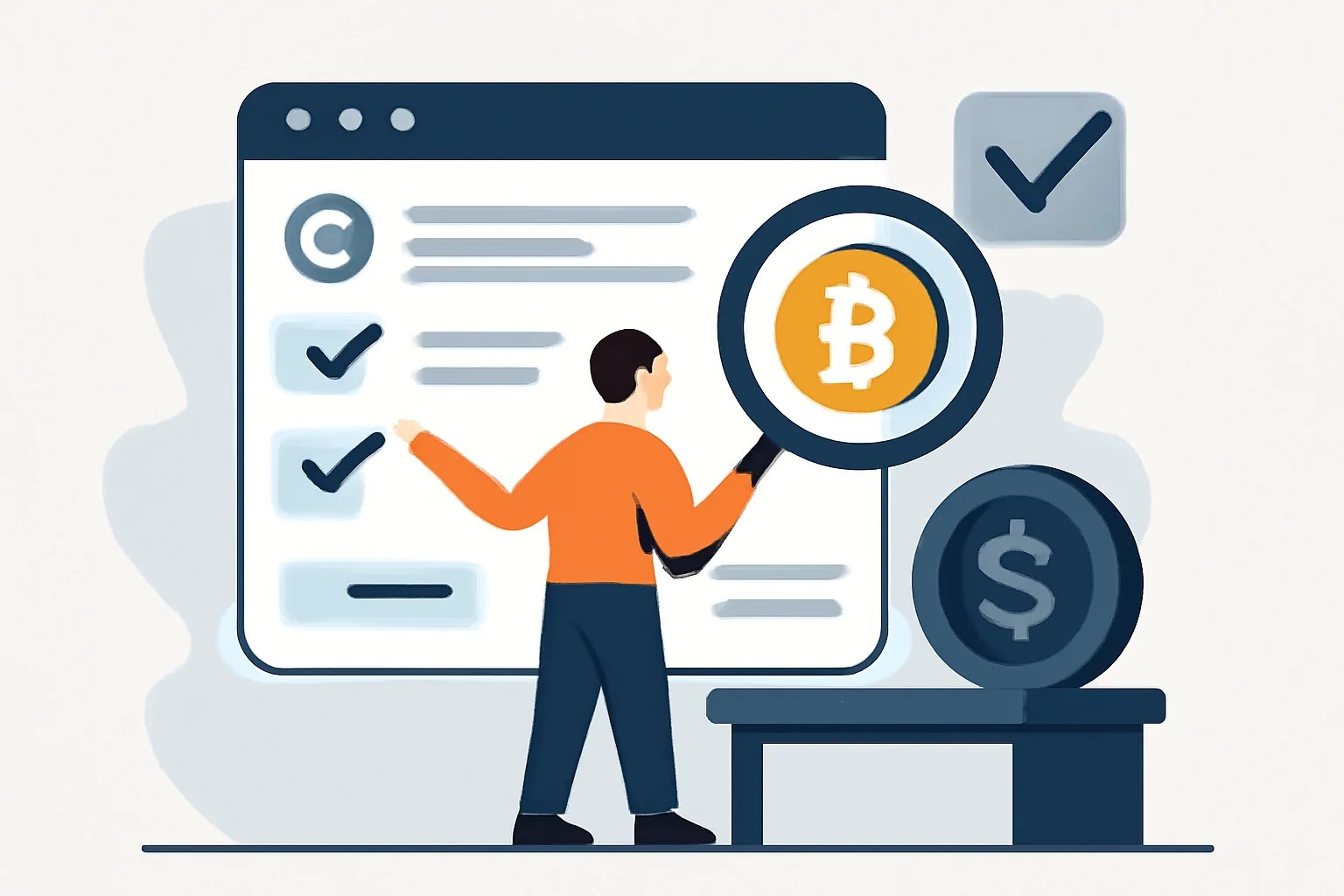
Before you send funds, run through a short checklist. It does not need to be elaborate. It just needs to be honest.
- Have you confirmed the company name, domain, and legal presence?
- Did you read the terms, security page, and withdrawal rules?
- Did you find credible user feedback, not just marketing noise?
- Did you test account security settings and support responsiveness?
- Do fees, limits, and withdrawal times make sense to you?
- Does the exchange explain custody and reserve claims clearly?
- Are there any unresolved complaints or incident reports you have not understood?
If several answers are unclear, pause. That is not hesitation; it is discipline. A good exchange should be able to survive basic scrutiny. A platform that cannot answer simple questions about identity, security, fees, or withdrawals is asking you to trust more than it has earned.
There is no perfect formula for how to verify a crypto exchange, and there should not be. Markets change, companies change, and risk never disappears completely. But careful checking does make a difference. It helps you avoid obvious traps, notice weak signals early, and separate a decent platform from a dangerous one. That, in the end, is the real point: not blind trust, but informed caution.