What Changed in Crypto Exchange Rules for European Users in 2026
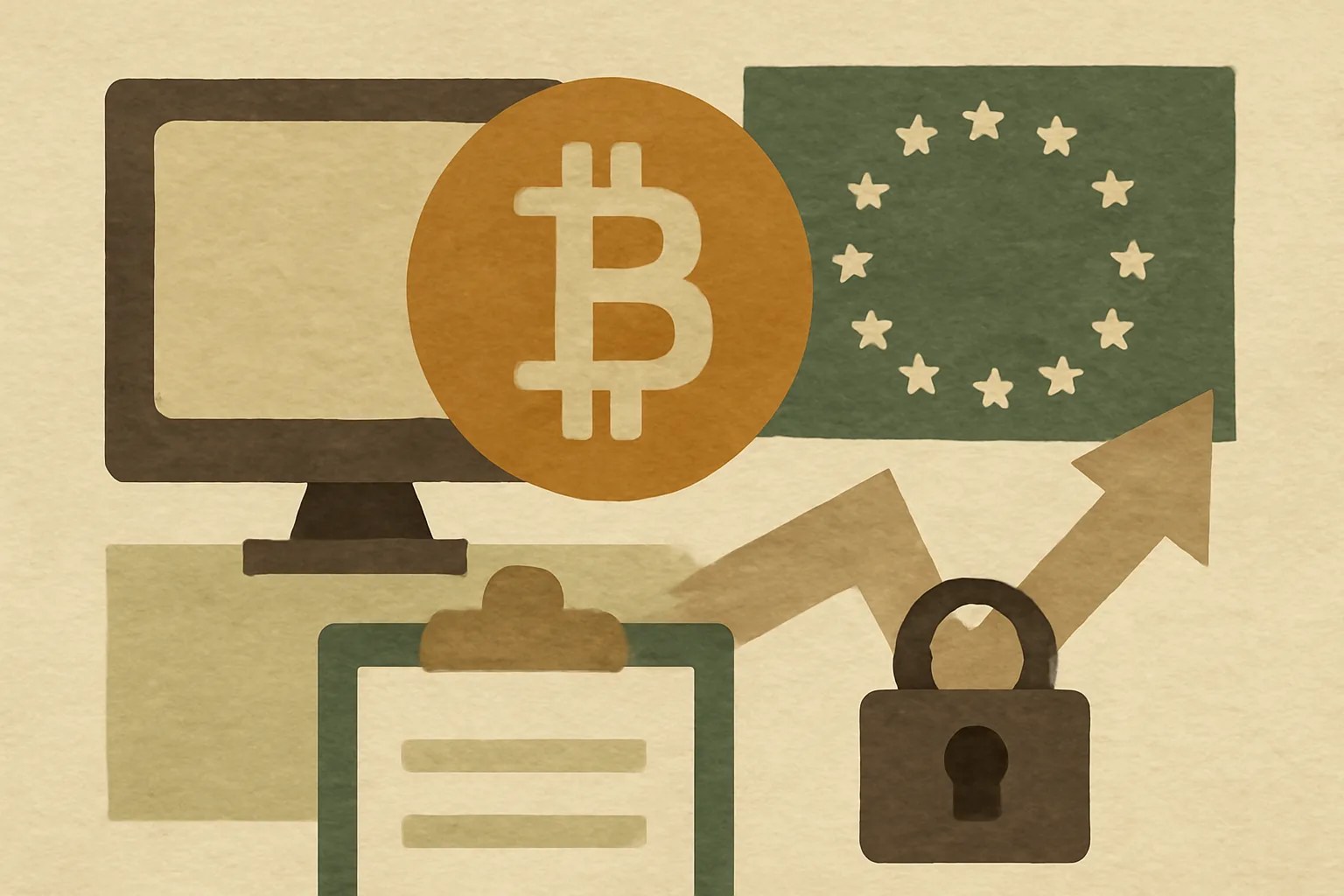
Criteria for European users: what “changed” should mean
For a European retail user, “changed” should not mean a vague policy press release. It should mean a visible difference in sign-up, identity checks, product access, fees, geo-blocks, and the way money moves in and out. If a rule change adds three extra screens and one extra document, that matters.
The cleanest comparison lens is simple: can you open an account, fund it, trade what you want, and withdraw without surprise friction? That is the real test. A rule that lives only in legal text is not the same as a rule that delays a withdrawal by 48 hours or removes a token from a country list.
European users also need to separate broad regulation from user-facing effects. The phrase what changed in crypto exchange rules for European users in 2026 should point to practical consequences, not a history lesson. A retail buyer in Spain and a small business in Poland may both see “the same” rule, yet one platform may ask for a utility bill while another asks for source-of-funds documents on the first deposit.
Which exchange types are affected differently
Not every platform feels the 2026 changes in the same way. EU-licensed centralized exchanges tend to show the most visible adjustments because they have formal obligations, local onboarding flows, and region-specific controls. Non-EU platforms serving Europe often add country filters, stricter verification gates, or warnings that appear only after a user chooses an EU address.
Broker-style apps can feel simpler on the front end, but they may hide the hardest limits in product menus. A user may see a slick buy button and only later discover that derivatives, staking, or specific tokens are not available in their country. That is annoying. It is also common.
Custodial and non-custodial services diverge sharply. A custodial exchange can halt a withdrawal, review a deposit, or request extra documents; a non-custodial service usually cannot hold funds in the same way, but it may still block access at the interface level if local rules require it. For a European user, the difference is not academic.
If you already compare trading models before opening an account, it helps to read how to compare spot trading before assuming every platform offers the same menu in 2026. A platform can be regulated in one country and still restrict half its products elsewhere.
Side-by-side: onboarding, verification, and account access
Before the 2026 rule shift, many European users could sign up with little more than an email and a password, then finish identity verification later. After the shift, the onboarding flow is usually more staged. Expect email confirmation, phone confirmation, identity upload, and then one or more additional checks before full access is granted.
Proof of residency is a common point of friction. A passport alone may no longer be enough for account activation in some cases. Users may need a utility bill, bank statement, or tax document dated within a fixed window. That window matters. A document from six months ago may fail even if the rest of the account details are correct.
Source-of-funds requests are also more visible. A small business owner moving €12,000 from a company account may be asked to explain the origin of the money, the business activity, or the relationship between the sender and the exchange account. The question is not always about suspicion. Sometimes it is just a control step. Still, the user feels the delay.
Enhanced screening can freeze a sign-up at the worst moment. One exchange may approve a cashier quickly, while another marks the account “under review” after a name-screening match, a mismatched address, or a device check. This is where people get impatient. Fair enough. No one enjoys a pending banner that lasts 72 hours.
For users who want a wider reading list on exchange research habits, how to analyze crypto market trends is useful before you decide whether a platform is worth the paperwork. Good information saves time, and time matters when an account review is already on the clock.
Side-by-side: trading access, product limits, and token availability
Trading access is where many European users notice the biggest day-to-day change. A token available in January may be delisted in March, then reintroduced through a different listing route after extra disclosures. That can feel arbitrary, but the platform usually sees it as a compliance response, not a product preference.
Leverage limits are a recurring point. Some exchanges reduce leverage for European accounts, while others remove leveraged access entirely for certain regions. A day trader who expected 20x may only see 5x or no leverage at all. That is not a small adjustment. It changes position sizing, liquidation risk, and even whether the strategy still makes sense.
Staking and derivatives can also be treated differently by country. One platform may keep staking open in one EU market but restrict it in another. Another may add warnings, cooling-off prompts, or extra confirmation screens before a user accepts a derivative product. These steps are annoying only until a user realizes they were added because the platform now wants a clearer record of informed consent.
Token availability deserves a close look. European users may see geoblocked assets, missing perpetuals, or a shorter list of newly listed coins. That is especially true when a platform wants a cleaner legal position across multiple jurisdictions. The user experience becomes narrower, but not always worse. Sometimes a smaller menu is easier to trust.
If you also care about smaller-cap tokens and how exchange access can affect buying windows, the guide on how to buy cardano safely can help frame the practical side of token access. The same logic applies to any asset with regional restrictions.
Side-by-side: deposits, withdrawals, and payment rails
Deposits are rarely as simple as they look in a banner ad. In 2026, bank transfers for European users may be routed through more screening layers, with extra checks on sender names, account ownership, and transfer references. If the name on the bank account does not match the exchange profile, the deposit can stall.
Card purchases can bring their own friction. Some exchanges now show clearer card-fee disclosures before payment, while others reject cards more often when the billing country, card issuer, and account country do not line up. That is a small detail with a large effect. A 30-second payment can turn into a failed authorization and a support ticket.
Stablecoin transfers are not exempt. A deposit from self-custody may trigger a review if the sending wallet is new, linked to a mixer, or connected to a third-party address the exchange does not like. A business user moving funds from a payment processor may face an even longer review because the platform wants to see whether the source was direct or indirect.
Withdrawals are where trust is won or lost. A platform may hold payouts for several hours, or longer, if the transfer hits risk filters, a new address, or a limit tied to the user’s verification tier. A delay of one day is inconvenient. A delay of three days is another matter entirely.
European users who move between exchange and wallet should already know basic transfer hygiene. If not, the article on how to buy USDT safely is a good reminder that payment rail issues often start before the trade itself. One wrong address can create a much bigger problem than a fee increase.
Side-by-side: fees, disclosures, and user protections
Fees in 2026 are not just “maker” and “taker” anymore, at least not from the user’s point of view. Many European users now see more detailed breakdowns that separate spread, conversion cost, network fee, and card-processing charges. That is useful because a quoted zero-fee trade can still carry a non-zero cost once the spread is included.
Disclosure screens also matter more. Exchanges may now show clearer warnings about volatility, execution quality, and the limited protection that applies to some assets. A user who clicks too fast can still miss them. The page may look harmless. It is not harmless when a warning says your order may execute at a different price than expected.
Complaint routes are another piece of the puzzle. Some exchanges now make escalation paths easier to find, with a support ticket number or formal complaint link displayed before account acceptance. That sounds boring. It is. Yet a visible complaint process can save days when an account is stuck after a deposit review.
Custody protections can also be more explicit. European users may see separate terms for exchange-held assets, wallet balances, and third-party custodians. Read the line that says who controls private keys, who bears loss in a hack, and what happens if the platform suspends withdrawals. Those three answers are not decorative.
If you are checking platform terms closely, the article on how to buy litecoin safely is a useful companion, because fee and custody language often changes faster than marketing pages do. The cost is not always where the headline puts it.
Honest verdict: what matters most for different user profiles
For casual buyers, the biggest 2026 change is usually paperwork, not trading freedom. If you buy once a month and hold, the extra identity steps may feel irritating but manageable. A few more uploads, a few more disclosures, and one longer wait do not necessarily change your outcome.
For active traders, the story is harsher. A leverage cap, a delisted token, or a country-specific restriction can alter the strategy itself. If your method depends on fast entry and exit, an extra approval screen is not a minor nuisance. It is part of the cost model now.
For users moving funds between wallets, safety improved in some places and friction increased in others. Better screening can reduce bad deposits and scam exposure. Yet extra checks on self-custody transfers also mean legitimate transfers get paused more often. That trade-off is real. It helps one side and slows the other.
There is also a split between rules that protect and rules that merely slow things down. A clearer risk warning can stop a mistake. A redundant address check that appears on every withdrawal mostly adds delay. European users should not treat every new screen as a win just because it looks official.
For readers comparing products before opening an account, a quick check of nixmoney can be useful when the platform model is closer to payments than to active trading. Not every account behaves like a trading terminal, and that difference matters.
What European users should check before opening or keeping an account
Start with licensing status. Check whether the platform is authorized in your country or only in parts of the EU. Do not assume a brand that works in one member state is available in another. Country eligibility is often the first hidden limit, and it changes the rest of the account flow.
Next, read the supported products list carefully. Spot trading, staking, derivatives, and fiat ramps are not guaranteed to travel together. A user in one EU country may get all four; another may get only spot and deposits. That difference can be the whole story, especially if you only discover it after funding the account.
Then check the fiat rails. Look for bank transfer limits, card acceptance, payout methods, and any stated hold periods. A platform that accepts euros for deposit may still take two business days to release withdrawals. Business days matter. Weekends do not count.
Complaint handling should be easy to find before you need it. Look for the support path, escalation route, and any timeframes the exchange gives for replies. If the terms hide that information behind three links, expect the process to be equally layered when a problem appears.
Finally, verify whether the terms differ for your EU country. Small print can change by jurisdiction, even inside the same platform. That is why the best habit is simple: open the country-specific terms first, then confirm the product list, then fund the account. Anything else is guesswork.
HYIP Articles


Random quote about money
"Деньги – общее достояние. Каждому позволено брать столько, сколько он хочет, - при условии, что он это может."
Interesting posts in other sections of the blog







 ↑
↑
* to search the proxy database, just enter a country name, e.g. Russia, USA, Thailand