Trump Signs Quantum Executive Orders: What Do They Mean for Crypto Security?
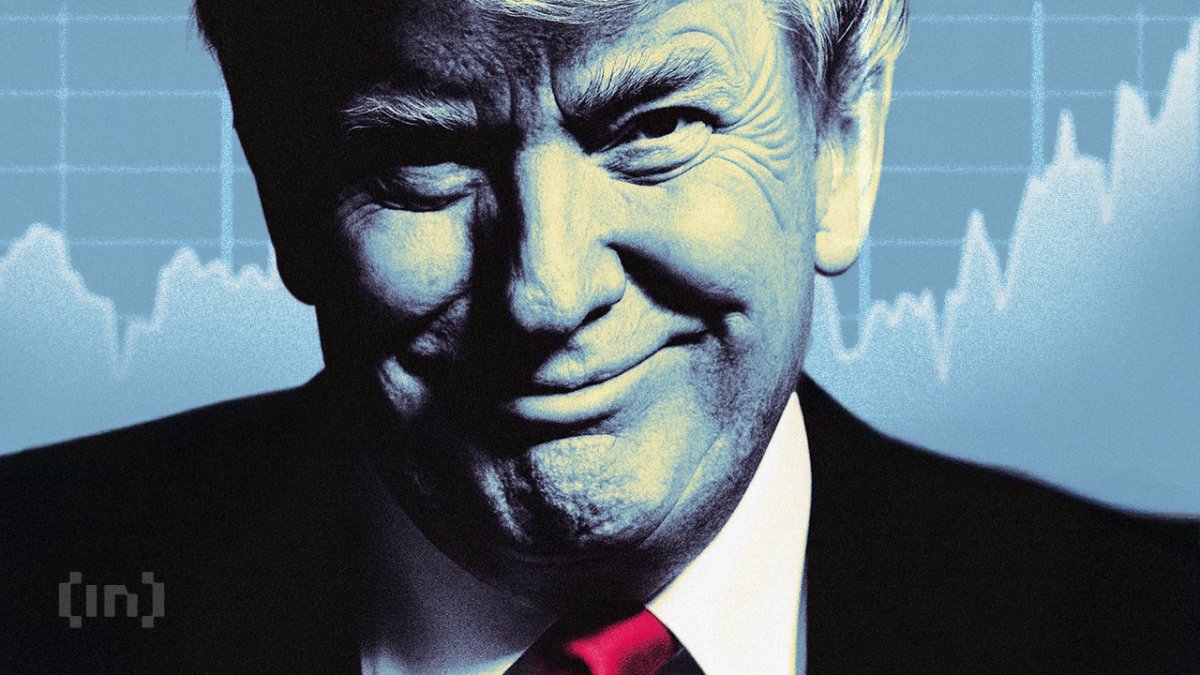
President Donald Trump signed two quantum executive orders on Monday. They push federal agencies toward quantum-resistant encryption and a more powerful quantum computer.
The orders revive a long-running question about quantum risks to Bitcoin and cryptocurrency in general. One sets a 2031 deadline for post-quantum cryptography, while the other targets quantum computing.
What the Quantum Executive Orders Do
The cryptography order accelerates a deadline that ran to 2035 under the 2022 National Security Memorandum-10. Agencies must now reach quantum-resistant standards years earlier.
Federal systems must use post-quantum cryptography for key establishment by the end of 2030. High-impact systems must move their digital signatures to the new standards by the end of 2031.
The order also tasks the Commerce Department and NIST with a pilot migration project. Federal systems should convert by the end of 2027, while CISA supports critical infrastructure operators.
A companion order is titled “Ushering in the Next Frontier of Quantum Innovation.” It launches a national push for a quantum computer that handles major scientific work.
The order also funds quantum sensors and networks over the next five years.
Officials frame the cryptography order around a threat called harvest now, decrypt later. Adversaries can store encrypted data today and try to unlock it once quantum machines mature.
That is a long-discussed risk to crypto holdings.
“The first Executive Order launches a national effort to produce a Quantum Computer capable of performing important scientific calculations, and to develop quantum-enabled sensors and networks in the next 5 years,” Trump remarks.
Follow us on X to get the latest news as it happens
What it Means for Crypto Security
Bitcoin (BTC) and Ethereum (ETH) secure ownership with elliptic-curve signatures. A large enough quantum computer running Shor’s algorithm could derive a private key from a public key.
The risk centers on coins whose public keys are already visible on-chain.
That exposure, often called Q-Day, gains a firmer government deadline through these orders. The timeline still gives developers room to respond.
The defensive tools already exist. NIST finalized three post-quantum standards on August 13, 2024, including ML-DSA for digital signatures.
Bitcoin contributors have floated a Bitcoin quantum migration plan and quantum-safe soft forks to adopt them.
Few researchers see urgency. A 2022 University of Sussex study estimated about 1.9 billion physical qubits to break a key inside Bitcoin’s block window.
Google’s Willow chip held just 105 qubits in December 2024, so many treat the threat as not an immediate risk.
Markets showed no immediate reaction. Bitcoin traded near $64,200 and Ethereum near $1,730, each up about 1% over 24 hours.
The orders set deadlines for government systems, not for decentralized networks.
Washington also holds the asset at stake, having established a Strategic Bitcoin Reserve in March 2025.
Bitcoin’s contributors moving as fast as federal agencies remains an open question.
Source: BeInCrypto
Cryptocurrency News




Random quote about money
"Кредиторы отличаются лучшей памятью, чем должники."
Interesting posts in other sections of the blog











 ↑
↑
* to search the proxy database, just enter a country name, e.g. Russia, USA, Thailand