Coinkite’s Coldcard Bug Exposed Single-Sig Risk. Multi-Vendor Multisig Is the New Bitcoin Custody Baseline

Bitcoin Magazine
Coinkite’s Coldcard Bug Exposed Single-Sig Risk. Multi-Vendor Multisig Is the New Bitcoin Custody Baseline
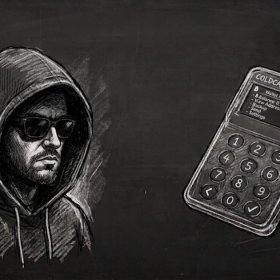
In the wake of Coldcard’s catastrophic entropy bug, self-custody advocates and experts have begun recommending a new standard, multi-vendor multisignature wallets, an approach that looks to minimize —among other threats— dependency on any single hardware wallet manufacturer.
The Coldcard entropy bug that went undiscovered since at least 2021 has taught a hard lesson to the Bitcoin self-custody advocates and users. No matter how legitimate or competent a wallet provider might seem, how well recommended and reputable, a major bug may be possible. As a result, Bitcoiners are questioning old recommendations and assumptions, including many declaring the ‘death of single sig’ the popular self-custody method of trusting the private key pair generation to one wallet alone.
The Threat Model
Self-custody by any measure is an advanced practice in Bitcoin. Advocates recommend it as a way to protect user funds from exchange malfeasance like that seen in the cases of FTX and MtGox, among many others. But recent events have driven a revaluation of custody practices, with many bitcoin owners moving coins to exchanges — at least temporarily — while others upgrading or changing their self-custody setups altogether. Nick Neuman, CEO of Casa, claimed that 233k bitcoins moved to safety in reaction to the Coldcard hack.
To understand when self-custody makes sense and for whom, it is essential to understand your personal threat model. A threat model is the careful analysis of threats to an individual, for the purpose of designing security practices and structures ahead of time.
A simple threat model practice can be to take a step back and think about all the possible things that worry you about self-custody, and add them to a list. Then think about all the things that advocates caution users about, and append them to that same list. Next, sort or rate items on that list based on which are most likely to happen to you, and which are most likely to happen in general. Finally, you can rank each item in the list by how catastrophic it would be if it occurred; can your current setup and plans survive the realization of that threat?
Two of the most likely causes of loss of funds in Bitcoin self-custody are user error related to backups or forgotten passwords, and of course theft. Many of the wallets believed to be lost bitcoins that have not moved come from bad backups of private keys in the early days, resulting in data loss after a computer failed. Others simply used passwords too difficult to brute force, and then forgot them, encrypting their private keys forever.
On the theft dimension, bad entropy attacks likely rank among the most successful attacks on self-custody to date, with Coldcard joining a significant list of other wallets that have suffered bugs of the sort, intentional or otherwise, such as Trust Wallet, and many lesser-known and possibly malicious mobile wallets. In some cases, fake wallets like the iOS Sparrow Wallets simply stole user funds by keeping a copy of the user-generated private keys and sweeping the funds once deposited. In all of these examples, more thoughtful user behavior before trusting random software with your life savings is the solution.
Once users have a clear threat model in place and a good enough understanding of the technology, designing security practices becomes more a science than an art. And while every individual has specific circumstances they need to take into account, some structures have emerged as the most resilient to most threats. One such practice becoming widely recommended and adopted among long-term self-custody Bitcoin holders is a carefully formed multisig setup.
Multi-vendor Multisig
The term “Multi-vendor Multisig” is relatively new in the self-custody niche. The term “multisig” has nevertheless gone viral in 2026, clearly triggered by the Coldcard hack that saw the loss of over 100 million dollars worth of bitcoin, mostly from single seed wallets. Most single-seed Coldcard users appear to have generated their private keys on the device without adding an extra passphrase, extra words that add custom entropy to the private keys, nor without extra dice rolls, which do the same in a different format.
The weak entropy from the Coldcard firmware — which users had no reason to distrust, given the company’s strong brand — in turn made guessing the related private keys easy, with a bit of custom work, which hackers eventually figured out.
The resulting viral interest in multisig is warranted. Multisig Bitcoin wallets protect users from such hardware manufacturer errors by letting users construct a Bitcoin address that requires signing from multiple private keys and thus multiple devices, in what is known as a Bitcoin script.
Bitcoin scripts are contracts of sorts that set spending conditions for a bitcoin wallet. All Bitcoin wallets can be thought of as having some kind of script involved, with the simplest and most popular being that anyone who can sign a valid transaction can spend all or any funds therein. Multisig scripts instead require a threshold of valid signatures from different keypairs to result in a valid withdrawal. These scripts are enforced by the Bitcoin consensus rules.
Multi-vendor multisig theory posits that users should make sure every keypair used to construct a Bitcoin multisig is generated from a different wallet vendor.
One example that is likely popular today might be the use of a Trezor Safe 7 hardware wallet with one key, a second key generated by a Ledger Nano, and a third key generated by a multisig wallet provider, considered a recovery key. A script of this sort would require any 2 valid signatures out of the three possible signatures in the setup.
By using two different hardware wallet providers, the user minimizes trust in any single wallet vendor, protecting them from an entropy failure like the one seen in Coldcard.
Other Multisig setups can add more keys, with a 3-of-5 threshold also being common and a standard offering of a multisig-specialized wallet like Casa. It is at this point that the terminology commonly used and understood to describe Bitcoin spending software starts to break down, and as a result merits clarification.
Wallets like Casa are software interfaces that let users combine partially signed transactions from different private key pairs. In this scenario, it becomes more useful to describe ‘hardware wallets’ like Trezor or Ledger as ‘key signers’ since no single keypair in the set holds enough of the key material to spend all the Bitcoin held in the Multisig script address.
So Casa is a Multisig wallet that lets you use a threshold of hardware signers to secure and send bitcoin funds. Fundamentally, they help users interact with Bitcoin script and create consensus-valid transactions easily. Other examples of such multisig wallet providers include Nunchuck, Sparrow desktop wallet and Unchained Capital.
In cases like Casa and Unchained, the wallet provider offers users a recovery key controlled by the company, which some users find useful. Nunchuck and Sparrow, on the other hand, are designed for full user autonomy in this regard, though Nunchuck does offer a premium recovery key-related plan as well.
The Upsides of Multivendor Multisig
Another benefit of a multisig wallet is its potential resistance to the infamous wrench attacks. Countries like France, which make Bitcoin and crypto ownership a matter of public record as a consequence of tax filings, have become focal points for crypto theft-related kidnapping. Self-custody or not, targets of this kind of crime are vulnerable to theft, particularly when the funds can be moved in full quickly, be it from a custodial exchange the user can access from their phone, or some self-custody setup.
Advanced forms of multisig, like multi-jurisdictional or time-locked multisig, make it so that users have to travel, ideally through an airport, in order to reach other key signers needed to construct a valid bitcoin transaction. Or perhaps the recovery key involved in the multisig has the condition that it will not sign for two weeks after the user submits the request and corresponding transaction data. The result is the removal of the final central point of failure in Bitcoin custody: the user’s own willingness to send the bitcoin, particularly when under duress.
While best practices in the case of wrench attacks broadly try to avoid ending up in that situation in the first place, making it difficult to spend your coins actually protects users from a wide range of attacks as well, including phishing schemes and other forms of social engineering that use pressure tactics to fool users into sending funds quickly.
Multisig has also begun to enable novel forms of Bitcoin insurance, as demonstrated by AnchorWatch, a multisig wallet and insurance company that offers bitcoin theft protection denominated in BTC. The company’s services today are primarily offered to Americans through the Lloyd’s of London insurer.
The Downsides of Multisig
One critical downside of Multisig is that the user does not only need to have access to the threshold key material needed to sign, be it two hardware wallets as in our example, or one of the hardware wallets and a recovery key from the wallet company. The user also needs to store a copy of the Multisig script or template, so that they can recreate the smart contract and thus the valid withdrawal conditions for spending. Most Multisig wallets store this information for clients, but they will also send a copy to users so they can recover independently of the Multisig wallet, should it one day go offline.
This post Coinkite’s Coldcard Bug Exposed Single-Sig Risk. Multi-Vendor Multisig Is the New Bitcoin Custody Baseline first appeared on Bitcoin Magazine and is written by Juan Galt.
Source: BitcoinMagazine
Cryptocurrency News



Random quote about money
"В финансах наказание следует тотчас за оплошностью."
Interesting posts in other sections of the blog







 ↑
↑
* to search the proxy database, just enter a country name, e.g. Russia, USA, Thailand