Open USD Raises Competition in the Global Stablecoin Payments Market
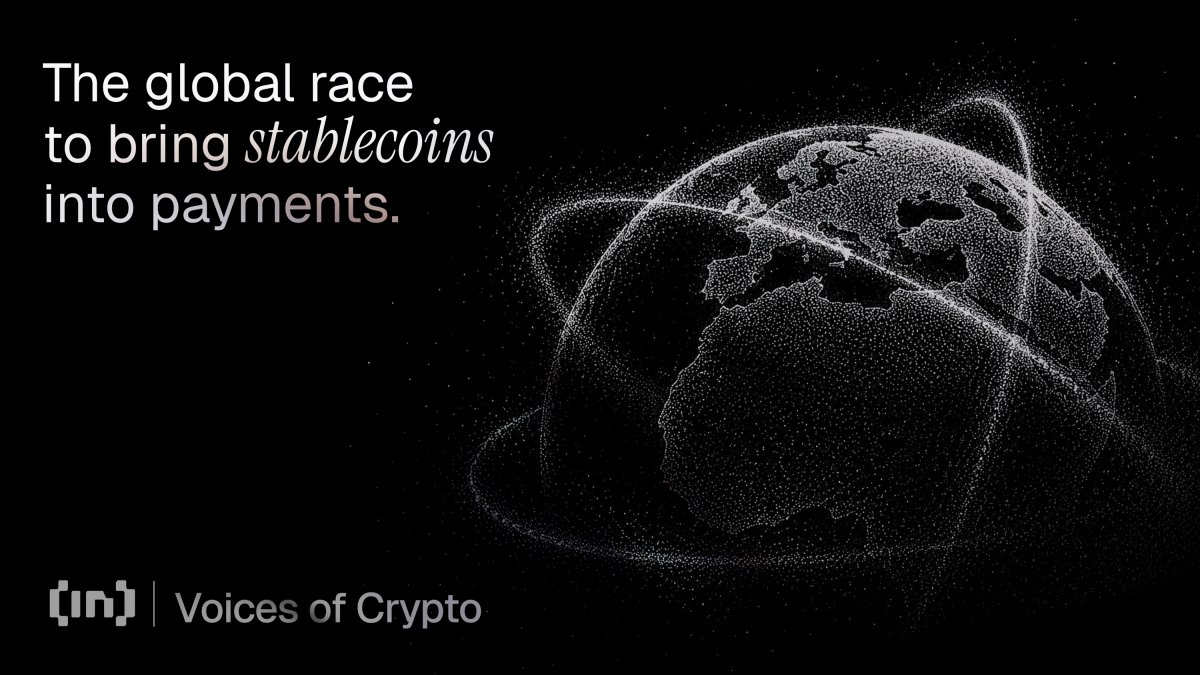
With stablecoin supply above $300 billion and payment use reaching an estimated $390 billion in 2025, more than twice the previous year, competition increasingly centres on distribution, liquidity, reserve income, and access to payment networks.
Open USD has brought these commercial forces together through a consortium of more than 140 participants, including Visa, Mastercard, Stripe, Coinbase, and BlackRock. Participating companies will be able to distribute the asset through exchanges, wallets, merchant products, and payment services while receiving a share of reserve earnings.
The model places Open USD against established issuers and smaller competitors seeking partnerships with the same financial companies.
BeInCrypto spoke with Louisa Bai, Head of Stablecoins at Mysten Labs, Marc Boiron, CEO of Polygon Labs, and Kevin Cui, Executive Director and Chief Executive Officer of OSL Group, about stablecoin competition, regional use cases, currency demand, and blockchain settlement.
Open USD Links Distribution With Reserve Income
Open USD gives participating companies a financial incentive to support adoption through their own products. Reserve earnings can be returned to consortium members, linking token distribution to commercial revenue.
“OUSD is primarily built to share stablecoin reserves across its partners, including Visa, Stripe, Coinbase, Mastercard, and leading blockchains such as Sui,” said Louisa Bai, Head of Stablecoins at Mysten Labs. “Its partner network and revenue-sharing model could increase competition in a market with deeply entrenched incumbents.”
USDT and USDC retain an advantage built through liquidity, trading pairs, exchange listings, and widespread use across crypto markets.
“Their moat comes from liquidity depth and years of exchange listings,” Bai said. “Mid-sized issuers face the greatest pressure because they lack the liquidity of USDT and USDC and the partner economics offered by OUSD.”
Open USD also depends on cooperation between companies with different commercial priorities. Decisions covering reserves, governance, supported networks, and distribution will require agreement across banks, payment companies, exchanges, and crypto firms.
Its progress will depend on whether shared reserve income produces sustained adoption across participating products.
Different Stablecoins Will Serve Different Products
Stablecoin control will remain divided between issuers, payment companies, exchanges, applications, and blockchains.
Issuers manage reserves and redemption, while payment companies control merchant access and customer distribution. Exchanges provide liquidity, and blockchains determine transaction speed, fees, and settlement capacity.
“Different stablecoin assets aimed at different use cases will coexist, together with different forms of control,” Bai said.
PYUSD remains closely connected to PayPal and its consumer products, while Open USD may develop around business payments and merchant settlement. Exchange-backed coins can focus on trading, while bank-supported assets can serve treasury management and institutional transfers.
This division allows stablecoins to develop around specific commercial environments rather than a single dominant operating model.
Regional Demand Splits Between Dollar Access and Local Settlement
Stablecoin adoption follows currency stability, remittance costs, regulation, and access to banking. Latin America currently provides some of the strongest examples of stablecoins functioning as everyday money across savings and cross-border payments, according to Marc Boiron, CEO of Polygon Labs.
“Latin America, and it’s not close,” Boiron said. “When a currency loses value overnight and sending money home costs 6% and takes three days, a digital dollar is a household decision.”
Boiron pointed to the Mexico-US and Brazil-US corridors as major sources of current volume. He described the Gulf as an early regulatory leader, Japan as a careful builder of bank-connected products, and the US as a market gaining more room for regulated issuance and payments.
Emerging markets such as Argentina, Brazil, and Pakistan use dollar stablecoins as protection from inflation and currency depreciation.
In Nigeria, Paga plans to use Sui-based stablecoin payments to support international transfers for freelancers and businesses paying overseas suppliers.
Local-currency coins serve a different economic need. Markets with trusted currencies and regulators seeking domestic settlement onchain have stronger incentives to develop assets denominated in yen, dirhams, euros, or other local units.
“A stablecoin inherits the reputation of the currency behind it,” Boiron said.
He expects dollar coins to lead in markets where people seek protection from inflation, while local-currency stablecoins can develop in places such as Japan and the Gulf, where domestic currencies retain public trust.
Business adoption depends on liquidity and reliable fiat conversion, while distribution and licensing determine how easily merchants and exchanges can support a new asset. Boiron said businesses need coins already present in the wallets and payment services they use, backed by issuers acceptable to banks and auditors.
“It comes down to liquidity, distribution, and whether there is a licensed issuer standing behind it,” he said.
Europe follows MiCA rules covering issuance, authorization, reserves, and distribution. Exchanges have restricted several assets, including USDT, while providers adjusted their offerings to European requirements.
The resulting market divides between dollar access in weaker-currency economies and local settlement in regions where domestic units retain trust.
Dollar Stablecoins Will Retain Their Lead
Dollar coins still dominate supply and liquidity, while local-currency assets are developing around domestic settlement and regional trade.
“Non-dollar stablecoins remain concentrated in foreign-exchange trading within DeFi,” Bai said. “Locally denominated assets such as JPYC will continue to develop, while USD is likely to remain dominant in the near term.”
Meanwhile, Cui expects local-currency stablecoins to grow alongside dollar coins as companies adopt them for domestic payments and regional trade.
“Local-currency stablecoins are developing a durable role alongside dollar coins by reducing FX exposure and allowing businesses operating in euros, reais, or yen to retain their own unit of account,” said Kevin Cui, Executive Director and Chief Executive Officer of OSL Group.
Local coins may gain adoption where companies earn and spend in the same currency, while dollar coins continue serving international settlement and savings demand.
Blockchains Provide the Settlement Base
Blockchains determine how efficiently stablecoins move between users, companies, and financial applications.
Boiron offered a complementary view of the chain’s role, arguing blockchains create more value by supporting widely used assets across many products than by issuing coins tied to one ecosystem.
“The most valuable stablecoin is the one everyone else already accepts,” Boiron said.
Chains therefore compete through transaction performance, developer tools, and support for several major stablecoins.
“Sui’s role in stablecoin growth is settlement, with fast execution built for the transaction volumes mass adoption requires,” Bai said. “Stablecoins need fast finality, capacity for large user numbers, stable fees, and strong user experience.”
Sui introduced gasless stablecoin transfers in May 2026, allowing users to send supported assets without holding SUI separately for transaction fees. Confidential transfers entered public beta in June, allowing issuers to conceal balances and transaction values while preserving access for compliance and auditing.
Sui also recorded more than six million transactions per second during a July public experiment using programmable tunnels. These offchain payment and state channels process activity away from the main network before settling final results on Sui.
Such features can support payroll, merchant payments, treasury transfers, and institutional settlement.
Open USD shows how stablecoin competition is expanding beyond issuance. Reserve income, distribution partnerships, payment access, and blockchain performance will influence which assets gain adoption.
Dollar coins will retain their advantage in global markets, while local assets develop around domestic payments and regional commerce. The strongest providers will combine reliable reserves with liquidity, distribution, and efficient settlement.
Source: BeInCrypto
Cryptocurrency News


Random quote about money
"Бедные видят в богатстве проявления судьбы, богатые - результат собственного труда."
Interesting posts in other sections of the blog












 ↑
↑
* to search the proxy database, just enter a country name, e.g. Russia, USA, Thailand