What Changed in Crypto Exchange Regulations Recently
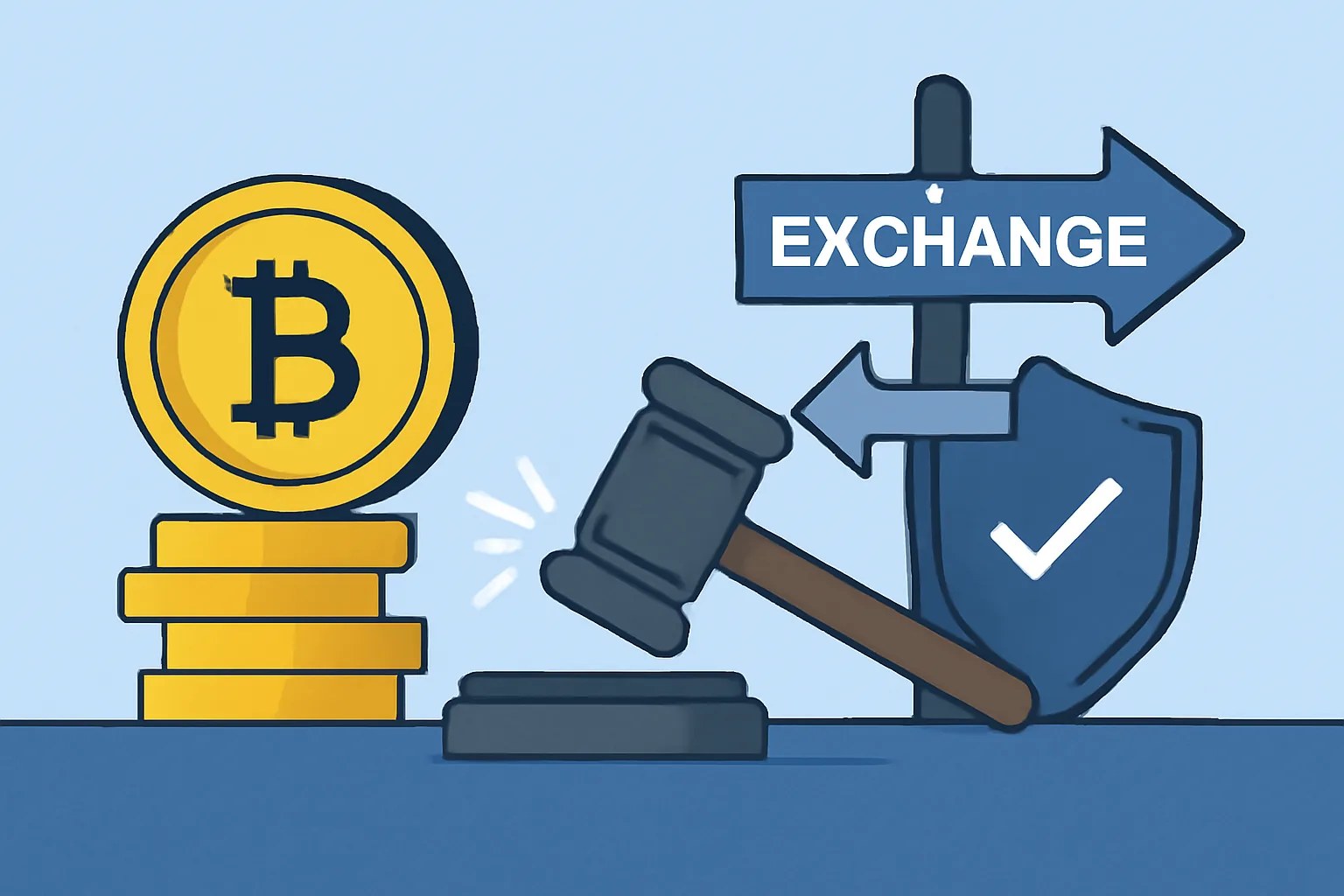
Overview of the Most Recent Regulatory Shifts
Crypto exchange rules have moved in several directions at once, and the result is not subtle. Licensing is tighter in some markets, while custody, disclosures, and consumer protection are getting more detailed in others. If you have been asking what changed in crypto exchange regulations recently, the short answer is that regulators are treating crypto exchange activity more like a financial service than a side project.
That shift shows up in daily operations. Exchanges now face more checks on who can serve customers, where they can operate, and how they explain risks. One more wrinkle: some jurisdictions are asking for clearer internal controls before an exchange can even launch a new product. Small firms feel this first.
A practical example helps. An exchange that once opened accounts with a quick email sign-up may now need identity checks, source-of-funds questions, and a more formal review before certain withdrawals. None of that is glamorous. It is, however, becoming normal.
For traders, this can look like slower onboarding or extra document requests. For businesses, it means legal review before a token listing, a new wallet feature, or a change in custody model. The rules are not identical everywhere, and that matters.
Licensing and Registration Requirements
Recent rules in several regions now push more crypto exchange operators into formal licensing or registration. That includes centralized platforms, brokers that touch client assets, and, in some cases, firms that only provide order matching or custody-related services. The key question is no longer “Do we call ourselves an exchange?” but “Do we perform an exchange function that triggers oversight?”
Some jurisdictions have widened the net to catch businesses that used to sit in a gray area. A platform offering fiat on-ramps, custody, or staking support may now need a license even if it does not advertise as a traditional exchange. One sentence matters here: labels do not control the rulebook.
That creates real consequences for cross-border firms. An exchange may be permitted in one country and restricted in another unless it files locally, appoints a registered representative, or adapts its product suite. A few have responded by geoblocking users in specific states or countries rather than absorbing the compliance burden.
There is a business decision behind that. Registering in multiple jurisdictions can be expensive, and the cost is not only legal fees. It also includes audits, local compliance staff, capital requirements, and the operational drag that comes from proving the same control twice in different formats.
For readers comparing platforms, this is one place where the differences between forex and crypto trading matter. Forex brokers often work inside older licensing systems, while crypto exchange operators may face newer, faster-changing registration tests.
AML, KYC, and Sanctions Compliance Updates
Anti-money-laundering rules are one of the clearest answers to what changed in crypto exchange regulations recently. Exchanges are being asked to verify identity earlier, monitor transactions more aggressively, and document why they allowed or blocked a transfer.
KYC checks are no longer just a one-time form. Many exchanges now refresh documents, ask for proof of address, or trigger enhanced due diligence when a user changes behavior. A trader who suddenly deposits from a new jurisdiction, for example, may get asked for more paperwork before trading resumes.
Transaction monitoring has also become less forgiving. Regulators expect exchanges to spot structuring, repeated small transfers, sudden spikes in volume, and connections to high-risk wallets. That means screening software, human review, and a process for escalation. The software flags patterns; staff must still decide.
Sanctions screening is another area where the bar has risen. Exchanges are being pushed to screen customers, counterparties, and wallet addresses against restricted-party lists, then retain proof of the check. If a match is uncertain, some firms freeze activity first and ask questions later.
That can frustrate users, but regulators see it differently. A missed screening failure can create fines, license problems, or a forced unwind of customer relationships. One false negative can be expensive. Very expensive.
Operators also need better recordkeeping around suspicious activity reports and internal alerts. If a regulator asks why an account remained active after a series of unusual withdrawals, “the system did not flag it” is not a comfortable answer.
Custody, Segregation, and Asset-Safeguarding Rules
Custody rules have become stricter because regulators are focused on what happens if an exchange fails. Newer requirements often push exchanges to separate customer assets from company assets, keep better books, and explain where client funds are stored.
That separation is not just accounting theater. If customer assets are mixed with operational funds, insolvency gets messier and customer recovery gets harder. A firm that holds 2 sets of funds in one wallet structure may face serious questions later, especially after a market shock or internal control failure.
Some rules also ask for clearer custody disclosures. Exchanges may need to say whether assets are held in-house or through a third-party custodian, what happens in a transfer delay, and how withdrawals are protected. A vague “safe storage” promise is no longer enough in many places.
There is also more attention on proof of reserves, wallet management, and reconciliation practices. A good exchange should know, at least daily, where customer assets sit and whether on-chain balances match internal ledgers. If the numbers do not match, the problem is not cosmetic.
This is where operators often compare policies against the best practices discussed in the best cryptocurrency investment strategies, because safeguarding capital and limiting concentration risk are not just investor habits; they are exchange habits too.
For traders, the impact may show up as withdrawal delays during reconciliations or stricter approval steps for large transfers. Annoying? Yes. Random? Not really.
Disclosure, Reporting, and Transparency Obligations
Disclosure rules are expanding, and exchanges now have to say more about fees, risks, conflicts, and execution practices. Some regulators want clearer explanations of how orders are routed, whether market makers are involved, and when a platform can pause trading.
Recordkeeping has also grown heavier. Exchanges may need to preserve trade logs, wallet movement records, onboarding documents, and complaint histories for set periods. That sounds administrative because it is. Still, it gives regulators a way to reconstruct events when a user claims funds disappeared or a trade executed at a bad price.
Suspicious activity reporting expectations are tighter too. Internal compliance teams are expected to escalate patterns, not wait for a user complaint. A platform that sees repeated attempts to bypass limits has to decide quickly whether the issue is customer error, fraud, or money laundering.
One detail often missed: risk disclosures now need to be understandable, not just complete. If an exchange offers high-risk products, it may have to explain liquidation risk, smart-contract failure, or counterparty exposure in plain language. Dense legal prose is less convincing than a direct warning.
Readers who care about execution quality may also want the crypto exchange order types explained, because reporting and execution rules often intersect when a platform defines how an order is filled, paused, or rejected.
A small but real change: more exchanges now publish incident notices after outages or security events. That public clock matters. Users do not like silence, and regulators dislike it even more.
Market Conduct and Token Listing Standards
Token listing rules have become a major focus because exchange listings can move markets fast. Regulators are increasingly asking exchanges to document why a token qualified for listing, who approved it, and how conflicts of interest were managed.
That matters when an exchange or affiliate holds the token, earns listing revenue, or has staff trading around the decision. A disclosure that says “we reviewed the asset” is weaker than a documented process with conflict checks, legal review, and post-listing monitoring.
Market manipulation is another concern. Exchanges are expected to watch for wash trading, spoofing, and coordinated pumps that distort prices. If a token has thin liquidity, that scrutiny becomes sharper because one bad actor can move the chart with small capital.
Fair dealing rules also touch token delistings and trading halts. When a platform removes a token, it should explain the reason, the timeline, and the withdrawal window. Traders dislike delistings, but they dislike surprise delistings more.
A practical aside: many traders watch the cryptocurrency fear and greed index for sentiment, yet exchange conduct rules do not follow sentiment. A token can be popular and still fail a listing standard.
One more issue is internal trading. If employees can see listing decisions before the public, controls must stop them from front-running those decisions. That is not a theoretical worry. It is one of the first things regulators test.
Cross-Border and Jurisdictional Differences
Crypto exchange regulation is fragmented, and the differences are now more visible. The United States, European Union, United Kingdom, Singapore, Hong Kong, and several offshore hubs all have different approaches to licensing, custody, AML, and token oversight.
That fragmentation creates a practical problem for global exchanges: a policy that satisfies one market may fail in another. A KYC form accepted in one region may not meet local identity standards elsewhere, and a custody arrangement approved in one jurisdiction may need a separate legal opinion in another.
Some places emphasize registration and conduct rules. Others focus more on consumer disclosures or anti-money-laundering controls. A few require local entities, local directors, or local reporting lines before a firm can legally serve residents. Those differences are not cosmetic. They shape platform design.
Cross-border business also raises questions about data transfer and supervision. If compliance staff are in one country and customer records are in another, the exchange may need contracts, data safeguards, and a clear policy for regulator access. That is a lot of paperwork for a single account opening.
For firms handling transfers between platforms, the article on how to move crypto from coinbase is a useful reminder that user-facing transfer rules can differ from exchange-to-exchange compliance rules, even when the blockchain route looks simple.
This is also why international exchanges often choose a narrower country list rather than a global launch. If they cannot satisfy 3 or 4 rulebooks at once, they limit access instead of risking a regulator dispute.
What These Changes Mean for Traders and Businesses
For traders, the immediate effect is friction. Account opening can take longer, withdrawals can be reviewed more closely, and large transfers may trigger extra questions. That is the trade-off for a market with more oversight.
For businesses, compliance costs are rising in plain sight. Legal review, screening tools, custody controls, independent audits, and trained staff all cost money. Small platforms feel the pressure first because they do not have the same budget cushion as larger exchanges.
Service limits are likely to appear more often. Some exchanges will cap deposits, restrict certain products, or block users from specific regions until verification is complete. A trader may see this as inconvenience; a compliance officer sees it as risk control.
There is also a competitive effect. Exchanges that document controls well may win trust from banks, payment processors, and institutional users, while weaker operators get shut out of partnerships. The market may end up with fewer platforms, but those platforms will look more formal.
Teams that want to avoid surprise problems should review their onboarding flow, custody structure, token listing process, and reporting calendar one step at a time. That means a real checklist, not a wish list. It also means testing whether customer support can explain freezes clearly when the compliance team is busy.
Businesses writing about these changes should also look at crypto payments for investment blogs if they accept digital assets, because payment handling and exchange compliance often overlap once funds move between wallets, invoices, and platform accounts.
One final point: the exchanges that adapt fastest are usually the ones that treat compliance as part of product design from day one, not as a patch after launch. The ones that wait often discover the rulebook at the worst possible moment.
HYIP Articles


Random quote about money
"Только два стимула заставляют людей работать: жажда заработной платы и – боязнь ее потерять."
Interesting posts in other sections of the blog












 ↑
↑
* to search the proxy database, just enter a country name, e.g. Russia, USA, Thailand