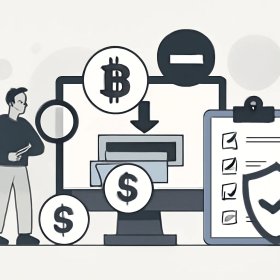


What crypto exchange withdrawal limits mean
Withdrawal limits are the rules an exchange uses to cap how much crypto you can move out of your account over a given period. In plain terms, they answer a simple question: how much can you send, and how often? For some users, the limit is generous and barely noticeable. For others, especially new accounts or accounts with incomplete verification, it can become the first real friction point after a deposit or trade.
Exchanges set these limits for a few practical reasons. Risk control is the obvious one. If an account is compromised, a limit can slow down a thief. Compliance is another. Many platforms need to follow KYC and AML requirements, so they tie withdrawal permissions to identity checks and jurisdiction rules. Then there is operational stability: exchanges may want to manage liquidity, reduce chain congestion issues, or keep high-volume transfers under tighter review.
It also helps to distinguish between different kinds of limits, and a daily limit is the amount you can withdraw within 24 hours. A monthly limit resets over a longer cycle. An account-level limit may describe the maximum you can withdraw at your current verification tier, regardless of the day. Some platforms apply these separately, which is why a withdrawal can be allowed today but blocked tomorrow even though you have not changed anything obvious.
If you are comparing exchanges or planning to move funds regularly, checking limits before you deposit is smart. It is a detail many people skip until the first transfer fails. If you are still choosing where to trade, it can be worth reviewing the platform’s asset support and withdrawal policies alongside broader safety checks, as in how to check a crypto exchange.
Types of withdrawal limits on crypto exchanges
Not all withdrawal caps work the same way. In practice, exchanges usually combine several limit structures, and those can stack on top of one another.
Tier-based limits: your limit changes with your account tier. A basic account may have a low cap, while higher tiers unlock larger withdrawals.
KYC-based limits: the more identity information you provide, the more access you may get, and unverified accounts are often restricted or blocked entirely.
Network-based caps: some exchanges limit withdrawals on a specific blockchain network, especially when that network is congested or under maintenance.
Asset-specific restrictions: a platform may allow a large Bitcoin withdrawal but place tighter rules on smaller-cap tokens or newly listed assets.
Security-based limits: if your account has changed password, enabled a new device, or triggered an alert, the exchange may temporarily reduce what you can send.
Tier systems are common because they let an exchange balance convenience and control. A basic user who trades occasionally may never need a large withdrawal allowance. A business account, by contrast, often needs faster and larger transfers, and kYC-based limits work in a similar way, except the trigger is identity verification rather than account category.
Asset-specific restrictions are easy to overlook. One coin may have a minimum withdrawal amount, a maximum per transaction, or a custom fee that makes small transfers inefficient. If you are moving popular assets, it helps to look at the specific market page for that coin, such as where to buy Ethereum or where to buy Bitcoin, because the same exchange can behave very differently from one asset to another.
Crypto exchange withdrawal fees
Withdrawal fees are separate from withdrawal limits, though the two often show up together on the same screen. A fee is what you pay to send the asset out of the exchange. It can be a fixed amount, a dynamic amount, or a network-dependent charge that changes with blockchain conditions.
Why do fees vary so much? Because a withdrawal is not just an internal account transfer, and in many cases, the exchange is actually broadcasting a transaction to a blockchain network on your behalf. If the network is busy, the cost to move funds can rise. If the coin uses a more expensive chain or a heavily loaded route, the fee may be higher. That is why the withdrawal fee for one token can look tiny while another seems unexpectedly costly.
There is an important distinction here: exchange fee versus blockchain network fee. An exchange fee is set by the platform. A network fee goes to the miners, validators, or block producers who process the transaction on-chain, and sometimes the exchange bundles both into one displayed fee. Sometimes it shows them separately. Either way, the final amount you receive can be slightly less than the amount you entered.
Users often assume the fee is always identical across withdrawals, but that is not guaranteed. For some assets, a platform may pass along the live network cost. For others, it may use a flat rate. This is why a small withdrawal can feel disproportionately expensive. Moving a modest amount of a token with a high fixed fee can make little sense economically, which is one reason people compare transfer costs before choosing where to hold funds. If you are exploring altcoins and their exchange behavior, pages like where to buy Solana or where to buy XRP can be useful for checking market-side details alongside transfer conditions.
How long crypto withdrawals take
Withdrawal time is usually a chain of small waits, not one single delay, and first, the exchange has to approve and process the request internally. Then the transaction is sent to the blockchain. After that, the network needs confirmations before the funds appear in the destination wallet or exchange account.
The internal exchange step can be very fast or surprisingly slow, and if your account is in good standing and the request is routine, it may be processed almost immediately. If the system flags the transaction for extra review, it can sit in pending status longer. Large withdrawals, first-time withdrawals, or transfers made after a login from a new device can also move more slowly.
Once the transaction is on-chain, network conditions take over, and some blockchains confirm quickly and predictably; others slow down when usage spikes. Congestion, low fee selection, maintenance, and temporary network pauses can all extend the timeline. And if you are sending to another exchange, the receiving platform may require more confirmations before crediting the deposit.
The phrase “withdrawal complete” can mean different things depending on the context. On one platform, it may mean the exchange has broadcast the transaction. On another, it may mean the blockchain has already confirmed it, and that is why it is worth checking both the exchange status page and the transaction hash. The hash tells you whether the transfer is moving; the exchange dashboard tells you whether the request is still being reviewed.
As a practical matter, the fastest withdrawals tend to be the ones that are simple: verified account, familiar device, no compliance flags, supported network, and a healthy blockchain. Anything outside that pattern introduces delay. It is not always a problem; sometimes it is just how the system is designed to keep funds safer.
What affects your withdrawal limit and approval speed
Several factors influence both how much you can withdraw and how quickly the exchange approves the request. Some are obvious. Others are tucked away in account settings or compliance rules.
Verification level: basic versus full KYC often determines the size of your limit and whether withdrawals are available at all.
Security settings: two-factor authentication, withdrawal address whitelisting, and anti-phishing codes can improve trust, but they can also add steps to the process.
Account history: a long, stable history of normal activity usually helps. Newly opened accounts may face tighter rules.
Jurisdiction: where you live can affect what the exchange is allowed to offer, especially under local regulatory requirements.
Compliance checks: unusual transaction patterns, high-value transfers, or interactions with flagged addresses can trigger review.
A lot of users are surprised by the role of security settings. A withdrawal whitelist, for example, can make a transfer slightly more cumbersome the first time but faster and safer afterward, and once an address is approved, future withdrawals to that destination may go through with fewer interruptions. It is a trade-off worth considering if you move funds regularly.
Account history matters more than people think. Exchanges tend to trust predictable behavior. Regular logins from the same region, consistent device use, and a clean verification record all help create a low-risk profile. By contrast, frequent changes in IP address, repeated failed login attempts, or rapid withdrawals after a big deposit can lead to pauses. For broader guidance on keeping accounts in good standing, the exchange-checking notes in how to check a crypto exchange are a sensible companion read.
How to check and increase your withdrawal limit
Most exchanges list withdrawal limits in the account area, but the exact path varies. Look for sections named “Limits,” “Security,” “Verification,” “Funding,” or “Withdrawals.” Some platforms show separate caps for fiat, spot crypto, and network-specific transfers, and others hide the details in a support article or help center.
When you find the limit page, check three things: the maximum amount per transaction, the total amount allowed per day or month, and any minimum withdrawal threshold. If those values are not obvious, do not guess. A transfer that is too small may be rejected, and one that is too large may get stuck in review.
To raise a withdrawal limit, the usual steps are straightforward:
Complete identity verification at the highest available tier.
Enable stronger security features such as two-factor authentication.
Confirm your email, phone number, and withdrawal address where required.
Keep your account in good standing by avoiding failed login attempts and suspicious behavior.
Contact support if your account is eligible for a higher tier or business access.
There is also a practical side to limit management: use the right asset and the right network from the start, and if you send a token over the wrong chain, the limit is not the only issue. The transfer may fail, or worse, go to an address that cannot recover it. When dealing with networks that support multiple routes, double-check the destination format before you confirm. That single habit prevents more headaches than most people realize.
Common problems with crypto withdrawals
Most withdrawal issues fall into a few recurring categories, and once you know them, they are easier to diagnose.
Blocked withdrawals: the exchange may freeze transfers due to verification problems, security alerts, or compliance review.
Pending status: the request may still be under internal review or waiting for network confirmation.
Wrong network selection: sending an asset on an unsupported chain can delay or permanently disrupt delivery.
Minimum amount not met: some coins have a minimum withdrawal size, and anything smaller will be rejected.
Fee mismatch: if the fee is higher than expected, the amount available to send may fall below the minimum.
Incorrect network selection deserves special attention. It is one of the most common and most frustrating mistakes. A token might exist on more than one blockchain, and the address may look similar enough to fool a hurried user, and but the exchange can only process it on the supported route. If you choose the wrong one, support may not be able to help, or recovery may be slow and uncertain.
Pending withdrawals are another common worry. In some cases, the solution is simply patience. In others, it is a sign that extra verification is needed. Check whether the exchange has asked for email confirmation, device approval, or a security code, and if no action is required on your side, look at the transaction status page and the blockchain explorer. A transaction hash can tell you whether the transfer has actually left the exchange.
Fees can also cause a withdrawal to fail in an indirect way. If you try to move a small balance and the fee consumes too much of it, the remaining amount may not meet the minimum. The interface may show a warning, but it is easy to miss when you are in a hurry, and that is why small balances sometimes end up stranded until you add more funds or choose a different asset.
Best practices before withdrawing crypto
Before you click confirm, it pays to slow down for thirty seconds and run through a short checklist. Crypto transfers are final in a way card payments are not, and mistakes can be expensive to undo.
Check your current withdrawal limit and make sure the amount fits within the daily or account cap.
Review the fee and confirm that the net amount still makes sense for the transfer.
Verify the destination address character by character, especially if you copied and pasted it.
Confirm that the receiving wallet or exchange supports the chosen network.
Look for any minimum withdrawal amount or maintenance notice.
Use two-factor authentication and, if possible, address whitelisting.
If you are moving a coin you trade often, read the exchange and asset pages first so you understand typical transfer behavior.
A final habit worth adopting is to test with a small amount when you are using a new destination. It is not always necessary, but it can be a useful safety net, especially if you are withdrawing to a fresh wallet or to a different exchange for the first time, and a small test confirms the network, the address, and the expected timing before you commit a larger sum.
Withdrawal limits, fees, and processing times can feel like obstacles, but they are really part of how exchanges manage risk and keep their systems orderly. Once you understand the rules, they are less mysterious. And that matters: the smoother your withdrawals, the easier it is to manage your holdings without last-minute surprises.