Why to review a crypto exchange privacy policy before signup
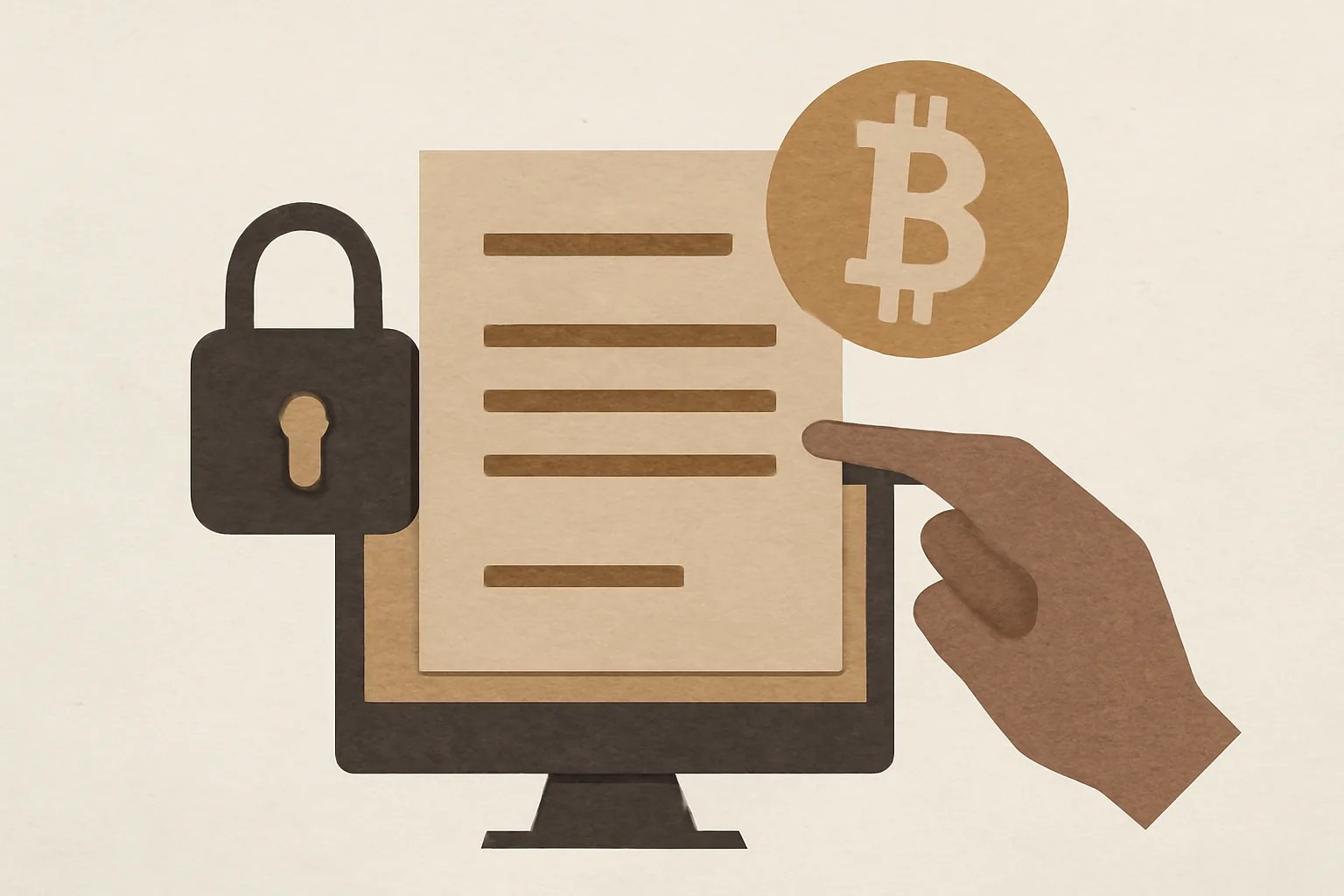
Why privacy policy review matters before signup
A crypto exchange privacy policy and personal data collection terms should be read before you create an account, not after the first failed login or the first verification request. That sounds obvious, yet many users open the signup page, enter a phone number, and only then discover the exchange asks for a passport scan, proof of address, and a selfie under one policy they never saw.
The policy matters for three separate moments: account opening, onboarding, and later access. If the exchange says it needs your email only for registration, but the next screen asks for more, you already know there is a mismatch worth checking. One exchange may use a simple email-and-password flow. Another may require full KYC before you can even see the dashboard.
Read the collection section first. Look for the sentence that explains why the exchange wants each item. If the answer is vague, such as “to improve services,” that is not enough by itself for a cautious signup decision. A policy with clear examples is easier to trust than one with polished language and no detail.
There is a practical consequence here: once you submit a document, you cannot pretend the exchange never had it. Even if you close the account later, the policy may keep some records for fraud checks, tax obligations, or dispute handling. That one line can matter more than a welcome bonus.
Map the data categories the policy mentions
Start by listing the named categories one by one. A solid policy usually separates identity details, contact info, device data, transaction records, behavioral data, and optional profile information. If the exchange lumps everything into “user data,” ask yourself why it needs such a broad bucket.
Identity details often include full legal name, date of birth, and government ID number. Contact info usually means email, phone number, and mailing address. Device data may cover IP address, browser type, operating system, and app version. None of those are strange on their own, but the policy should show what is collected and for what purpose.
Behavioral data deserves extra attention. That can mean login times, pages viewed, clicks, session length, and referral source. Some exchanges also mention trading behavior or risk signals. A sentence that says “we monitor use to detect abuse” tells you the exchange is tracking more than static profile data.
Optional profile information is the quiet one. This can include profile photo, nickname, occupation, source-of-funds notes, or account preferences. Optional does not always mean harmless. It only means the field is not required at the first step. If you are comparing exchanges, this is where to cross-check the language with another guide such as how to analyze crypto market trends, because platform behavior often changes when user activity rises.
One useful habit: copy the data categories into a list with two columns, “named in policy” and “actually requested on screen.” That simple comparison catches surprises fast.
Separate required, optional, and inferred data
Not every field has the same status. Mandatory fields are the ones the exchange says it cannot process without. Optional fields are the ones you may skip. Inferred data is trickier, because the exchange says it may derive it from how you use the service or from checks performed by partners.
Required fields usually include email, password, name, and one form of identity verification. Some exchanges add a phone number or residence country at this stage. If you see an asterisk on a form, read the note beside it. A single required checkbox can also control marketing consent, cookie consent, or both.
Optional fields should stay optional. If the policy asks for employer name, trading experience, or source of funds but marks those items as optional, you can pause and ask why they matter. Sometimes the reason is regulatory. Sometimes it is a weak form design. There is a difference.
Inferred data is where the policy becomes more technical. The exchange may say it infers device trust, account risk, or likely location from login patterns and IP signals. It may infer whether a user is acting through a bot, a shared network, or a suspicious session. That is not the same as direct submission, but it still counts as personal data handling in many policies.
One short rule helps here: if the exchange can infer it, it can probably use it. And if it can use it, it may also share it under a processor agreement.
Check collection points across the user journey
Personal data rarely arrives in one place. Registration collects the basics. KYC collects identity proof. Support chats may collect whatever you type into the message box, including screenshots, account details, and bank references. A policy that says data can be collected “through interactions” is covering a lot of ground.
Cookie consent is another collection point. On desktop, the exchange may track browsing behavior before you even finish the signup form. On mobile, app permissions can add location data, camera access, contacts, or storage access, depending on what the app asks for. If the app wants camera access for document verification, that is normal. If it wants contact access without a clear reason, ask questions.
Referral links are easy to overlook. A referral code may reveal which partner sent you, and that can connect your account with an affiliate record. API use can also collect data, especially if you connect bots, portfolio tools, or reporting software. If you use tools around your account, it helps to read a related guide like developer API for investment blog analytics, because API access often changes what gets logged.
Support messages deserve their own note. A user who writes, “my passport address changed last year,” has just added more personal data to the record. Another user who uploads a bank statement to explain a failed verification step has likely expanded the file set stored by the exchange. Those details tend to stay in ticket archives.
The journey matters because collection is cumulative. A signup form may look small, but by the time you add KYC, cookies, chat logs, and permissions, the file on you can become much larger than expected.
Review sharing, processors, and third-party access
Most exchanges do not process everything themselves. They may share data with verification vendors, analytics tools, affiliates, regulators, or service providers under stated conditions. The policy should say who gets what, and why. If it does not, you are left guessing how many hands touch the data.
Verification vendors are common. They may check identity documents, screen for fraud, or validate address records. Analytics tools may measure app use, crash reports, and performance. Affiliates may receive referral and campaign data, while regulators or law enforcement may receive records where law requires it.
Watch for broad language such as “trusted partners” or “selected third parties.” Those phrases can cover a lot. A more useful policy names categories and the purpose of each share. If a provider only handles email delivery, that is different from a provider that stores identity documents.
Here is a practical test: if you cannot tell whether the recipient is a processor or a controller from the policy, the wording is too thin. Ask support for the category of recipient and whether the recipient may reuse the data for its own purposes. That question can expose a major difference in responsibility.
One more point. Some policies let service providers operate in several countries, and the data may move with them. That does not automatically make the exchange unsafe, but it does mean you should read the transfer section, not just the sharing section.
Look for retention, deletion, and account closure terms
Retention is where many users get surprised. An exchange may say it keeps personal data as long as needed for service delivery, legal compliance, fraud prevention, or dispute resolution. That can mean the account closes but the records remain. The policy should say whether deletion requests have exceptions.
Check whether the exchange separates different record types. An ID scan may be held for a different period than a support ticket or trading log. Transaction data often survives longer than a profile page, because the exchange may need it for accounting, audit, or regulatory reasons. One policy may even state that some records cannot be deleted until a fixed period expires.
Deletion language should be specific. If the exchange says it “may delete” data upon request, that is softer than a promise to delete it, subject to exceptions. If it says account closure does not remove backup copies right away, you should know that before uploading sensitive files. Silence here is a warning sign.
Sometimes the policy describes anonymization instead of deletion. That can mean your name is removed while usage logs remain in aggregate form. Useful for the exchange. Less satisfying for the user. The distinction matters because a record stripped of your name may still be linked back through internal identifiers.
If you need a concrete comparison point, ask support whether closed-account data is kept for 30 days, 90 days, or a longer period. If support will not answer, the policy may be doing the same thing in softer language.
Spot cross-border transfer and legal basis language
Cross-border transfer clauses are often buried near the end. They may say data is stored or processed in another country, sometimes outside your home jurisdiction. That matters because legal protections, dispute routes, and regulator access can differ by location.
Look for the legal basis language too. A policy may rely on consent, contract performance, legitimate interests, legal obligation, or fraud prevention. Consent is the easiest to understand, but it is not always the basis the exchange uses. Legitimate interests can cover security checks, platform improvement, or risk management, provided the exchange explains the balance test.
If the exchange mentions compliance obligations, read carefully. Those words often support retention and sharing with authorities. If it mentions legitimate interests, check whether the policy gives examples rather than a blank legal label. A legal basis without an example is only half an answer.
Cross-border transfer language can also appear in cookie and analytics sections. Data about your device, browser, and session may be sent to vendors in another region, even if your account itself is local. That is one reason the line between website tracking and account verification matters so much.
For a broader rule set on regional changes, you can also see what changed in crypto exchange rules, since transfer language often follows legal shifts more closely than the front page does.
Prepare a minimal-data signup decision
A minimal-data signup decision starts with one question: what do you need right now, and what can wait until later? If you only want to browse prices, maybe email and password are enough. If you want to trade, you may need identity checks. If you want fiat withdrawals, the exchange may ask for more. The answer changes by feature, not by slogan.
Before completing verification, ask support three direct questions. First, which fields are mandatory for account creation? Second, which fields are needed only for withdrawals or higher limits? Third, can any optional profile fields be left blank without affecting access? Those three answers can save you from over-sharing.
A cautious user can also delay document upload until the exchange confirms the exact reason for collection. If the policy says a document is needed to comply with law, ask which law category applies. If it says the document is used for fraud prevention, ask whether masked copies are accepted. Small differences matter.
There is also a simple operational habit: keep screenshots of the signup screens and the policy version date. If the exchange changes its terms later, you will know what you agreed to on day 1. That record is handy when customer support says the policy “has always said that.”
For users who compare products before signing up, the same discipline helps on the trading side too. If you already check how to compare spot trading before placing orders, apply the same care to personal data. The exchange asks for data. You decide how much, and when.
One last step: do not upload more than the policy asks for at that stage. If the exchange only needs proof of identity, do not send a tax file. If it only needs a selfie, do not add a utility bill unless support specifically requests it. Clear limits protect both the account and the person behind it.
HYIP Articles


Random quote about money
"Берегите пенсы, а уж фунты сами себя сберегут, - эта пословица так же справедлива для формирования личности, как и для накопления капитала."
Interesting posts in other sections of the blog












 ↑
↑
* to search the proxy database, just enter a country name, e.g. Russia, USA, Thailand