Crypto Exchange Withdrawal Stuck on Pending After Verification
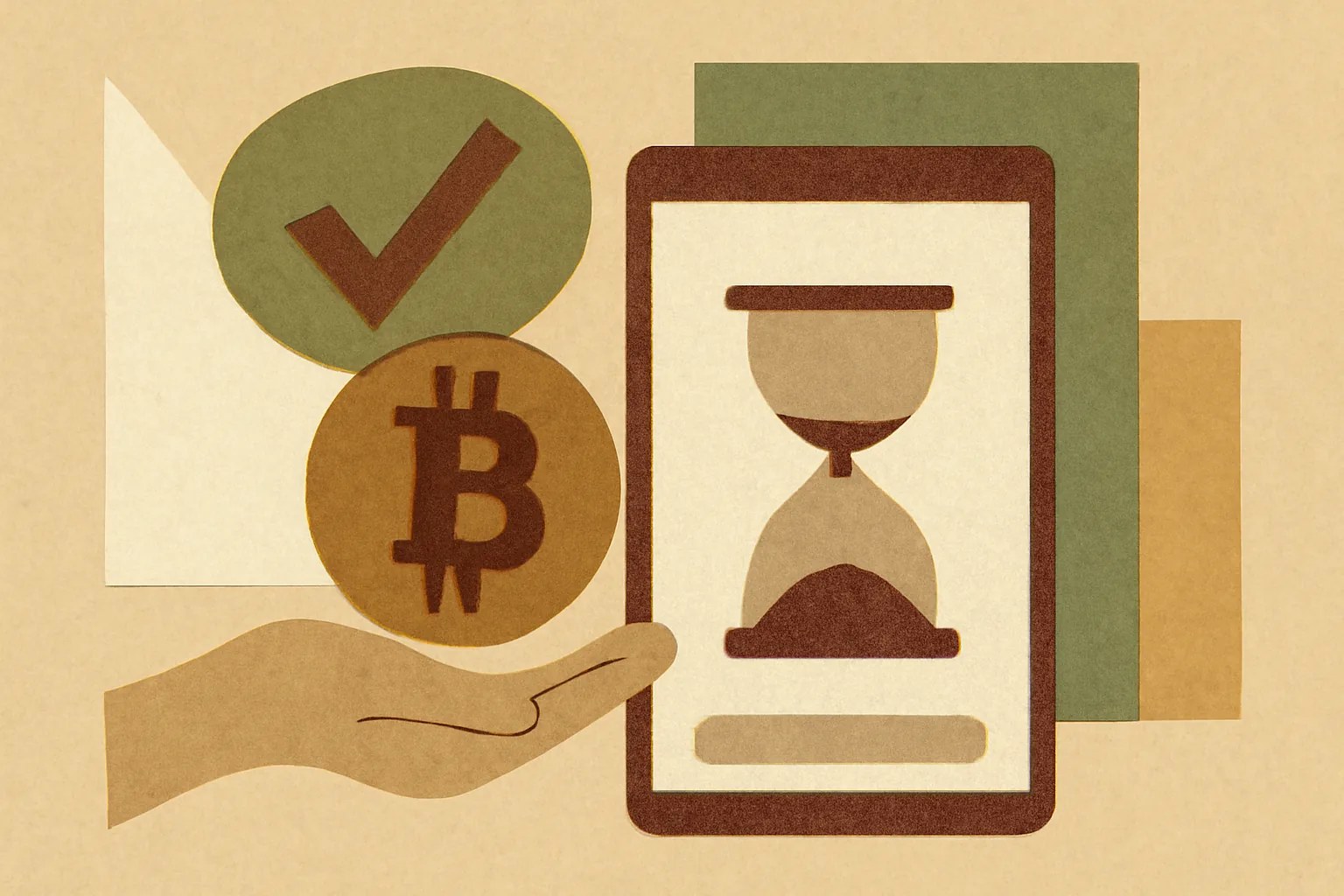
When “verified” is not the same as “ready to release”
You finished verification. The account passed KYC, the documents were accepted, and the dashboard now shows a green check or a “verified” label. Yet the withdrawal still sits there, pending. That gap is frustrating, and it happens more often than people expect.
This article focuses only on the post-verification stage. So if you are seeing a crypto exchange withdrawal stuck on pending after verification, the key question is not whether your identity was approved, but why the exchange has not released the request yet. Those are different steps. Very different.
A verified account can still wait because the exchange has one more gate before sending funds. Sometimes that gate is automatic. Sometimes a human opens it. Sometimes a rule stops it for 15 minutes, 24 hours, or longer.
Exchange-side holds that can remain after verification
Verification clears one layer, not all layers. Exchanges often keep a withdrawal pending while an internal risk engine checks the request, especially if the amount is unusual for that account, the login pattern looks new, or the request lands during a busy period.
Manual approval queues are another common hold. A support or operations team may review withdrawals above a certain threshold, or requests from accounts that recently changed security settings. In some systems, batching also creates a pause: the exchange collects several withdrawals and sends them together at set times, which means the status can remain pending even though nothing is “wrong.”
Temporary maintenance can do it too. One chain may be open while another is paused, or the exchange may suspend sends while it updates wallet infrastructure. That pause can last 10 minutes or several hours. If the exchange posts a maintenance notice, read it closely; the notice often says whether new requests will be accepted, held, or cancelled.
If you want a broader routine for account checks, the article on admister home is useful because it shows how to keep basic account signals in one place. That matters when a pending withdrawal is only one symptom among many.
Checklist for the exact withdrawal screen and status labels
Start on the withdrawal details page, not the homepage. The details page usually gives the clearest clue. Look for the exact status word, because “pending,” “processing,” “under review,” and “awaiting approval” can mean different things on different exchanges.
Check the timestamp first. If the request was submitted 5 minutes ago, a pending label is normal on many platforms. If it was submitted 6 hours ago and the exchange usually releases within 20 minutes, that is a different case. Keep the number. Write it down.
Find any reference ID, withdrawal ID, or ticket number. Some exchanges hide this in a small line near the asset name or transaction hash field. That ID is the cleanest way to ask support for a status check without forcing them to search by email address alone.
Look for banners, red alerts, or yellow notices on the same screen. A banner may say withdrawals are temporarily paused for the selected asset, or that the request is waiting for additional verification. Those clues matter more than guesswork. Also check whether the request says “queued” instead of “processing”; queued often means it has not entered the send stage yet.
A plain status label can be misleading. One exchange may call a request “pending” while it is already in a batch queue, while another uses the same label for a hold caused by a security check. The label is not the whole story, so read the surrounding fields carefully.
Common account conditions that can block release after KYC
Even after KYC, the account itself can still trigger a hold. Missing profile fields are a common one. If the exchange wants a phone number, tax form, address confirmation, or source-of-funds field and it is blank, the withdrawal can stay pending.
Security changes are another trigger. A recent password reset, a new device login, or a fresh 2FA setup can cause the exchange to pause outgoing funds for a cooling period. Some platforms do this for 24 hours; others choose 48 hours. The rule is usually written in the account security section, not on the withdrawal page.
Withdrawal address whitelist requirements can also stop the release. If the exchange only sends to saved addresses, and your new address has not finished its confirmation period, the request may remain pending until that timer ends.
New country access can matter. If you logged in from a VPN, a new IP range, or a region the exchange treats as higher risk, the system may freeze the withdrawal until the login pattern settles. That sounds dramatic, but it is often just a standard fraud filter.
For users who keep several exchange accounts, a small comparison of exchange rules can help. The guide on what changed in crypto exchange rules is relevant if your account sits under a stricter rule set than you expected.
Network, asset, and destination constraints that can keep a withdrawal pending
Sometimes the exchange is ready, but the route is not. If the selected network is paused for maintenance, the request may stay pending until the route opens again. This is common with assets that move across multiple chains, where one route is live and another is blocked.
Unsupported route combinations can also trap a request. You may have selected the correct asset but the wrong network, or the destination may not accept that format. A wallet that accepts one chain version of a token may reject another. The exchange may catch this before sending and hold the withdrawal.
Minimums matter. If the amount does not meet the network minimum after fees, the exchange may not send it yet. The same happens when the destination address format is incompatible, such as sending to an address that does not support the chosen chain.
There is another awkward case: the asset is supported, but only on certain rails. A withdrawal for a token on one network may be disabled while the token itself remains tradable. That creates confusion because the balance looks fine, but the send button is effectively tied up by routing rules.
If you are still comparing routes and assets before sending funds, the guide on how to compare spot trading is not about withdrawals directly, but it helps when a user keeps moving funds between products and then wonders why the final send option changes.
What to collect before contacting support
Collect the withdrawal ID first. Then record the exact time you clicked submit, down to the minute if possible. Add the asset, the network, and the destination address. Those four items usually tell support more than a long story does.
Take 2 screenshots. One should show the pending status and the visible details. The other should show any banner, warning, or alert attached to the account or the withdrawal page. If there is an email or in-app message about the hold, save that too.
Do not rely on memory. People often remember the wrong network, especially when the same token exists on more than one chain. A single mismatch can waste an entire support chat.
If the exchange sent a confirmation email for the request, keep it. If there is a reference number inside that email, include it in your notes. It can help support confirm whether the request is awaiting a system hold, a manual check, or a network issue.
How to contact support without restarting the queue
Open the ticket from the exchange help center or in-app support, not from a random email thread. That keeps the request linked to the correct account. If the platform has a withdrawal-specific form, use that first.
Start with the facts in one short block: asset, network, amount, withdrawal ID, and the exact pending label. Then ask one clear question: is the request awaiting manual review, a system hold, or a network pause? That phrasing is better than “please fix this,” because it gives support a path to answer.
Do not repeat your full verification history unless they ask. You already passed KYC, so the issue is not the identity review itself. Repeating the same backstory can slow the ticket, especially if a human agent has to scan a long message for the one line that matters.
If the exchange has a status page or support article on holds, mention that you checked it. A short note like “I saw no active maintenance for this asset” can save a round trip. If the platform offers a dedicated help route for account alerts, use that instead of live chat if the queue is long.
For people who care about account data and privacy while talking to support, the article on crypto exchange privacy policy and personal is a practical companion. It helps you decide what to share, and what not to overshare, in a ticket.
When to wait, when to escalate, and what outcome to expect
A short wait is normal when the request was submitted minutes ago or when the exchange says it batches withdrawals at fixed intervals. In that case, wait for the next processing window. If the exchange lists a specific delay, use that number, not your hope.
If the status should have changed already, escalate. A withdrawal that has been pending far longer than the exchange’s usual window, with no maintenance notice and no account warning, deserves a follow-up. One clean update is better than five new tickets.
Ask whether the request can be rechecked, released, or cancelled if it remains stuck. Cancellation may be possible before broadcast, but not after. That distinction matters because an unbroadcast request can sometimes be corrected, while a sent transaction is already on the way.
Sometimes the expected outcome is simply a manual review result. The exchange may approve the withdrawal, ask for one extra check, or refuse it and return the funds to the account. None of those outcomes are unusual. The key is getting a direct answer instead of waiting in silence for another 24 hours.
If the pending state is tied to a rule you can change, fix that rule first: complete the missing profile field, finish the address whitelist delay, or clear the new-device lockout. If it is tied to a system hold, support needs to say so plainly. That final distinction is the one that stops the guessing.
HYIP Articles


Random quote about money
"Если хочешь избавиться от гостя, докучающего своими визитами, дай ему взаймы денег."
Interesting posts in other sections of the blog










 ↑
↑
* to search the proxy database, just enter a country name, e.g. Russia, USA, Thailand