Funding Rate in Crypto Futures: The Basic Idea
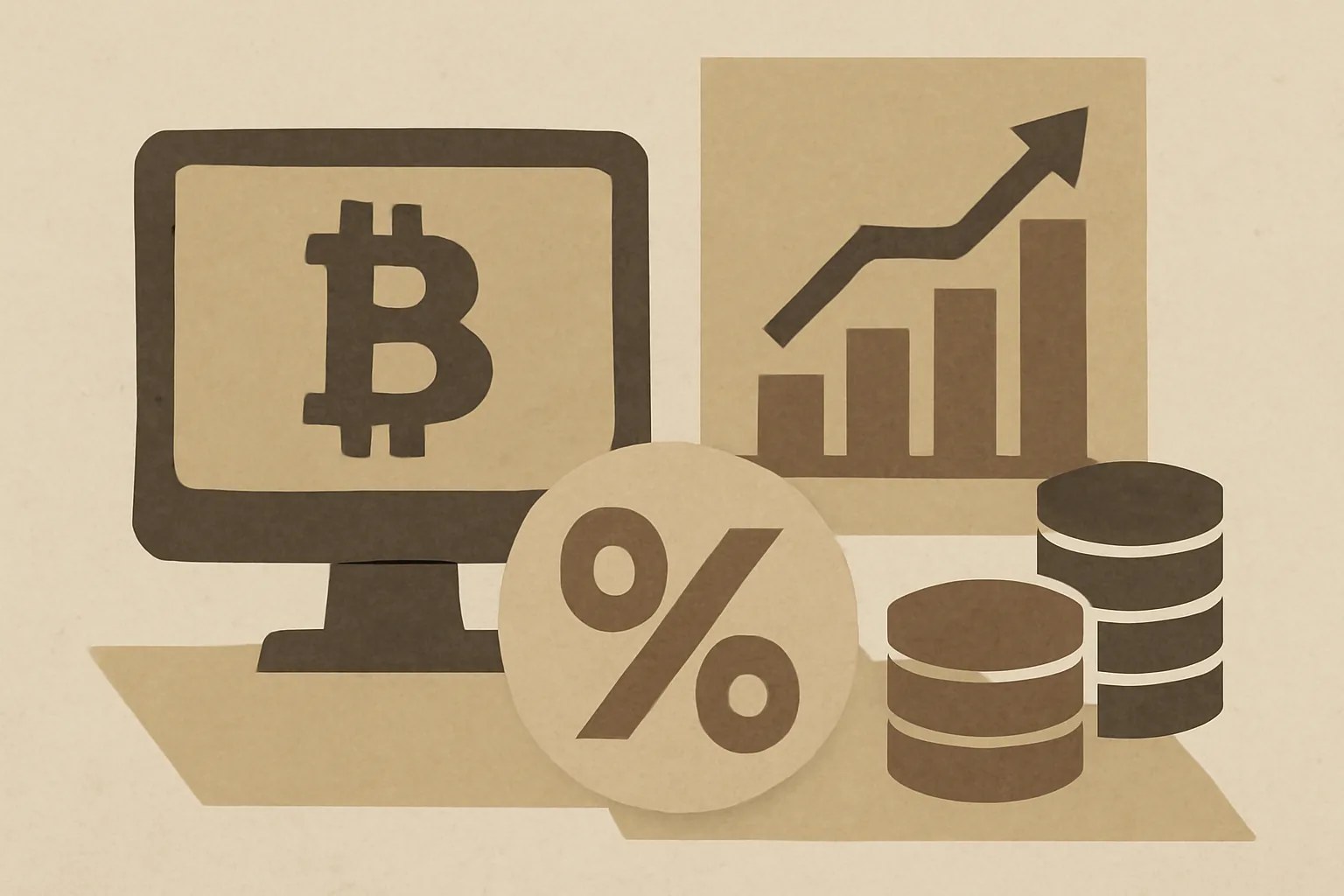
Funding Rate in Crypto Futures: The Basic Idea
what crypto exchange funding rate means for futures traders starts with one simple point: it belongs to perpetual futures, not spot buying. There is no expiry date on a perpetual contract, so the market needs a mechanism that keeps the contract price close to the underlying asset. Funding does that job. If the contract trades too far above spot, one side pays the other; if it trades below spot, the direction can flip. Simple enough.
This is not a trading fee in the usual sense. A commission is charged by the exchange for opening or closing a trade, while funding is a periodic transfer between traders holding opposite sides of the perpetual contract. The exchange sets the schedule, but the payment often moves from longs to shorts or from shorts to longs depending on market conditions. That difference matters, because a trader can be right on direction and still lose ground to funding over time.
Perpetual futures are designed to behave like futures, yet they stay open-ended. That odd structure is the reason funding exists at all. If you trade a coin pair for 2 hours, the effect may be tiny. Hold it through several funding intervals, and the bill can feel much less tiny.
Why Futures Traders Watch Funding Before Opening a Position
Traders check funding before entry for one direct reason: carry cost. A long position may pay funding several times a day, and a short position may receive it, or the reverse may happen. If your plan is to hold for 30 minutes, funding may barely matter. If your plan is to hold overnight, it can change the trade.
The timing of entry matters too. A trader might wait until just after a funding event instead of opening 5 minutes before it, especially if the position is meant to last only one session. That choice is not glamorous, but it can save money. One small example: a breakout trade with a tight target can look attractive until funding eats most of the expected edge.
Funding also affects trade selection. Two setups can look identical on the chart, yet one carries an expensive funding rate and the other does not. In that case, a futures trader may prefer the cleaner setup, even if the chart on the first one is slightly better. Numbers decide.
For readers who also want to understand other exchange metrics, what crypto exchange metrics should i can help frame funding as only one line in a larger pre-trade checklist.
How Long and Short Positions Influence Funding Payments
Funding moves between longs and shorts. When the market is crowded on one side, that side usually pays the other side. In a bullish crowd, longs may pay funding. In a bearish crowd, shorts may pay. The basic idea is to discourage a large one-sided imbalance from running too far away from spot.
A trader holding a long does not automatically pay. A trader holding a short does not automatically receive. The direction depends on the funding rate at that interval and on the exchange’s calculation rules. That is why checking only the symbol name is not enough. You need the actual funding number.
Market imbalance can push funding positive or negative. Positive funding usually means longs are paying shorts. Negative funding usually means shorts are paying longs. The sign matters, but so does the size. A tiny negative print can be less useful than a larger positive one, depending on your position and holding period.
Here is the part many beginners miss: funding is not a punishment for being early or late. It is a balancing mechanism. If a crowded long trade keeps expanding, funding may stay elevated for a while, and that changes the economics of staying in the trade. The position can still work. It just costs more to sit there.
What Funding Rate Does Not Tell You
Funding is not a direct signal of price direction. A positive rate does not guarantee a dump. A negative rate does not promise a rally. The market can stay irrational longer than a trader can stay solvent, as the old line goes, and funding by itself does not rescue anyone from bad timing.
Funding is also not the same as leverage. A 50x position and a 3x position may face the same funding rate on the same contract, but the dollar impact differs because the position size differs. That is a practical distinction. A trader who confuses the two may underestimate the holding cost and overestimate the safety of a small account.
Funding is not a standalone reason to enter a trade. One rate print does not turn a weak setup into a strong one. If the chart is messy, the order book is thin, or the planned stop makes no sense, funding should not be used as a magic excuse. It is one input. Not the whole trade.
If you need the mechanics of platform data first, how to read a crypto exchange is a useful companion before you rely on funding fields alone.
Reading Funding Rate on an Exchange Screen
On a futures platform, funding usually appears in the contract details panel, near the mark price or the position information. Look for at least three fields: the current funding rate, the next funding time, and the predicted rate. Some exchanges show the timer in hours and minutes. Others show the clock in local exchange time. Either way, the number is tied to a schedule, not to your mood.
When the screen shows the current rate, that is the rate relevant to the next settlement window. The next funding time tells you when the transfer happens. The predicted rate, if the exchange offers one, may change before the window closes. That means the display is useful, but not frozen in stone.
Traders should also check whether the rate is shown as a percentage or a decimal. A small formatting mistake can be expensive. A number that looks tiny at first glance may represent a meaningful cost over multiple intervals. Read the label, not just the digits.
One practical habit is to look at funding before placing the order, not after. A trader who opens a position at 19:59 and notices funding at 20:00 has already committed to the interval. The screen was there. The clock was there too.
How Funding Rate Changes the Cost of Holding a Perpetual Position
Holding a perpetual position across one funding event is rarely dramatic. Holding it across 5 or 10 events can be another story. That is because each transfer adds to, or subtracts from, the trade’s total result. The same direction call can become less attractive as time passes.
Imagine two trades with the same entry and exit prices. Trade A closes before the first funding event. Trade B stays open through several intervals. If Trade B pays funding each time, the net return can fall behind Trade A even though the chart outcome looks identical. That is the hidden drag futures traders keep checking.
High funding can also distort patience. A trader may want to let a winning position run, then notice the carry cost has become annoying enough to justify a quicker exit. That is not panic. It is arithmetic. The trade plan changed because the holding cost changed.
For some traders, this is where stop placement and funding interact. If the planned exit is far away and the expected funding cost is rising, the trade may no longer fit the original thesis. In those cases, comparing the cost against a tighter exit can be sensible. If you already track exits carefully, best crypto exchange for stop loss may fit your workflow.
Funding Rate in Risk Planning and Trade Setup
Experienced futures traders often add funding to the pre-trade checklist, especially for overnight holds, hedged positions, and high-leverage setups. The logic is plain. If the position is designed to survive small adverse moves, then recurring funding should be measured alongside the stop distance and margin use. Otherwise the trade may look safer than it is.
Hedged positions deserve a special mention. A trader can hold offsetting exposure and still face funding on one leg. That can create a slow bleed, even when the net price exposure looks small. In a desk setting, someone may track this daily; on a retail platform, the same idea still applies, only with fewer screens and more temptation to ignore the clock.
High-leverage trades are especially sensitive because the margin buffer is smaller. Funding does not trigger liquidation by itself, but it can reduce free margin over time and make a fragile setup even tighter. A position that survives one volatile candle may still become harder to defend after several funding intervals.
If your checklist already includes transfer and compliance items, what changed in crypto exchange travel can help connect exchange rules with trade planning, even if the topic sits outside funding itself.
Common Funding-Rate Mistakes Futures Traders Make
One common mistake is ignoring funding during fast markets. Traders focus on the candle, the breakout, and the news headline, then hold through a funding print that eats part of the move. That happens more often than people admit. Fast markets are noisy, and funding is easy to miss when the chart is loud.
A second mistake is treating one funding print as decisive. One positive rate does not mean the trade is crowded forever. One negative rate does not mean the crowd is about to flip. Markets change. Funding changes too. A good futures trader watches the sequence, not just the last number.
A third mistake is mixing up funding with spot-market fees or assuming funding is the same thing as spread. Those costs are different. Fees hit on execution. Funding hits on schedule. Spread affects entry and exit quality. Each one matters in its own way, and a trade can be hurt by all three at once if the trader never checks the math.
A fourth mistake is believing funding tells the full story of risk. It does not. Liquidation risk depends on margin, entry price, contract movement, and the size of the position. Funding may worsen the picture, but it is not the trigger by itself. A trader who blames funding for a bad liquidation usually missed the real problem earlier.
One last practical error: assuming a high funding rate always means “crowded long” and therefore “short now.” That shortcut can fail badly. A short opened only because funding looks rich can be crushed if the trend stays strong for 3 sessions. The trade still needs a thesis. Funding is the cost line, not the whole argument.
How to Use Funding Without Overthinking It
A sensible workflow is short. Check the rate, check the next funding time, compare it with your planned holding period, and then decide whether the cost is acceptable. Four steps. That is enough for many trades. The point is not to turn funding into a obsession. The point is to avoid being surprised by a predictable payment.
Traders who keep notes often get better at spotting patterns. For example, they may find that a setup they like on the chart performs worse when funding is elevated and the target is small. That is actionable. It turns funding from an abstract number into a filter. Not perfect. Useful.
If a position is meant to last less than one funding interval, the effect may be tiny. If it is meant to last through several, the effect deserves a line in the trade plan. Same market. Different bill. That is why the funding rate matters in futures, and why traders keep checking the screen before they click buy or sell.
HYIP Articles

Random quote about money
"Благосостояние государства обеспечивают не те деньги, которые оно ежегодно отпускает чиновникам, а те, что оно ежегодно оставляет в карманах граждан."
Interesting posts in other sections of the blog






 ↑
↑
* to search the proxy database, just enter a country name, e.g. Russia, USA, Thailand