Stablecoin Banking Competition Expands Beyond Settlement
Stablecoins can move dollars around the clock. The harder question is who controls everything surrounding the transfer: the account, the card, currency conversion, the customer relationship and the risk when something goes wrong.
That contest is pulling payment networks, fintech firms and crypto companies into the same market. The supply of stablecoins tracked by Artemis reached about $315.6 billion in July 2026, while daily transfers averaged $195.6 billion. Commercial use across payments, payroll and cross-border settlement is giving providers more reason to build full financial products around those flows.
Visa, Mastercard and Stripe are strengthening the settlement infrastructure. Specialist firms such as Wirex are betting that the larger commercial opportunity sits closer to the customer.
Card Networks Build the Rails
Visa’s stablecoin settlement run rate rose from $3.5 billion annualised in November 2025 to about $7 billion by March 2026. The company has since expanded a pilot that lets eligible issuers and acquirers settle obligations using stablecoins on supported blockchains, according to its announcement.
Mastercard added support for several stablecoins across multiple networks in June. Earlier in 2026, it agreed to acquire BVNK for up to $1.8 billion.
Stripe has also integrated stablecoin acceptance and fiat settlement. Its acquisition of Bridge added technology for issuing, transferring and converting digital dollars.
Their entry gives stablecoins access to established payment networks. It also sharpens the question of who owns the customer-facing layer.
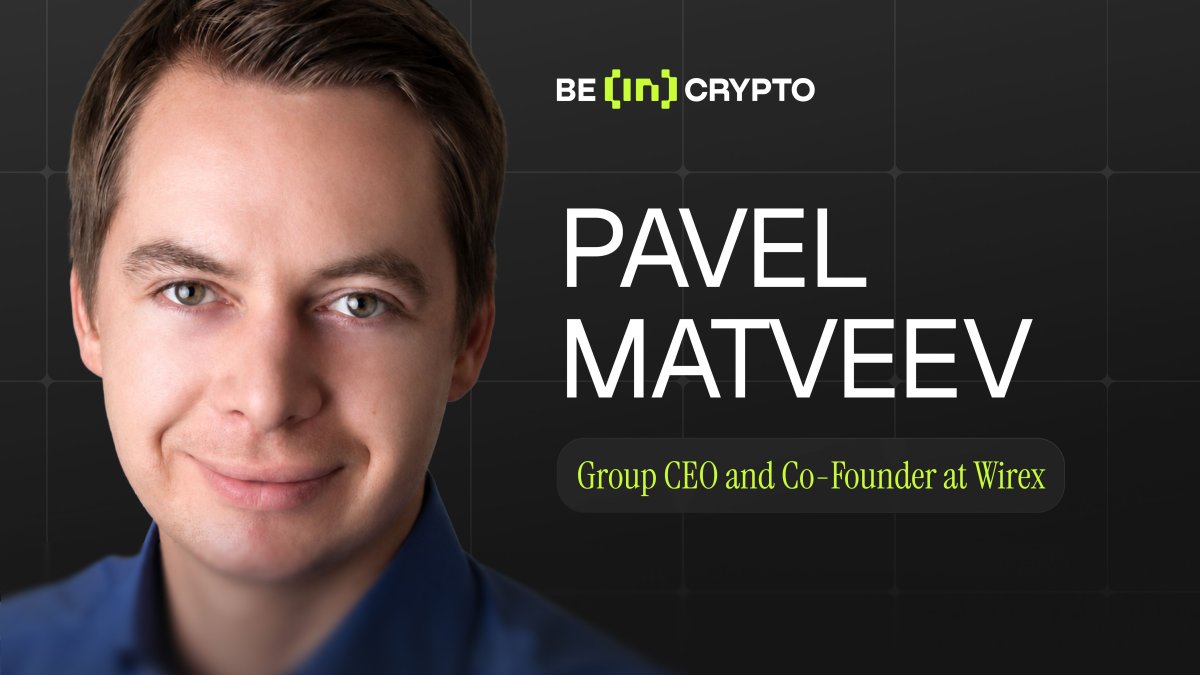
“There are plenty more parts of the system which allow the stablecoin industry to operate, and it’s impossible for Visa and Mastercard to own them all. Even in the traditional financial system, they’ve never chosen to become card issuers,” Wirex Group CEO and Co-Founder Pavel Matveev told BeInCrypto.
Payment networks connect institutions and merchants. Issuers and fintech platforms control the accounts, cards and interfaces customers use each day.
Wirex is pursuing that layer through its banking-as-a-service business, which supplies stablecoin-linked products to exchanges, wallets and other fintech firms.
Customer Access Is Where the Revenue Sits
Settlement moves money between participants after a transaction has been authorised. The surrounding services create more ways to earn through card interchange, foreign exchange, programme fees and financial products linked to customer balances.
“This is a huge part of the end-to-end financial transaction, and owning a large chunk gives these businesses more ways to deepen the relationship with customers across multiple touchpoints and earn revenue,” Matveev said.
Wirex says its BaaS operation reached $1 billion in annualised settlement volume within 131 days of launching in November 2025. The rate was calculated from activity across Base and Stellar during that period.
Matveev also said the company has more than 300 active partner discussions, with BingX, EVEDEX and Crossmint already integrated.
The numbers suggest early demand. The stronger test will be how many partners go live, how frequently their customers transact and whether those flows produce durable revenue.
More Control Means More Liability
The same model that gives providers greater commercial control also concentrates responsibility.
A stablecoin payment may involve an issuer, a blockchain network, a wallet, a card programme and a liquidity provider. The customer usually sees one app and expects that company to fix the problem.
“The responsibility ends where our control ends. In some cases, such as when a stablecoin loses its peg, the stablecoin issuer bears responsibility,” Matveev said.
That boundary becomes harder to explain as stablecoin neobanks add credit, trading and investment products.
Wirex One, an upcoming onchain app, plans to combine card spending and foreign exchange with tokenised equities, asset-backed credit and perpetual futures offering leverage of up to five times.
Its Earn product advertises variable returns of up to 9.75% through DeFi markets including Morpho and Aave. Matveev said the return comes from lending demand rather than token incentives.
“Customers take on the underlying risks, including market volatility and smart contract risk, and rates are variable, moving with market conditions.”
Those products carry a different risk profile from a payment balance. Smart-contract failures, liquidity shortages, oracle errors and stablecoin depegging can affect returns or access to funds.
Providers will need clear separation between money used for spending, assets supplied to lending markets and leveraged trading positions. Customers also need to know which company controls each product and who carries the loss when it fails.
AI Payments Add Another Accountability Test
Stablecoins are also moving into automated payments.
Wirex recently joined Visa’s programme for agent-initiated transactions and plans to launch an Agent Card using tokenised credentials.
Users would set spending caps, merchant restrictions and time limits. Software would then check each transaction against those rules.
This creates another layer of responsibility. Providers must prove what the user authorised, how the agent applied those instructions and who pays when an automated transaction exceeds them.
The stablecoin banking race is becoming a contest over product control rather than transaction speed alone. Visa, Mastercard and Stripe are building the rails. Fintech firms and crypto providers are trying to own the account, the interface and the wider financial relationship.
Their long-term position will depend on whether they can combine payments, yield and automation while keeping the risks visible and the lines of responsibility clear.
Source: BeInCrypto
Cryptocurrency News


Random quote about money
"Если вы в состоянии устранить проблему с помощью денег, значит, проблемы у вас нет."
Interesting posts in other sections of the blog









* to search the proxy database, just enter a country name, e.g. Russia, USA, Thailand