Crypto Exchange Data Retention and Account Deletion Rules
Crypto Exchange Data Retention and Account Deletion Rules
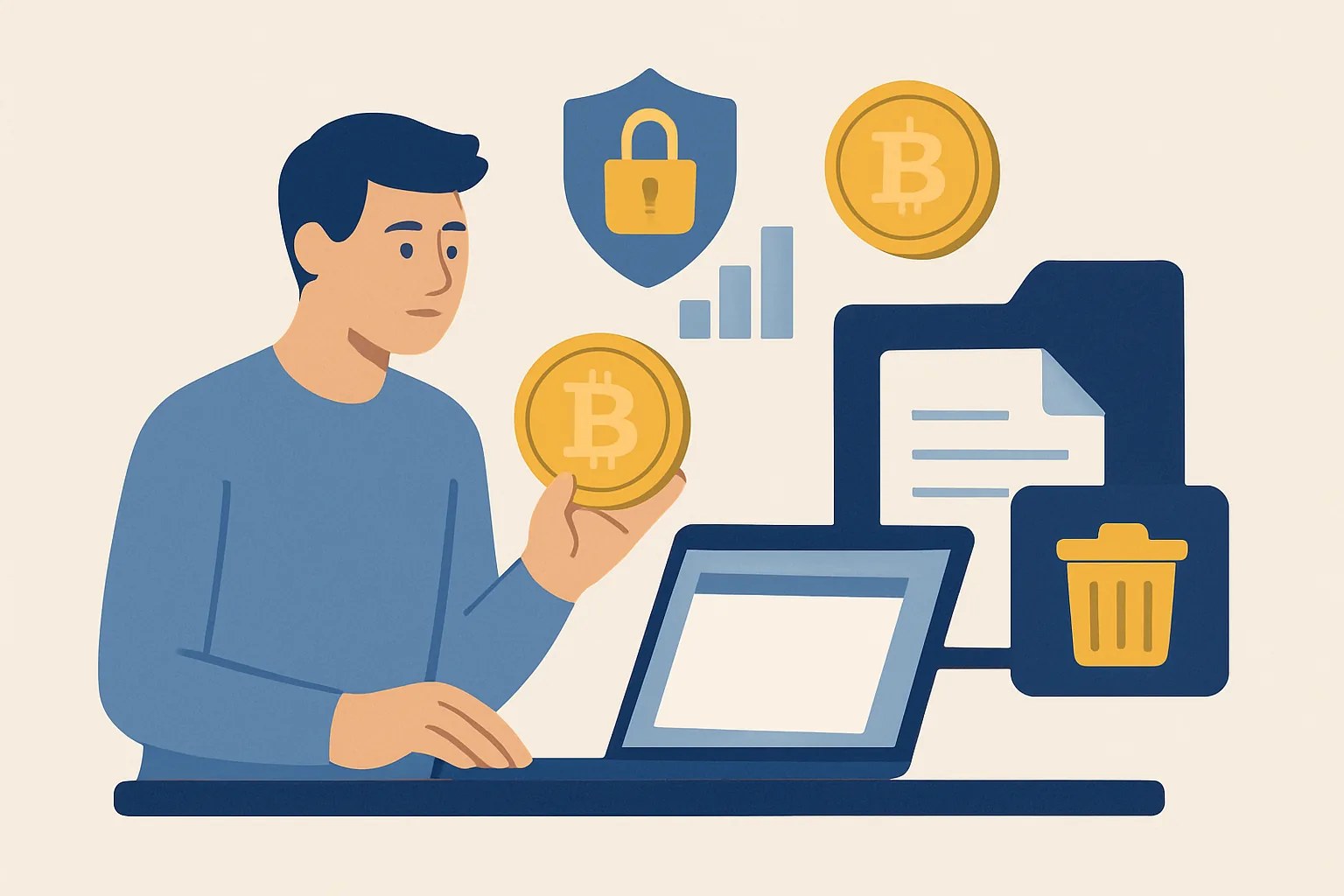
Most traders think “delete account” means one clean cut. It rarely does. A crypto exchange may still keep identity files, audit logs, support chats, IP history, transaction metadata, and compliance notes, and each of those can sit under a different rule.
That sounds dry, but it affects real people. If you opened an account in 2021, sent 12 support messages, and traded only twice, the exchange may still have more than just your username and email. Some records are tied to fraud checks. Some are tied to tax. Some are tied to an appeal you forgot about.
1) Know what “data retention” covers on an exchange
Data retention on a crypto exchange is broader than most users expect. It can include the identity document you uploaded, the selfie check, device fingerprints, login IPs, order history, deposit and withdrawal metadata, ticket transcripts, and internal compliance notes. A file you never saw can still exist long after the account looks empty.
One useful way to think about it: signup data, trading data, and closure data are often different records. A support agent may see your ticket about a frozen withdrawal. A compliance team may see a risk note attached to the same account. A system log may store the device you used on 3 different days. Three records, one user.
That matters because deletion requests usually do not sweep all records at once. Some exchanges can remove marketing data quickly while keeping risk records for longer. Others keep chat logs because the conversation may be part of a dispute. If you want a wider picture of how exchanges document user activity, the article on crypto exchange KYC and AML compliance gives useful background on why some files are held separately.
2) Check the difference between deletion, closure, and suspension
These words are not the same. Account closure may only stop normal use. Suspension may lock the account because of a review. Deletion request is the formal ask for removal of user data where the law allows it. One action is administrative. Another is legal. The third is a privacy request.
If an exchange says your account is “closed,” the account may still exist in the back office. If it is “suspended,” nothing may move until the review ends. If you send a deletion request while the account is under compliance hold, the exchange may keep records until the hold is lifted. Simple word, big effect.
Ask the exchange which event actually starts the clock: closure, deletion approval, or completion of the review. If they do not say it clearly, ask again in writing. A support reply with a date is better than a vague promise.
3) Review the retention policy before you request deletion
Start with the privacy policy, then the terms, then any retention schedule or data policy page. Most exchanges hide the useful lines in sections named “privacy,” “legal obligations,” “record keeping,” or “fraud prevention.” Search those pages for “retention,” “deletion,” “backups,” “AML,” and “tax.”
Look for exceptions. An exchange may say it deletes account data on request, but also keeps certain records for legal, tax, anti-fraud, and AML reasons. That is normal. It is also where people get surprised, because the headline sounds broad while the exceptions are narrow and very specific.
Read the country or region language too. If the exchange serves the EU, UK, or another regulated market, the policy may name local laws that override a deletion request. The exchange may not quote the statute in plain English. You may have to infer the rule from the retention period and the list of exceptions. Not fun, but necessary.
If you are also comparing the way exchanges document user actions, what changed in crypto exchange travel can help you see why some information must remain available to compliance teams even after a user leaves.
4) Prepare your account before asking for deletion
Do a short pre-delete check. Withdraw balances. Cancel open orders. Remove linked payment methods. Save trade history. Download statements. Keep tax records first. This takes 15 minutes on some exchanges and an afternoon on others.
Do not skip the records. Once the request lands, access can change fast. A user who forgets to download fills, fees, or statement PDFs may later discover that the dashboard is gone. If the exchange offers CSV exports, take them. If it offers monthly statements, save those too. One file now can spare a support fight later.
Check connected tools as well. Stop API keys. Remove trading bots. Unlink exchange-to-wallet permissions if the platform offers them. Disable price alerts and SMS notifications so the account does not keep sending messages after you think the relationship is over. If your alerts are tied to chart tools, the guide on how to connect TradingView alerts is a useful reminder of where those connections usually live.
5) Submit the deletion request the right way
Most exchanges offer one of four paths: in-app settings, a privacy request form, a support ticket, or email. Use the path named in the privacy policy first. If the policy points to a form, do not start with chat. If it says email, send email and keep the sent copy.
Give enough detail to identify the account: registered email, username if used, account ID if shown, and a plain request for deletion of personal data where allowed by law. Ask the exchange to confirm the scope of the request. That means you want the reply to say whether they will close the account, remove marketing data, retain legal records, or do something else.
Keep the wording calm and exact. “Please delete my account” is short, but “Please process my account deletion request and confirm which data will be retained for legal or compliance reasons” is better. One sentence, one purpose. If the exchange offers a case number, save it.
Some users also ask for a copy of the account history before deletion, which is wise if you need tax support later. If you are trying to understand the differences between activity records and pricing records, how to read a crypto exchange can help you separate trade data from market data before the account closes.
6) Expect partial retention even after deletion
“Deleted” does not always mean wiped from every system on day one. Some data may remain in backups, logs, or legally required records. An exchange may make the data inaccessible to you while keeping a copy in archive storage for a fixed period. That is common.
Backups are the usual reason. A backup created on Monday may contain your profile on Tuesday, even if you delete the account on Friday. Logs are another reason. A system log can preserve the login event, the IP address, and the time stamp. If a regulator asks later, the exchange may need that evidence. One archive, multiple duties.
Ask whether the exchange distinguishes between deletion and anonymization. In some policies, personal fields are removed while non-identifiable records stay for analysis. In others, the account becomes inaccessible but not fully erased until the next backup cycle expires. “Deleted” may mean “not visible to the user” rather than “gone everywhere.”
7) Verify what happens to connected services and third parties
Deletion is not only about the exchange’s own database. It also affects API keys, wallet connections, email services, SMS vendors, analytics tools, and compliance processors. If you leave one API key active, a bot may still try to trade. If you leave an alert service linked, you may keep receiving messages for weeks.
Start with API access. Revoke every key, even the old ones. Then remove whitelisted addresses, connected wallets, and third-party trading tools. Check your email settings for marketing consent and operational notices. If the exchange sends SMS, disable those notices too. A clean disconnect is better than assuming one button did everything.
Third parties matter because the exchange may not control every copy of your data. Affiliates, processors, cloud providers, and compliance vendors can hold records under their own obligations. You may not get a separate deletion confirmation from each one, but you should ask whether the exchange has a list of vendors or a transfer policy. If you want a related privacy angle, how much do crypto exchange spreads is a reminder that some platforms also route activity through outside services in ways users never see.
8) Confirm the outcome and keep proof
Do not treat silence as success. Save the request timestamp, case ID, and final reply. If the exchange says the account is closed but not yet deleted, keep that distinction in your notes. If they say legal retention still applies, keep the exact wording.
Check three practical signs. First, login access should fail. Second, marketing emails should stop. Third, the privacy team should confirm what data remains and why. If the exchange gives a retention period, write it down with the date you received it. One email today can answer a question 18 months later.
If the exchange changes its status page, keep a PDF or screenshot of the reply before the ticket closes. Support systems sometimes delete visible threads after a case is marked resolved. That does not erase the history in the company’s records, but it can remove your easiest proof.
When a support agent says the account is “removed,” ask one last specific question: does that include account access, marketing data, and public profile data, or only the user-facing dashboard? A precise answer is the difference between a closed tab and a real retention record. Small words. Big consequences.
HYIP Articles



Random quote about money
"Чем больше у тебя денег, тем больше знакомых, с которыми ничто тебя не связывает, кроме денег."
Interesting posts in other sections of the blog












 ↑
↑
* to search the proxy database, just enter a country name, e.g. Russia, USA, Thailand