

Why “audit” is not the same as “proof of reserves”
A crypto exchange can publish a proof of reserves statement without having a full audit behind it. That is the first split worth learning. The statement may show balances on a date, while an audit tries to test how the claim was checked, by whom, and under what limits.
This difference matters because trust is not built on one screenshot. A balance snapshot can be accurate at 2:00 p.m. and stale by 4:00 p.m. An audit asks a harder question: what exactly was examined, and can someone else repeat the work?
That is why the phrase what is a crypto exchange proof of reserves audit and why it matters keeps coming up in serious due diligence. The answer is not “an exchange posted a page.” The answer includes process, scope, date, evidence, and the name of the party that signed off.
A proof of reserves statement can be useful. A proof of reserves audit can be more useful. The gap between those two is where users often get burned.
When a user should care about the audit process, not just the report
Most users start with one simple question: does the exchange have the funds? That is fair. Yet the bigger question is whether the claim was checked yesterday or six months ago, and whether the check covered the assets you actually hold.
If you keep a large balance on an exchange for active trading, the audit process matters as much as the headline result. A report dated 90 days ago says little about today’s conditions. A report that covers only BTC and ETH says even less if you hold 12 smaller assets.
This becomes sharper after a market shock. When withdrawals slow on one platform, users often rush to compare reports from other venues. A recent audit, one with named reviewers and clear liabilities testing, can be a better signal than a glossy page with no detail.
Small balances are different. If you trade once a month and leave only enough for fees, a limited report may be sufficient. If you park a major portion of your holdings there, the audit process is not decoration. It is your screen against blind trust.
Who performs a proof of reserves audit and what independence should look like
Three actors usually appear in the chain. The exchange prepares records. An external auditor, or an attestation provider, checks some part of them. A third-party firm may then publish a report, or the exchange may publish the result with the provider named inside.
Independence is the real test. A provider that also runs marketing for the exchange is not the same as a firm with no commercial tie. That does not automatically make the work bad, but it does change how carefully you should read the result.
Look for a named firm, a named partner, and a date. Those three details beat vague phrases. If the report says only “independent review completed,” ask who did it and what they were allowed to inspect.
Scope matters too. An auditor may be independent but still limited to one wallet cluster, one asset class, or one point in time. The report can still be honest and still be narrow. That is not a contradiction.
Some exchanges also use an attestation provider rather than a full financial auditor. Fine, but the label should be plain. Users should know whether they are reading a restricted review, a snapshot attestation, or a broader audit engagement.
What evidence an audit should inspect beyond a simple balance snapshot
A simple balance snapshot says, “these wallets held this much on this date.” That is only the opening move. A stronger review also looks at wallet ownership, controls over the wallets, and whether liabilities were included in the check.
Wallet ownership matters because a public blockchain address is not proof by itself. The auditor needs to connect that address to the exchange, often through signing tests or internal records. Without that link, anyone could point to a rich address and claim it belongs to them.
Liabilities coverage is equally important. An exchange can show assets and still owe more to customers than it can pay. If the review ignores liabilities, the result may be comfortable and misleading at the same time.
Sampling methods also matter. A provider might test a subset of wallets or accounts rather than every line item. That is normal in many reviews, but the user should know the sample size, the selection method, and the consequence of not testing the full book.
For readers comparing exchanges, this is where a page like the binance crypto exchange can be helpful as a reference point for how large venues present their disclosures. The presentation may be clean. The important question is what the reviewer actually touched.
How to read the audit scope, exceptions, and methodology notes
The scope section is the map. Read it first. If it says “selected assets,” do not assume the whole platform was tested. If it says “single date,” do not read it as an ongoing guarantee.
Methodology notes often hide the strongest clues. Look for phrases such as “as of,” “limited to,” “sampled,” and “subject to.” Those words are not filler. They tell you what the auditor saw and what the auditor did not see.
Exceptions matter even when they are small. An exception for one wallet cluster, one legal entity, or one data source can change the meaning of the whole report. A clean result with one exception is not the same as a clean result with none.
Pay attention to the asset list. A report that covers BTC and USDT may be useful for some users and irrelevant for others. If you trade altcoins or hold balances across multiple chains, a narrow scope means the report cannot answer your question.
Dates matter in a very practical way. A report from last quarter tells you little about a fresh product launch, a custody change, or a surge in deposits. The closer the date, the better the signal, though even a recent review is still a point in time.
Red flags that make a “proof of reserves audit” less useful
Vague wording is the first red flag. Phrases like “verified by experts” or “fully audited” can sound strong while saying almost nothing. Ask for the firm name, the date, and the exact assets covered.
No named auditor is another warning sign. If the exchange refuses to identify the reviewer, the result is hard to trust. A platform asking for your deposits should be able to name the person or firm that checked its books.
Missing liabilities are a major weakness. The exchange can have large wallets and still be short if customer claims are larger. Without liabilities, the report is not answering the full question users care about.
Reports can also sound broader than they are. A page might imply “all reserves” while actually covering one chain and one snapshot. That mismatch is common, and it is exactly why the fine print should come before the headline.
If you want a live example of a large venue with lots of product surface area, the bybit (spot) cryptocurrency exchange is the kind of platform where scope questions matter. A broad exchange needs broad disclosure. A narrow report on a broad business can leave gaps.
A practical checklist for deciding whether the audit is good enough for your use case
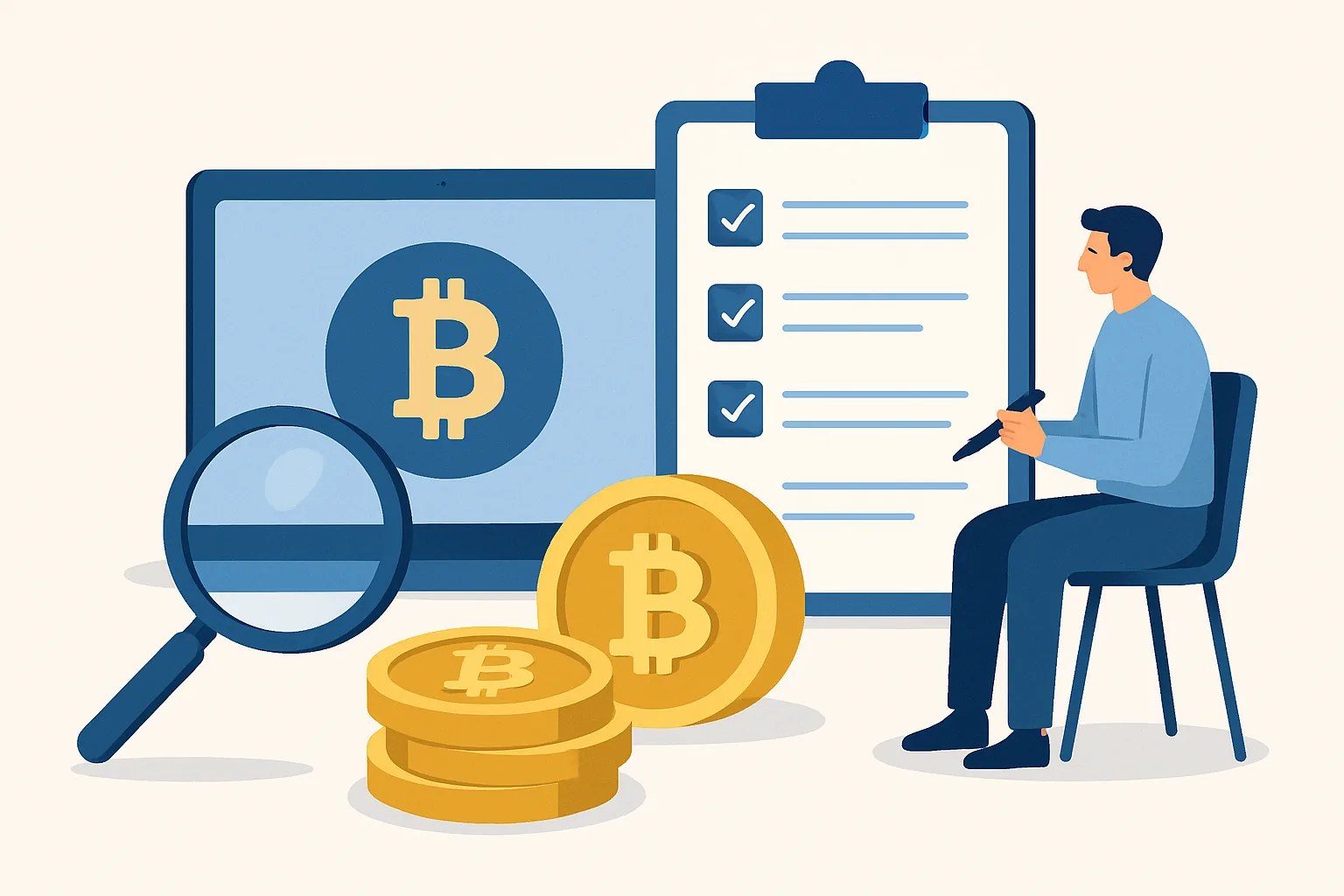
Start with your own risk limit. Step 1: decide the largest balance you are willing to keep on the exchange. Step 2: compare that amount with the scope of the audit. If the audit does not cover the assets you own, stop there.
Step 3: check the date. A report older than your trading cycle is weaker than one published after your last deposit. If you trade weekly, a quarterly review may be too slow.
Step 4: look for liabilities coverage. If liabilities are missing, treat the report as partial. Step 5: confirm the reviewer is named and independent. If the firm is unnamed, or if the same group both sells custody services and signs the review, caution should rise.
Step 6: read the exceptions. One exception can be acceptable; three exceptions may not be. Step 7: compare the methodology with another exchange you trust. For instance, a venue like the bitvavo cryptocurrency exchange may present disclosure differently, and that difference can show you whether the first report is thin or simply unusual.
Step 8: decide your exposure. If the audit is narrow, keep a limited balance. If the audit is recent, named, and broad enough for your holdings, a larger balance may be reasonable. A cautious user does not need perfect certainty. He needs enough evidence for the amount at risk.
What to do if the audit leaves important questions unanswered
First, look for a newer disclosure. A new month can bring a new report, and a new report can close gaps left by the last one. If the exchange updates disclosures often, the latest page should be the one you read.
Second, compare methodology across exchanges. If one platform explains liabilities, wallet ownership, and date while another offers only a one-line statement, the difference is not cosmetic. It affects what you can reasonably infer from the report.
Third, treat unanswered questions as risk, not mystery. A platform that will not say which assets were reviewed, or which wallets were tested, should be treated as higher risk until it answers. That is a practical consequence, not a slogan.
Users who trade many smaller tokens face this problem often. A venue may have a broad market lineup, like the list of cryptocurrencies for trading, statistics on KuCoin pages can suggest, but a broad lineup does not make a narrow audit broader. The audit still has to name the assets it covered.
If the exchange still leaves major gaps, reduce exposure or move funds. Keep only what you need for the next trade. Leave the rest in self-custody or on a platform with clearer evidence. That choice is boring. It is also the point.